February 23, 2014

TELANGANA & LOK SABHA 2014


WHO GAINS AND WHO LOSES OUT IN TELANGANA?

K Chandrashekar Rao on fast-unto-death for Telangana in December 2009
It does not matter if you like it or not. The reality is that after both houses passed the Andhra Pradesh Re-organization Bill, Telangana is all set to become the 29th state of the Indian Union. A struggle that began about seven decades ago and which was further strengthened by years of neglect has finally succeeded. In spite of protests in Seemandhra and the ruckus inside the Parliament, the government and the Opposition came together in a move dubbed by detractors as 'match-fixing' to allow the contentious bill to pass through. Though Hyderabad is to be the joint capital for the next ten years, the metropolis which is considered to be the pride of the Telugu people and is the bone of contention between the two sides will cease to exist within the territorial extent of Andhra. With the elections both at the Center and in the states, namely Andhra and Telangana due in the next two months, this move will have a direct impact on how the masses vote. Here is a look at the various political parties and how their fortunes will be affected with the division of southern India's largest state. Also with this post, I am starting a new series on the blog where I will analyze each state with respect to the Lok Sabha polls of 2014.

ISSUES

(1) Statehood for Telangana: No prizes for guessing this. The creation of Telangana is of course going to be the sole issue this election season in this part of the country, that is if there are no drastic developments in the run up to the polls. The people of this region have demanded a separate state for decades, citing step-motherly treatment meted out by the rest of Andhra. While Hyderabad, located deep in the heart of this area is one of the most developed cities in the country, the rest of the yet to be born state has lagged far behind. The statehood for Telangana has been a crucial poll subject for long, except for the time when Y S Rajshekar Reddy was the Chief Minister. Considering that hundreds of people have lost their lives over this rather emotional topic, it is going to dominate the political situation here for months, if not years. The challenge for the next government, both in New Delhi and in Hyderabad will be to implement development schemes so as to nurture the state in its early days. 

(2) The TRS-Congress pact: Another key issue which could decide the outcome will be the proposed TRS-Congress merger/pre-poll alliance. Rao's outfit has been at the forefront of the agitation for the past decade whereas the Congress' role in passing of the bill has been appreciated by the people on the ground. As such, if they join hands, they are expected to sweep an overwhelming majority of the seventeen seats from here. The Congress wants Rao's outfit to merge with it, whereas the latter does not want to commit, preferring to keep his options open.


CONTENDERS

(1) Telangana Rashtriya Samiti: The TRS formed by K Chandrashekar Rao in 2004 after he parted ways with Chandrababu Naidu to fight for Telangana statehood is expected to gain heavily from this development. Though it fared badly in the 2009 General elections, KCR's 'fast-unto-death' later that year brought the attention of the entire nation to this issue. The UPA II government buckled under pressure and announced the initiation of the process to bifurcate Andhra, something that it would repent later. There is no doubt that today, KCR is the biggest political leader in the new state. The big question however, is whether he should merge his outfit into the Congress or become a partner in the UPA. It is believed that there was an understanding between the INC and TRS that the latter would merge into the former as and when Telangana is formed. While the Congress has kept its promise, Rao is hesitant to keep his word on the merger. Though it is sure that such an alliance will for sure sweep the newly carved state, KCR's knows that in all likelihood, the UPA will not win a third state term. Moreover, if the NDA crosses the 200 mark and needs allies to stake a claim to form the next government, the TRS could join it (like it did in 2009) and bargain heavily for a special economic package for the state of Telangana. Remember, the BJP's support was crucial in passing the Bill in both Houses of the Parliament.

(2) Congress: In several parts of the soon to be created state, Sonia Gandhi is being referred to as the 'Mother of Telangana' as she has ensured that the UPA kept the promise it had made in 2004, even if the announcement came months prior to the General elections. The grand old party has indeed taken a huge gamble. By giving Telangana it has ruled itself out of the race in 25 seats in Andhra, the state that sent the maximum number of Congress MPs in the last two Lok Sabhas. To be frank, the party did not have a choice. Jaganmohan Reddy has virtually wiped it out of the Rayalseema and Seemanadhra regions whereas the TDP too is expected to improve its performance. The challenge before the Congress is to ensure that the TRS mergers into it. Sadly for it, KCR is a shrewd politician. If he decides to retain his outfit's independence, there is a threat that he may join hands with the BJP led NDA in the future. That would be a disaster and will allow the saffron outfit to make a strong mark in Telangana besides helping it clinch the advantage in the race to 272 in the post poll scenario. Considering the high stakes, one can expect the Congress to lobby hard in the next few days to make sure that Rao fights under its colors.

(3) All India Majlis-e-Ittehadul Muslimeen: In my opinion after the TRS and the Congress, the third party which will be affected by the creation of the new state is the AIMIM. The party has been representing the Hyderabad seat in the Lok Sabha since 1984 largely due to its loyal Muslim vote bank. However, post the recent developments, the two time MP and party president Asaduddin Owaisi may be feeling a bit jittery. In case the Telangana sentiments are high, the voters may rise above communal lines and may end up overlooking the AIMIM. However, Modi's nomination for the post of the Prime Minister by the NDA will be one issue which Owaisi may raise to whip up religious sentiments and consolidate the minority votes.

(4) BJP: The saffron party's situation in southern India continues to be pathetic, more so after its rout in Karnataka assembly polls. However, in a bid to give itself a better chance at least in Telangana, the party backed the bill introduced by the Congress in the Parliament, hoping to create some momentum in its favor. Like Sonia Gandhi, Sushma Swaraj too has won the good will of the people from this part of the country. Giving her a ticket from her will be a bold move and may well pay off. At least, she should figure prominently in the BJP's election campaign here. On the issue of the merger of the TRS into the Congress, the party will be keeping its fingers crossed. Also, in case the deal fails, the party will look at Rao as a potential ally in the future and may lure him with a special economic package for the new state.

The Telugu Desum Party (TDP) and the YSR Congress are expected to draw a blank here in case they contest as they batted for the 'United Andhra' movement. The Communist and other constituents of the Third Front too do not have any substantial presence here which means they too will not open their accounts.

PAST RESULTS

Here is a look at how the 17 seats that will form a part of Telangana have voted in the last five Lok Sabha polls. Please note that during these elections, the region was still a part of Andhra Pradesh. Also, over the years, the delimitation exercise has made it difficult to get accurate results in all constituencies. In 1996, the Congress held a slight upper hand in the region whereas in the next election it was the TDP that did well. The allies in the NDA i.e. Telugu Desum and the BJP swept the region in spite of the fact that they did not have a pre-poll arrangement. YSR's campaigning and the alliance with the TRS helped the UPA do well across Andhra in 2004 and Telangana was no exception. The superlative performance in the state catapulted the Congress beyond 150 and helped them to a surprise victory at the Center. In 2009, in spite of the break-up with KCR, the Congress led by Rajashekar Reddy routed all Opposition in the state. A hallmark of this victory was that KCR's outfit was reduced to a paltry number of two even as the Congress went past 200, again with Andhra contributing the maximum number of MPs to UPA II.

No.
Constituency
2009
2004
1999
1998
1996
01
Adilabad
TDP
TRS
TDP
TDP
TDP
02
Peddapalli
INC
INC
TDP
TDP
INC
03
Karimnagar
INC
TRS
BJP
BJP
INC
04
Nizamabad
INC
INC
TDP
TDP
INC
05
Zahirabad
INC
-
-
-
-
06
Medak
TRS
TRS
BJP
INC
INC
07
Malkajgiri
INC
-
-
-
-
08
Secunderabad
INC
INC
BJP
BJP
INC
09
Hyderabad
AIMIM
AIMIM
AIMIM
AIMIM
AIMIM
10
Chevella
INC
-
-
-
-
11
Mahabubnagar
TRS
INC
BJP
JD
INC
12
Nagarkurnool
INC
TDP
TDP
INC
TDP
13
Nalgonda
INC
CPI
TDP
CPI
CPI
14
Bhongir
INC
-
-
-
-
15
Warangal
INC
TRS
TDP
TDP
TDP
16
Mahabubabad
INC
-
-
-
-
17
Khamman
TDP
INC
INC
INC
CPM


(1) Information on the results of the five constituencies - Zahirabad, Malkajgiri, Chevella, Bhongir and Mahabubabad are not availabale on the Internet.

(2) CPI: Communist Party of India
CPM: Communist Party of India (Marxist)
JD: Janata Dal


MY PREDICTIONS

I am sticking my neck out to make some predictions ahead of the General Elections. Of course, the point to note here is that I have not taken the INC-TRS merger or pre-poll alliance into account since it has not been announced as yet. As mentioned earlier, Chandrashekar Rao and the TRS may well take about half of the seats from the new state whereas the Congress too may do well. I expect the BJP to end its drought here and the AIMIM to retain its stronghold of Hyderabad. Note, I have just relied on my understanding and my gut feeling to come to these numbers.

Political Party
Expected Seats
1
Telangana Rashtra Samiti (TRS)
6-10
2
Congress (INC)
4-8
3
Bharatiya Janata Party (BJP)
0-2
4
All India Majlis-e-Ittehadul Muslimeen (AIMIM)
0-1
5
Others (YSR Congress/TDP/CPI/CPM)
0-1


WATCH OUT

(1) Rise of the Rao Dynasty: It will be interesting to see whether Chandrashekar Rao contests a Lok Sabha seat or prefers to fight the elections to the state assembly, hoping to become the first CM of the state for which he went without food for over 10 days. In that case, it is pretty likely that his son K T Rama Rao, the MLA from Sircilla may lead the party in the Parliament. His daughter, K Kavita who had courted arrest several times during the T agitations is likely to jump into the electoral fray this year. His nephew Harish is the MLA from Siddipet. Though there are various speculations over the future of the TRS, what is clear is that the Raos are set to become the first family of Telangana. 

(2) The future of the TRS: Will he or won't he merge into the Congress? This is the question that is dominating all political discussions in the region. It is believed that most of the leaders in the TRS are against merging the party into the Congress. Even KCR would like to retain his party's identity, aware that he will be made to dance to the High Command's tune in case he joins the INC. Besides, staying independent leaves the option of allying with the NDA in the future open. Considering that his party does not have strong presence in most parts of the soon to be formed state, Rao knows that he may need the help of the grand old party to form a government in Hyderabad. Resisting the Congress in such a situation will be extremely difficult. On the other hand, merging into the Congress may lead to a vertical split int the outfit, with many leaders opting out.

(3) The future of the BJP in Telangana: Much like the Congress, the BJP took a gamble by supporting the T Bill in the Parliament. While the Congress was looking at and may even get some immediate gains in 2014, for the the saffron outfit, it is a long term investment. By lending its support to the creation of the new state, the party has given itself a strong platform which it can use to garner votes. Though the it may not win even a single seat here in this General Elections, do not be surprised if it does open its account in the new legislative assembly. Secondly, the BJP will be closely watching the developments regarding the merger of the TRS into the Congress. If the merger happens, many in the TRS may jump the boat and the only viable option for them will be the BJP. In case, the deal falls through, Modi may woo Rao with a multi-crore package for Telangana.

Other posts in this series:
(1) Karnataka & Lok Sabha 2014 (Link)
(2) Rajasthan & Lok Sabha 2014 (Link)
(3) Maharashtra & Lok Sabha 2014 (Link)
(4) Goa & Lok Sabha 2014 (Link)
(5) Kerala & Lok Sabha 2014 (Link)
(6) Assam & Lok Sabha 2014 (Link)
(7) Tripura & Lok Sabha 2014 (Link)
(8) Haryana & Lok Sabha 2014 (Link)
(9) Chhattisgarh & Lok Sabha 2014 (Link)
(10) Jammu Kashmir & Lok Sabha 2014 (Link)
(11) Madhya Pradesh & Lok Sabha 2014 (Link)
(12) Bihar & Lok Sabha 2014 (Link)
(13) Jharkhand & Lok Sabha 2014 (Link)
(14) Sikkim & Lok Sabha 2014 (Link)
(15) Arunachal Pradesh & Lok Sabha 2014 (Link)
(16) Nagaland & Lok Sabha 2014 (Link)
(17) Manipur & Lok Sabha 2014 (Link)
(18) Meghalaya & Lok Sabha 2014 (Link)
(19) Mizoram & Lok Sabha 2014 (Link)
(20) Delhi & Lok Sabha 2014 (Link)
(21) Uttarakhand & Lok Sabha 2014 (Link)
(22) Himachal Pradesh & Lok Sabha 2014 (Link)
(23) Gujarat & Lok Sabha 2014 (Link)
(24) Punjab & Lok Sabha 2014 (Link)
(25) Bengal & Lok Sabha 2014 (Link)
(26) Odisha & Lok Sabha 2014 (Link)
(27) Tamil Nadu & Lok Sabha 2014 (Link)
(28) Andhra & Lok Sabha 2014 (Link)
(29) Uttar Pradesh & Lok Sabha 2014 (Link)

GAJASURA SAMHARA


THE SLAYING OF THE ELEPHANT DEMON

Gajasura Samhara, Halebid

I had the good fortune of visiting the wonderful Hoysala temples of Belur and Halebid last weekend as a part of our trip to Chikmaglur, the details of which will be put up on the blog soon. Among the several soap stone statues that adore the outer walls of these exceptionally beautiful temples, one that mesmerized me the most was that of the Gajasura Samhar - Shiva the destroyer slaying the demon Gajasura by performing the tandav nritya inside his belly. As our guides, first in Belur and then in Halebid explained us the details of the statues, I realized that I had no idea about this episode from the colorful Indian mythology. Of course, one of the first things that I did that evening when we were travelling from erstwhile capital of the Hoysalas to the port city of Mangalore was to read about it. Not so surprisingly, there seem to be several different narratives, mentioned in our Puranas about this tale, some of which I have mentioned below.

The Elephant Demon & the Elephant God: According to one legend, Gajasura a 'good' demon impressed Lord Shiva with penance. When the Destroyer appeared before him and asked him for what he wished, the Asura asked him to reside in his stomach. The Lord agreed, of course without thinking of the consequences like he has done so many times and for which he has earned the name of Bhola Shankar. With Shiva away, Goddess Parvati who had no idea about the incident was worried and approached Lord Vishnu to find her husband. The Savior realized that Shiva was inside Gajasura's stomach and devised a plan to get him back. He transformed Nandi, Shiva's consort into a dancing bull and dressed himself as a flutist and went to the court of the great demon. Gajasura being impressed with the flutist's show told him to ask for whatever he wanted. When the flutist asked him to liberate Mahadev, he fell to his feet realizing that it was none other than Lord Vishnu. After liberating Shiva, the demon requested the Lord to take his head to Kailash and he complied. When he reached his abode, Shiva was stopped by a young boy. Unaware that he was his own son, Shanker chopped off his head, enraging Parvati who threatened to destroy the world unless her son was brought back to life. To pacify her and to revive his dead son, Ishwar attached Gajasura's head to the headless torso and thus was born Lord Ganesh.

While I personally consider this version of Gajasura Samhara to be the most 'accurate', there mare many questions that remain unanswered. Firstly, there are very few 'good' demons mentioned in the ancient Indian texts. The one that are mentioned like Prahlad and Emperor Bali are celebrated for their impeccable character and conduct. However, no such praise is showered on Gajasura. The most important episode from this tale is that of Shiva emerging out of the demon's belly. However, if he was a good demon, it is doubtful that Shiva would have killed a devotee of his in such a brutal manner. Thirdly, there are many stories of how Lord Ganesh got his elephant head and not all start with the tale of the elephant demon.

Teaching the wicked sages a lesson: Another version of the story is from the Varaha Purana. The sages of the Darukavana, the Deodar forests had become arrogant of their powers. In a bid to teach them a lesson and break their false pride, Lord Shiva in the form of a young and attractive mendicant went to their forests along with the charming Mohini, the female form of Lord Vishnu who played a critical role in denying Amrit to the Asuras during the Sagar Manthana or the Churning of the Ocean. The sages were spell bound by Mohini's beauty whereas their wives were enchanted by Shanker. When the sages understood the clever ploy of the Lord, they were enraged. To destroy him, they used their tantric powers to create a mighty demon in the form of an elephant called Gajasura. As he attacked Shiva, a war ensured between the two during which Shiva slayed the demon and wore his hide around his body. The problem with this story is that it does not talk about how Shiva killed the elephant demon; nothing is said about the famous portrait of the Destroyer dancing on the head of his fallen foe.

Shiva - The Protector of the devotees: After having undergone severe penance, Gajasura - the elephant demon became extremely powerful and strong. In fact, even the Devas were said to have been scared of him. With power going into his head, he started harassing the devotees of Lord Shiva in Varanasi, asking them to worship him. As his atrocities increased, Shiva appeared before him and killed Gajasura. He skinned the animal and wore its hide around his body. This version is narrated in the Kurma Purana where Shiva is referred to by the name of Krittivasa, one who has skin as his garment. There are conflicting views as to where this incident occurs. Some believe that Shiva killed Gajasura in Varanasi whereas others say it took place in Valuvur in Tamil Nadu, where the presiding deity is Lord Shanker in form of Gajasamharamurthi.

The Shiva Puranas give a slightly different version of this tale which is pretty similar to the one mentioned in the Kurma Purana. Here Gajasura is said to be the son of the Mahishasura, the buffalo demon who was killed by Goddess Durga. To avenge his father's death, he is said to have performed a penance. Lord Brahma was impressed and granted him a boon that he would be killed only by a Jitendriya, one who has overcome all lust and desires. Thinking that he was invincible, the demon harassed the people of the Earth, asking them to worship him instead of the Gods. He went to Benares and attacked the sages who prayed to Lord Shiva for help. Shanker, moved by their cries for help appeared and destroyed Gajasura. On the request of his enemy, he took his head as a trophy and wore his skin around his body. It is said that Gajasura's body become the Krittivasesvara linga of Lord Shanker.

February 22, 2014

EMPIRES: NAPOLEON


A BIOGRAPHY OF ONE OF HISTORY'S GREATEST GENERALS


A part of the PBS series entitled Empires, the four part series on French Emperor Napoleon Bonaparte is a masterpiece on the life of one of the best military minds the world has ever seen. Born in an influential family on the islands of Corsica, he went on to become the ruler of the most prosperous and rich country in the early 19th century on the basis of sheer hard-work and merit. Having seized power in a coup, he set out to capture the whole of continental Europe with the aim of spreading the ideals of the French Revolution. Although he won many spectacular victories over the numerous enemies of France during much of his reign, it was his greed that led to his ultimate downfall in the sixth Napoleonic War. While he did make a comeback, he was utterly defeated in the much famed Battle of Waterloo after which he was exiled on the island of the St Helena where he died. Narrated by Brendon McCullough and written & directed by award winning director David Grubin, the documentary is a must watch for anybody who loves world history. The excellent narration, the beautiful background score and the wonderful editing makes it one of the best documentaries that I have seen. Moreover, the memoirs of the ordinary Corsican who rose to become the most important figure in contemporary Europe also give an insight on his view on the important events during his relatively short yet illustrious life.

To Destiny: The episode begins on 2 December, 1804 in Notre Dame where a 35 year old Napoleon crowns himself the Emperor of France in a spectacular ceremony which is attended by the Pope Pius VII himself. Next, the documentary goes into flash back mode tracing the early life of Napoleon, his Corsican legacy, his affair with future wife Josephine and his rise in the new French republic ending with his victory at the battle outside the Italian city of Lodi.

Mastering Luck: In this part, the focus is on the meteoric ascent of Bonaparte between 1796 and his coronation in 1804. After beating the Austrians and a failed campaign in Egypt, there are a series of events that end with him as the Emperor of France. He implements a series of political, economic and judicial reforms, besides initiating several welfare schemes.

The Summit of Greatness: In the two years following his coronation, Napoleon's army triumph across Central Europe against various hostile empires and kingdoms, namely the Austrians, the Prussians and later the mighty Russians. He abolishes feudalism, brings his code to new places, signs a treaty with the Tsar and indulges in nepotism by promoting his siblings to important positions.

The End: As the name suggests, this episode recounts the end of one of history's greatest military figures. Post 1806, Bonaparte makes a series of blunders and is forced to abdicate the throne and exiled to the island of Elba in 1814. He returns only to be defeated at the Battle of Waterloo. In the five years he spends at the Atlantic island of St Helena as a political prisoner, he narrates his memories, talking about his military campaigns, justifying his decision and building a legacy that lasts even today.

February 21, 2014

CHHOTE USTAAD


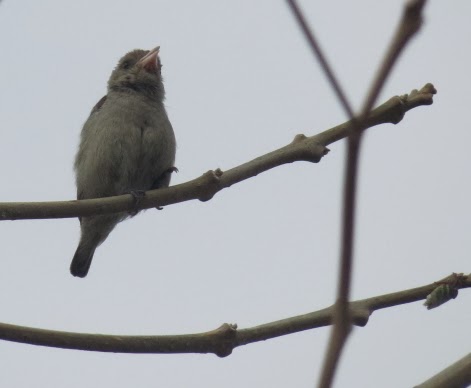
PALE-BILLED FLOWERPECKER


The pictures in this post are from April or May 2013 while we were still staying in Devarachikanahlli, off Bannerghatta Road. It was a Saturday morning and I was up early in the morning to the nullah to click some birdies. After getting some nice shots and spending about two hours there, I was walking back home when I spotted two little avians on a leafless tree along the edge of a public garden. I knew that this was a chance to add another feather to my cap (See, I am showing off). I instantly ran into the garden, took up position at vantage point from where I got some decent pictures of the pair. Of course, my biggest blunder was that I did not take a single picture of the pair, preferring to concentrate on individuals. Those were early days and I was smitten by the 50X Optical Zoom of my Canon SX50HS and to be frank, the fascination still continues. Anyway, as they say there is always a next time. Last week as I was arranging the pictures in my hard disk, I came across these and on googling, I realized these were Pale-billed Flowerpeckers. I am not fully sure about the identification and please feel free to correct me.


Also known as the Tickell's Flowerpecker, this passerine bird is a resident breeder of the South India, Bangladesh, Sri Lanka and parts of Himalayas and South-East Asia. Belonging to the family Dicaeidae, the species was first described by the great British ornithologist Lotham in 1790 and is known as D. erythrorhynchos in Latin. About 8 cm in size, you can recognize this bird by its curved pinkish beak. Considering its petite size, one generally needs to rely on the rapid, sharp chirping sounds that they make in quick succession to spot them (Link). Its colors are rather dull, ranging from brown to olive green. Since its range overlaps with the Thick-billed Flowerpecker and the Niligiri Flowerpecker, there can be some confusion in identifying them. The best thing to do in this case is to observe the colors. Meanwhile, their diet generally consists of small fruits and of course, nectar from flowers. The breeding season lasts from February to June, just around the time I spotted them, reinforcing my belief that the birds I saw that was a were an 'item'. The female lays 2 to 3 eggs in a pendant-purse shaped nest. 


No reference to these little beauties is complete with mentioning their astonishing relationship with epiphytic plants species like Loranthus and Viscum. The Flowerpeckers eat the berries of these plants, sucking the pulp. As they try to get rid of the seeds that have a sticky coat around them, the seeds end up on the branch of the host plant where it will germinate over the course of time. Besides, they are also important in the pollination of the flowers of the hemiparasitic Dendrophthoe falcata, commonly known as Banda Patha in Hindi. When these and several other avians species come to its dark pink flowers to get nectar, it explosively sprays pollens on the bird's plumage which helps in spreading them over distances.

February 18, 2014

SUB-LIME


LIME BUTTERFLY - PAPILO DEMOLEUS


Named after its penchant for citrus plants, the Lime Butterfly is a member of the swallow tail family. It is ironically though that it lacks a prominent tail. The wings measuring about 8 to 10 cm in size consist of irregular spots on a predominantly black background when from the upperside. The red tornal spot with blue edging is difficult to miss. However, it is the underside that I find particularly attractive as seen from the snaps. The pattern is like a maze of white and black with orange spots that have a distinct blue edge, visible only when you have a closer look. The tornal spot only adds to the beauty. It is a resident of the Arabian peninsula, the Indian sub-continent, China, Japan, parts of South East Asia, Australia and some Pacific islands. Owing to its excellent adaptability and high rate of reproduction, it is spreading into several islands in the Caribbean Sea. There are four other species of lime butterflies, three of which are endemic to Madagascar whereas the fourth is found in Sub-Saharan Africa. An interesting feature about the species is that its mode of flight differs as the day progresses. In the mornings, it will fly leisurely whereas the flight is straight and low in the later part of the day. When the weather is hot, it prefers resting on damp surfaces from where it derives moisture.


SOURCES

(1) Wikipedia: Papilo Demoleus (Link)

February 08, 2014

WHY THE THIRD FRONT IS A FAILURE?


FIVE REASONS WHY THE FEDERAL FRONT WILL NOT BE A SUCCESS


With seven regional parties joining hands with the Left Front earlier this week, it seems like the much hyped 'Third Front', a term which gains momentum months prior to General Elections and then fizzles out, is on the cards. The eleven constituents who have around 90 MPs in the Lok Sabha have formed a united block and have planned to oppose any bill brought in by the government since it could electorally benefit the Congress. In the coming days, it is expected that the leaders of the Front which at present includes the Janata Dal (United), the Samajawadi Party, the Biju Janata Dal, the Janata Dal (Secular), the Jharkhand Vikas Morcha (Prajatantrik), the All India Anna Daravida Munnetra Kazhagam and the Asom Gana Parishad, apart from the four parties of the Left Block will hold talks to finalize the seat sharing arrangements. A non-BJP, non-Congress government at the Centre has been the ultimate dream of the federalists. However, the big question is whether it is a viable option. The increase in the vote share of the regional outfits and the emergence of strong state satraps has made them extremely important in national politics. Meanwhile, the anti-incumbency is hurting the Congress whereas the polarization of votes could affect the BJP's prospects after it named Narendra Modi as its PM nominee. As such, some believe that 2014 could see witness a Federal Front heading the regime in New Delhi. In fact, in a bid to prevent the NDA from coming to power, the UPA may offer such an alliance consisting of regional players outside support. However, I believe that the Third Front is bound to fail. Firstly, it will need at least 120 plus seats to be a force to reckon with and considering the present situation of its constituents, it seems to be an uphill task. In fact even if it gets 120 seats and forms a minority government with the outside support of the Congress, it is unlikely to last over two years. And here are the five reasons why I think so...

(1) Present Situation: As I have mentioned earlier, the Third Front has to get over 120 seats to even dream of forming the next government. However, in the present situation, it is expected that most of the regional parties who met this week are going to drop seats. Nitish Kumar, the most vocal leader of the new formation has to battle anti-incumbency, a resurgent BJP and the Congress-RJD-LJP alliance this time around. Having walked out of the NDA over the leadership issue, the JD(U) is likely to end with a tally of 10-15 seats only. In neighboring Uttar Pradesh, the Muslims who have been a prominent vote bank of the Samajwadi Party may desert it following the inability of the Akhilesh government to prevent the Muzaffarnagar riots. Meanwhile, the BJP and the BSP are likely to spoil the prospects of Mulayum Singh Yadav in the upcoming polls. The Left Front could be heading towards its worst showing in many years. Having stormed the Left bastion of Bengal in 2011, Mamata Bannerjee is all set to take the lion's share of seats in the eastern state. In Kerala too, the LDF is said to be extremely weak. Down south, the Gowdas have never been able to increase their clout outside the Mandya region of Karnataka. Besides the father son duo of Deve Gowda and Kumarswamy, they do not have any strong leaders who can win them seats. The AGP and the JVM (P) can at max, win 10 and 3 seats in Assam and Jharkhand respectively. On the contrary, Jayalalithaa's AIADMK and Naven Patnaik's BJD are expected to put on a good show. Considering the above arguments, I think the Third Front will finish with a combined tally of 80 - 110 seats, falling short of the 120 mark. On the other hand, if the NDA or the UPA manage to cross the 200 mark on their own, some parties in the confederation may not be averse to joining either of them. Amma is known to be close to Modi whereas Patnaik and AGP were a part of the BJP led alliance earlier. Similarly, the SP and the JD(S) have bailed out the INC many times in the past in the Parliament.

(2) The ideology: To get votes, the Third Front will have to project an ideology to the people. This is exactly what the coalition lacks as of now. The only reason for these parties who come from diverse backgrounds, who cater to different vote banks and who have varied 'founding principles' to come together has been to the aim of forming a non-BJP, non-Congress regime in New Delhi. In fact, this has been the stand of many regional players since decades. Earlier, with many of these fighting the INC in their back ground, anti-Congressism was the glue that kept them together. Over the years, with the 'Secularism' debate dominating the political scene, there has been a slight change here with anti-BJP sentiments taking over, especially after the nomination of Modi as NDA's Prime Ministerial candidate. However, the point to note here is whether the masses will vote for the regional players only to keep the mainstream national parties at bay? Also, the Federal alliance has never spoken about its 'united' vision for the country, the economic policies that it plans to implement once in power and its views on the nation's foreign affairs, social issue and key reforms are unclear. Besides, another challenge for them is whether the individual parties will ever rise above regional lines. One important thing is that each of the member of this alliance has a vote bank to protect. With every outfit trying to safeguard its own political interests will the Front be ever able to deliver on vital issues. My answer to this question is a No. Probably, the biggest problem will come while presenting the annual budget as every leader will want to get the maximum funds for his or her state.

(3) An incomplete front: Another head ache for the federal alliance is that in several key states, it has virtually no presence. Of course, in the coming days I expect several smaller parties like the People's Party of Punjab, either the National Conference or People's Democratic Party in Jammu & Kashmir and some other outfits in the North-East to join this confederation. Still, this does not solve the issue. In Rajasthan, Madhya Pradesh, Gujarat, Chhattisgarh, Delhi, Himachal and Uttarkhand, the coalition has no leader who can win them seats. In Andhra, where there are as many as three regional parties, namely the YSR Congress, the Telugu Desum Party and the Telangana Rashtra Samithi, none of these have indicated their willingness to join hands with federal front. Same is the situation in Maharashtra. Though the ties between the NCP and the Congress have been strained, they continue to share power. On the other hand, the BJP has already brought together several parties in its Mahayuti. Another issue facing the new front is that most of these regional players, except for Naveen Patnaik has a strong traditional regional rival and getting them on board is an impossible task. With Mulayum in the group, there is no way that Mayawati is going to give her support to the coalition; DMK and the AIADMK do not see eye to eye; Nitish will never allow bete noire Lalu Yadav to be a member of the alliance where Mamata's TMC can never work with the Left parties. With Didi and Behenji out of the equation, there is no way that the Third Front will get the numbers to form the next government.

(4) Leadership: Lets suppose that the Third Front is all set to form the government, either on its own or with outside support of the Congress. The question staring at the alliance will be who will head the government? All this while, the Third Front members have tried to evade this issue by claiming that the decision on who will be their PM choice will be taken after the polls. However, with nearly half a dozen leaders harboring ambitions for the top job, selecting one person will be extremely difficult. In a party meeting, the AIADMK cadre have proposed Jayalalithaa's name for the post. Knowing how things function in the Dravidian parties, it is for sure that this announcement too has the matriarch's blessings. It is a well known fact that Mulayum Singh Yadav too wants to become the Prime Minister. In fact, when he asked his son Akhilesh to become the CM of Uttar Pradesh after the SP dislodged the BSP from power, it was being speculated that he was planning to move to the national scene. Bihar CM Nitish Kumar too is seen as a probable PM candidate. While he had denied any such ambitions in the past, his repeated calls for the formation of the Third Front and his excessive campaigning in the last few months tell a different story. Nitish's party colleague Sharad Yadav is the dark horse. His experience as the convener of the NDA may come in handy while keeping the different allies happy. And how can one forget the humble farmer H D Deve Gowda. A former PM, he like Sharad Yadav too can be a please-all candidate. However, what goes against him is that the JD(S) may fail to win over 5 seats. Probably, the best amongst the pack, at least in my opinion is Orissa CM Naveen Patnaik. Having governed his state fairly well for three consecutive terms, he has the experience to handle the PM's post.

(5) Bitter experiences of the past: They say 'History repeats itself'. The four federal governments that were formed in the 1990s are testimony to the fact that such an experiment can never be sustainable and will only result in political instability. In 1989, Vishwananth Pratap Singh led the first such government at the Centre which barely lasted for an year. The reason for the fall of this regime was that Chandra Shekar led faction broke away, a clear indication that such formations never work. Chandra Shekar who succeeded Singh fared even badly, staying in power only for 223 days after the Congress withdrew its support, accusing him of spying on their leader Rajiv Gandhi. The third experiment of a regional alliance was in 1996 when Deve Gowda headed the United Front government. Prior to the government formation, there were several uneasy meetings to decide the new PM. It is widely believed that Lalu Yadav prevented Mulayum from being the PM to make sure that he does not emerge as the biggest Yadav leader in the country. Less than an year later, his regime fell and I K Gujral occupied the highest executive post in the country. There is one important event that took place while Gujral was at the helm of affairs which is worth reading. It is relevant because such situations may arise in case of a Third Front government comes to power in 2014. As PM, Gujral tried his best to shield Lalu Yadav as the CBI was investigating the multi-crore Fodder scam. You see the regional parties have a narrow minded approach. They fail to see what is good for the country as a whole, rather focusing on their states. Such an approach is not ideal for leading a nation as diverse as ours. Though I firmly believe that smaller outfits are one of the greatest features of our democracy, I think that giving the reins of the Central government to them is like allowing a 15 year old drive a car. While the teenager may do a decent job, there are high chances that he may crash his vehicle. At the same time I do not say that the two national parties or rather the coalitions that they are heading - the UPA and the NDA are the best choice. However if I have to choose amongst the three 'Devils', I will definitely chose them any day over the Third Front.

CHANGE OF GUARD


WILL REPLACING BAHUGUNA HELP THE CONGRESS

Harish Rawat (Courtesy: Sahara Samay)
With the elections coming closer, the Congress seems to be cornered on all fronts. The myriad corruption scandals, high inflation rates and economic slump have led to a strong anti-incumbency wave across the country. On the other hand, the BJP which had been a divided house for nearly a decade has found a new rallying point - its PM nominee Narendra Modi who has captivated the minds of the cadre. The INC tried to counter the Gujarat CM's growing influence by raising the issue of 'Secularism'. However, as opinion polls have predicted, the saffron leader's development agenda is a big hit amongst the masses while Congress' arguments are finding no takers. At the same time, the willingness of several non-NDA parties to work with the Hindutva leader was another big jolt to the UPA leadership, clearly indicating that many regional players are ready to join the BJP-led alliance provided it crosses the 200 mark. Aware of Modi's growing popularity and in a bid to divert attention from the failures of the UPA at the Centre, the party changed its strategy, deciding to focus on local issues at the state level. This too was a failure with the BJP and the AAP sweeping the recently concluded elections in the four states. Finally, the Congress took the big gamble as Rahul Gandhi gave a rare interview to Times Now Editor-in-chief Arnab Goswami. At the end of the 75 minute show, the younger Gandhi who could neither give convincing answers to any question thrown at him nor could put across his vision for the country was the laughing stock of the nation. At a time when they should convince people to vote for them, the party leaders are seen defending the royal scion in the last few days. Meanwhile the INC has not yet given up hope of a third consecutive term. The sacking of the Uttarakhand CM Vijay Bahuguna just a few months before the Lok Sabha polls is seen as a move to boost its chances in the state which it had swept in 2009. 

This is not the first time that a ripple effect of the General Elections has been felt in the capital Dehradun. In 2009 Lok Sabha polls, following the INC's white wash of the BJP, the incumbent CM B C Khanduri was asked to step down and replaced by his own aide Ramesh Pokhriyal. This move turned out to be a disaster; his alleged role in several scams became a cause of embarrassment to the party which was already facing the heat down south in Karnataka. Aware that Pokhriyal could dampen the party prospects in the 2012 state polls, Khanduri was brought back and placed at the helm of affairs. What should have been a cakewalk for the Congress turned out to be one of the closest electoral battles in the last few years thanks to factionalism within its ranks. Winning one seat more than the saffron outfit, the INC formed the government with support from the Bahujan Samajwadi Party (BSP), the Uttarakhand Kranti Dal (UKD) and some independents. In what was seen as a counter to curb the growing influence of regional satraps like Harik Singh Rawat, Harish Rawat and Yaspal Arya to name a few, the party high command asked the dark horse - Tehri MP Vijay Bahuguna to occupy the top post. The first big jolt to the new CM came just few months down the line when his son Saket, a business man lost his dad's seat of Tehri to BJP's Mala Rajlakshmi Shah by over 22,000 votes. One of the prime reasons for the defeat was that several of the high profile state leaders refused to campaign for the CM's son. The big blow however, came in June 2013 when flash floods in and around the holy city of Kedarnath claimed over 5000 lives. Life and property worth crores was destroyed and tourism, one of the state's premiere sources of income took a major hit. In the following months, the callousness of the state administration to carry out the rescue operations and shoddy rehabilitation efforts further added to the strong anti-incumbency wave against the Central government, here in the hill state. As such, the Congress had no option but to sack Bahuguna. MP Harish Rawat, who enjoys the support of the majority members in the state legislature was made the CM.

       CONSTITUENCY           1996       1998       1999       2004       2009   
Almora BJP BJP BJP BJP INC
Garhwal  AIIC (T)  BJP BJP BJP INC
Hardwar BJP BJP BJP SP INC
Nainital AIIC (T) BJP INC INC INC
Tehri-Garhwal BJP BJP BJP BJP INC


(1) Until 2004 Lok Sabha polls, the five constituencies in Uttarkhand were a part of Uttar Pradesh.
(2) AIIC (T): All India Indira Congress (Tiwari) was a splinter group of the Congress formed by N D Tiwari,  Arjun Singh and Natwar Singh which later merged with the INC.

The decision for a regime change in Dehradun should not surprise anybody. All opinion polls suggest that the UPA is struggling across the country. At the same time, Bahuguna administration's inefficient way of handling the relief work had become a major poll issue in the state which the BJP was trying to use for its own advantage. The Congress is hoping that the change of guard will cut down the anti-INC sentiments to some extent. A look at the above chart, showing which party won the five constituencies in the state over last five General Elections throws a surprising picture. Four out of the five times, Uttarkhand has chosen a clear winner. In other terms, it is a winner-takes-all state, like Tamil Nadu. In 1996, there was a close contest between the BJP and the N D Tiwari led AIIC(T). In the next two elections though, saffron wave swept the state as Congress struggled, managing to win just one seat in 1999. In 2004, the SP won Hardwar bringing the BJP's tally down by one whereas the INC held on to Nainital. The last election saw the Congress humiliating the BJP 5-0 in spite of the BJP lead coalition government in the state. The Congress' excellent show here was one of the biggest reasons for it to cross the 200 mark on its own. Five years down the line, with a strong anti-INC wave at the Centre and people's discontent with the state administration, the BJP is trying to capitalize on the situation and repeat its showing in 1998. The nomination of the Harish Rawat as the Chief Minister is an attempt by the Congress to bolster its prospects in the state. Will it work? Lets wait and watch.


IMAGES

(1) Harish Rawat (Courtesy: Sahara Samay)
Original: Sahara Samay - 1200 crores for disaster relief operations (Link)

February 02, 2014

LALBAGH DIARIES: JAN 2014 - VI


RED RINGED PARAKEET


I was almost done with bird photography when I came across a pair of Red Ringed Parakeets perched on a nearby tree. Although the ground was sloping, thanks to my woodland shoes, I was able to get some brilliant snaps of the duo. As mentioned in an earlier post, I am extremely happy with the photos that I clicked here. I guess the best part of bird photography, of course apart from the avians is the fact that it is unpredictable. Just when you think it is done, you may get an amazing moment to capture.


Links to all posts in the series:
(1) Lalbagh Diaries: Jan 2014 - I (Link)
(1) Lalbagh Diaries: Jan 2014 - II (Link)
(1) Lalbagh Diaries: Jan 2014 - III(Link)
(1) Lalbagh Diaries: Jan 2014 - IV (Link)
(1) Lalbagh Diaries: Jan 2014 - V (Link)
(1) Lalbagh Diaries: Jan 2014 - VI (Link)

LALBAGH DIARIES: JAN 2014 - V


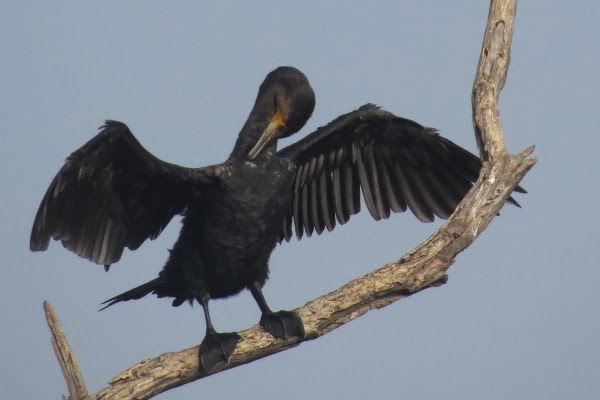
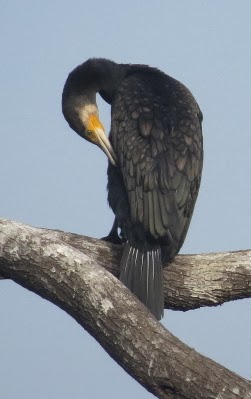
THE INDIAN CORMORANT


If there was one bird which I was happy to shoot at Lalbagh, it was the Indian Cormorant. Slightly larger than its cousin the Little Cormorant, this bird is pretty much similar to other cormorants. Distinguishing the two species can be difficult. One good link in this regard is this (Link).


I would like to share one story here. As I was busy clicking the Cormorants, a visitor who was jogging with his friends made the following comment, probably aimed at me: "When you come to Lalbagh on Sunday mornings, even crows look exotic". I do not have any problem with the jibe at me. But I have a different take on it. Isn't it sad that even the educated class in a city like Bangalore are so ignorant about our feathered friends. I mean, the Indian Cormorants are some of the most common birds in the country and yet people have no idea about them. This says a thing or two about our education system, the level of awareness we have about environment and more importantly, about ourselves too.

Links to all posts in the series:
(1) Lalbagh Diaries: Jan 2014 - I (Link)
(1) Lalbagh Diaries: Jan 2014 - II (Link)
(1) Lalbagh Diaries: Jan 2014 - III(Link)
(1) Lalbagh Diaries: Jan 2014 - IV (Link)
(1) Lalbagh Diaries: Jan 2014 - V (Link)
(1) Lalbagh Diaries: Jan 2014 - VI (Link)

LALBAGH DIARIES: JAN 2014 - IV


THE GREY HERON


I found this Grey heron at the western end of the Lalbagh Lake. Amongst the avians that had gathered here on that morning, this one was the second, behind the majestic Pelican. Grey Herons are very common in Begur; however, you can easily spot them in Agara, Madivala and here in Lalbagh too. Mature adults have a grey plumage whereas the neck is white, besides the black mark on its head which extends in the form of black spots along the neck. I wonder where Nature get these colors from. Like all herons, they patiently wait in water, stalking prey and then catching it with a strike in lightning speed.


Grey Heron

Grey Heron with Indian Cormorant


Links to all posts in the series:
(1) Lalbagh Diaries: Jan 2014 - I (Link)
(1) Lalbagh Diaries: Jan 2014 - II (Link)
(1) Lalbagh Diaries: Jan 2014 - III(Link)
(1) Lalbagh Diaries: Jan 2014 - IV (Link)
(1) Lalbagh Diaries: Jan 2014 - V (Link)
(1) Lalbagh Diaries: Jan 2014 - VI (Link)

LALBAGH DIARIES: JAN 2014 - III


LITTLE CORMORANT & INDIAN DARTER


After shooting the avians in the Lotus Pond (Link), I headed towards the Lalbagh lake. I was a tad disappointed as the raft of ducks that are a big hit with the visitors were not to be seen. On a closer inspection, I found that they had gathered in the vegetation at the centre of the lake, far away from view. Nonetheless, the other feathered creatures like the Cormorants were present in sizable numbers.


Little Cormorant

The Little Cormorant is a pocket sized power house. If you observe them for long, you will you will notice that these guys just do two things during most of the day. Fist, they will dive into the water, remaining submerged for short intervals in which they hunt for small fish. Once a fish is caught, they come out of water and swallow it. This is repeated about five times. Next, they will fly to a nearby branch, spread their wings and remain motionless. This is the best time to get good snaps. Watching them is a visual treat.

Indian Darter

Belonging to the family Suliformidae, the Indian Darter or the Oriental Darter is commonly known as the Snake Bird because of the peculiar shape of its long and slender neck. A resident of the South and South East Asia, it is a Near Threatened species. As such, I was very excited at getting a chance to see them. There was just one darter on that morning, elegantly perched on the leafless branch, watching the still waters for prey.

Spot Billed Pelican
The Spot Billed Pelican is one of the iconic birds of the city. A Near Threatened species, there was just one pelican in the lake. Generally, one can see them congregate in large numbers, sometimes in association with painted Storks too. Far away from other avians, it was fishing with its huge, characteristic beak.

Links to all posts in the series:
(1) Lalbagh Diaries: Jan 2014 - I (Link)
(1) Lalbagh Diaries: Jan 2014 - II (Link)
(1) Lalbagh Diaries: Jan 2014 - III(Link)
(1) Lalbagh Diaries: Jan 2014 - IV (Link)
(1) Lalbagh Diaries: Jan 2014 - V (Link)
(1) Lalbagh Diaries: Jan 2014 - VI (Link)

February 01, 2014

LALBAGH DIARIES: JAN 2014 - II


THE BIRDS AT THE LOTUS PONDS


Indian Pond Heron
A native of the Indian Subcontinent, South and South-East Asia, the Indian Pond Heron is one of the most common birds of the country. From the beaches of Goa to the lakes of Bengaluru to nearby nullahs, you can find them in places with proximity to water. In fact they are generally found in association with egrets. They are generally camera shy. However, this one was pretty brave. It looked like it was enjoying ll the attention it was getting from the several birding enthusiasts who were there.

White Breasted Waterhen

While the Pond Heron was posing for the shutterbugs, the White Breasted Waterhen was in some sort of hurry. It made me dance all around and yet I could not get a decent shot. Like the herons, they are residents of Southern and South-eastern Asia. It can be identified from the white marks on the face, neck and breast. As compared to other members of the Rallidae family, they are dull in color and are relatively less abundant in the city.

Purple Moorhen

Unlike their cousins, the Purple Moorhen have been gifted with brilliant colors - bluish purple coat and red beak making them irresistible to the eyes. In fact, the best places to spot them in the city are the lakes of Agara and Madivala (BTM). This is because here vast stretches of water is covered with vegetation which is ideal habitat for them. On the contrary, the waters in the Lalbagh lake are free from all kinds of vegetation. Its range stretches over most of the Old World extending up to Australia. This individual in Lalbagh had several hatchlings; the young ones are black in color.

Common Moorhen
A resident breeder of vast regions of Asia, Africa and Europe, the Common Moorhen is not as common as its purple cousin, at least in the city. It is easily recognizable from its frontal red shield. Out of the five sub species, the one found in the mainland is known as the Eurasian Common Moorhen.

Links to all posts in the series:
(1) Lalbagh Diaries: Jan 2014 - I (Link)
(1) Lalbagh Diaries: Jan 2014 - II (Link)
(1) Lalbagh Diaries: Jan 2014 - III(Link)
(1) Lalbagh Diaries: Jan 2014 - IV (Link)
(1) Lalbagh Diaries: Jan 2014 - V (Link)
(1) Lalbagh Diaries: Jan 2014 - VI (Link)