September 28, 2014

ANALYZING THE BY-ELECTIONS

FOUR LESSONS THAT THE BY-POLLS TEACH US


Wow! Who could have predicted this? Less than four months after that landslide victory in favor of the BJP, not many of us would have thought that the results of the by-polls could be so different. As if the 3-0 rout at the hands of the Congress in Uttarakhand was not enough, the defeat in Bihar and the decimation in Uttar Pradesh have put a question mark over the perception that the BJP would make inroads into hitherto unknown lands, riding on Modi Mania. At the same time, the regional players, most of which were obliterated in the General Elections put up a good show, laying to rest 'fears' that the country was heading towards a two-party rule. Besides, the Congress too showed signs of improvement; the 120 odd year old party does have a future in our democracy. Analyzing the results from 14 states that have seen snap polls, here the four key takeaways from the August-September 2014 by-polls.

May 2014 was a victory for Modi, not for the BJP: I remember this one episode during the 2014 Lok Sabha polls when former BJP president Rajnath Singh had to change one of his tweets from 'Abki bar BJP Sarkar' to 'Abki bar Modi Sarkar'. Psephologists and political observers have for months debated whether the magical numbers that the saffron camp got in the General Elections was an endorsement of Modi or a vote for his party or a combination of both. I believe that the by-polls has settled this debate. Nothing else can explain why the BJP fared so badly in the by-elections in spite of that superlative performance it registered less than 150 days ago. There is no doubt that even without Modi the NDA would finish as the largest alliance after the big polls; however, there was no way that it could cross the 200 mark, forget 342. Modi's excellent oratory skills, his charisma an his portrayal as a 'pro-development' leader helped his party move from the Opposition benches to the Treasury benches in the Parliament. Thus the saffron camp was right in breaking ties with Nitish and suppressing the anti-Moi camp lead by Advani.

The Satraps strike back: For all those who wrote the obituaries of the likes of Mulayum, Mayawati, Lalu Prasad and Nitish Kumar in the aftermath of the May elections, the results of the by-polls have proved the satraps still have a future in the politics of the country, so what if it is not as bright as it was some time back. Bihar witnessed political churning with Lalu's RJD joining hands with Nitish Kumar's JD(U) and the INC to take on the NDA. The Mega-alliance helped the Manjhi government to survive the test on the floor of the state assembly and then went on to beat the NDA 6-4 in the ten constituencies where elections were held in August this year. In neighboring Uttar Pradesh, the ruling Samajwadi Party performed out of its skin to wrests as many as eight seats from the saffron camp. This in spite of the fact that the BJP tried to cash in on communal tensions that have gripped the western parts of UP over the last year.

The revival of the Congress: After being reduced to mere 44 seats in May which saw many of its stalwarts biting the dust, the results of the by-polls have enthused a bit of life in the grand old party which many believe was in its last leg. The rot in the organizational structure is still there and its present leadership is insipid. But a string of rather unexpected victories over its arch rival is what the doctor prescribed the INC ahead of the state polls scheduled later this year. In the hill state of Uttarakhand where in the incumbent regime was looking shaky after the defection of Satpal Maharaj to the BJP ahead of the May elections, the party won swept won all the three seats. In Rajasthan where it was literally bulldozed by the saffronists, first in 2013 and May 2014, the INC bagged three out of the four seats. Similarly, in Karnataka, Gujarat and MP, it managed to bag constituencies held by the BJP. The Congress needs to make sure that the momentum is taken forward; At the same time, it is important to address issues that are plaguing the party and address them at the earliest.

The fight for the states is heating up: After that stupendous win, there were many who felt that the BJP, riding high on its success, would sweep the four states that will see polls being conducted in the near future. In fact, in all these states, the saffron outfit put up an impressive show - the NDA won 42 of the 48 seats in Maharashtra; seven of its 10 candidates were elected in Haryana; it created history and swept Jammu while painting the national capital in orange. As such, it was expected that the party would not find it difficult to win all of these states. However, the results of the by-polls has put the BJP on the back foot and has shaken the confidence of its supporters. The break-up of the 25 year old BJP-Shiv Sena alliance has made matters worse in the western state. In Haryana too, the Bishnoi led HJC has pulled the plug on its coalition with the BJP. In Delhi, the AAP's string operation has 'exposed' the party's back door efforts to bag power. Besides, in Jammu Kashmir, the PDP seems to be edging the saffron outfit.

For more on the August-September 2014 By-polls, click here (Link)

NAVRATRI 2014

DUSSEHRA CELEBRATIONS AT DEVAMBASTI


This year, September 26 marks the beginning of the 10 day Hindu festival of Dussehra. Legend has it that Goddess Durga fought the demon Mahisasura for 9 nights before slaying him on the tenth day. Though I have not spoken about it on this blog earlier, we have a temple dedicated to the Goddess in our native place of Murudeshwar where the daily pooja is done by my paternal grand father Dada. The temple is known as Devambasti or the 'House of Deviamma'. We have been worshiping the two principal deities - Durga Mahasati and Deviamma for over several generations. Anyway, I will write more about the temple and its history in the coming months. Being a Devi temple, Navratri is a big occasion for us and most of my relatives come to the temple to take the blessings of the Goddesses, especially on the tenth day when festivities are at its peak. Unfortunately, we cannot go there this year as we are leaving for a family trip to Rajasthan in the coming week.

Each day during the course of the festival, Goddess Durga (the one on the top) is decorated in a different style to commemorate her numerous avataars, each with a distinct style. Dada takes great pains to see that the alankaar is done properly. In these matters he is a perfectionist and the process of decoration may take up to two to three hours. Meanwhile, Deviamma or Devamma as we generally refer to her as, is draped in a new cloth. I will try and post pictures of the alankaars over all the days.

Happy Dussehra to you all. May the Goddess bless you with all the happiness, knowledge and strength.


PS: The pictures in this post were clicked by Raghuvendra Gaitonde.

September 27, 2014

VARTHUR DIARIES: SEPT'14 - Part III

THE GEN-NEXT WEAVERS


After clicking the Munias, as I was walking towards the bus stand, noises coming from the bushes nearby caught my attention. As I went to have a closer look, what I saw was probably the best part of the entire birding trip. Wikipedia mentions that juvenile Baya Weavers are known to leave their nests and disperse to newer locations in the vicinity. What I had come across was in opinion, one such 'Baya Weaver Play School'. I found about six little Weavers there; in fact, the Gen Next was much more approachable than the adults. I was able to get some very good captures; yeah, I love some of the clicks that I have posted here. At the same time, I was careful enough not to attract the attention of predators like Crows and Eagles. After all, the young Weaver can be easy picking for these predators.


For more posts in the series VARTHUR DIARIES: SEPT'14, click here (Link)

VARTHUR DIARIES: SEPT'14 - Part II

THE SCALY-BREASTED MUNIA


After spending about 30 minutes with the weavers, I spotted this pair of Scaly-Breasted Munia as I was heading back to the bus stand. This small yet beautiful bird is native to the Sub-Continent, South-Eastern Asia and Eastern parts of Australia. It seems that Mother Nature has been extremely kind to this little bird; the color combinations and the patterns are brilliant. The head is darker brown while the feathers are much lighter. The underside has a unique pattern in the form of scales that have a black border. The pair that I saw on that day were quite comfortable sharing space with the weavers.


For more posts in the series VARTHUR DIARIES: SEPT'14, click here (Link)

VARTHUR DIARIES: SEPT'14 - Part I

MEETING THE WEAVERS


It was a Sunday morning and I decided to go to the Varthur Lake for birding. The second largest lake in the city is hardly 4 km from our new house and I was expecting to spot several avians here. I was hopeful that like Agara, BTM and Lalbaugh, there would be a jogging track across the circumference of the lake from where I could capture some nice clicks. However, I was in for a shock. After getting down at the bus stand, I kept on walking on the road that goes from Whitefield towards the Varthur Police Station, looking for the entry gate. Though much of this side of the lake was covered with water hyacinth, there was still a lot of water. Sadly though, I could not see any birds. I walked for about 20 minutes with vehicles passing by at break neck speeds and was cursing myself for having come here; I turned back and started walking towards the bus stop.

Not the one to give up so easily, especially on birding trips, I decided to try the other route. After crossing a small temple, I came across several flower and vegetable gardens. Not so surprisingly, there were several birds here. Then came the big moment; I spotted this colony of about ten Baya Weaver nests hanging from some coconut trees along the edge of the lake. It was always my dream to click these amazing creatures against the backdrop of their unique nests. While they may be said to be 'common', finding them, especially in our cities can be very difficult. I had spotted one such colony in November last year on our trip to Hampi but could not spend anytime there since we were to board our bus back to Bangalore in a few hours. Meanwhile, most of the nests in the colony were complete; many of the birds were in fact giving some finishing touches to their marvelous creations. At regular intervals, the birds would go the lake, pick up some straws and then go about weaving their homes using their tiny beaks. I took my time clicking the pictures and admiring the birds. At a short distance, there was another colony of 15 nests. In fact, the location of the trees here was such that, I could get better pictures here.

Baya Weavers are passerine birds common in the Sub-continent and South-Eastern Asia. The females are very similar to House Sparrows and distinguishing the two can be difficult. However, breeding males have a distinct yellow crown that makes them easy to identify. It is the male of the species that takes the onus of building those beautiful nests. After the nest is in, what is referred to as 'helmet stage', the males start courting the ladies. Once a female is impressed, the pair will go on completing their 'home'.


For more posts in the series VARTHUR DIARIES: SEPT'14, click here (Link)

September 21, 2014

MAHASANGRAM - Part IV

THE ISSUES THAT MATTER


Of the four states that go to the poll this year, the biggest is the western state of Maharashtra. After being in power for the last 15 years, the results of the Lok Sabha have come as a jolt to the ruling combine. Together the Congress and its ally, the NCP were literally demolished as they faced a strong opposition - the 'Mahayuti' that the saffron allies, the Shiv Sena and the BJP had stitched together. Even the presence of Raj Thackeray's MNS could not benefit the UPA like they did in 2009 when the anti-incumbency votes were split into the two fractions of the Sena. While many would have expected the NDA to sweep Maharashtra, the recent poll setbacks to the saffron outfit in Uttar Pradesh, Uttarakhand, Bihar, Karnataka, Gujarat, Rajasthan and Madhya Pradsh (Link) seems to have put a serious question before the BJP - can it replicate its superlative performance even in the state assembly polls in winter, especially in Mumbai where it has been warming the Opposition benches since ages. The Congress is trying to get over its disastrous defeat; retaining Maharashtra could signal the beginning of a long pending revival. Meanwhile, state politics is incomplete without considering the three regional parties. Unlike the heartland, the two national parties are not the main players here. Let us see what parameters will impact the outcome of the Maharashtra state assembly polls in 2014.

As they say, united we win and divided we fall. The results of the October elections could simply boil down to the fact that which coalition is able to sustain itself in spite of all the drama over the seat sharing talks. Both the Congress-NCP as well as the Sena-BJP know very well that it is in their best interest to make sure that their respective partnerships survive. However, less than a month before voting, the UPA and the NDA as we know them today, are witnessing media war over seat sharing arrangements. The saffron alliance which stretches back to 25 years is looking extremely shaking; the BJP, high on its earth-shattering performance in the General Polls has rejected the 119-178 formula brokered by Bal Thackeray and Pramod Mahajan in the early 90s. While the state BJP wants to fight on 130 seats, the Sena has refused to give anything more than 125. Besides, Uddhav Thackeray's portrayal as the alliance's CM candidate by his outfit has not been taken kindly by the BJP. On the other hand, the NCP has upped the ante; Pawar's party wants to be an equal player in the coalition. After winning twice as many parliamentary seats as the INC in May, the regional parties wants to have a relook at the earlier formula. Meanwhile, the plea seems to have fallen on deaf years as the Congress has refused to back down from its stand. With cracks developing in the two fronts, it remains to be seen if the allies can bury their differences and patch up. Failing that, it could be a five cornered contest for Maharashtra - BJP vs SS vs Congress vs NCP vs MNS. In fact, what could be more interesting is the realignment of forces; the NCP could tie up with either the BJP or even the Shiv Sena; the BJP could also join hands with the MNS and so on.

As if the tussle over the seat sharing was not enough, the Congress and the NCP are fighting anti-incumbency stretching over a period of 15 long years. The two parties came together after the saffron allies were beaten in the 1999 state polls and ever since have been in power in Mumbai. They were also a part of the Manmohan government for two consecutive terms. The results of the recently concluded Lok Sabha polls has certainly sent shock waves to the incumbent regime. The two partners could only get six seats even as the mega coalition of the BJP bagged the remaining 42. There are speculations that the results may be repeated yet again later this year. The UPA somehow managed to stay afloat in 2009 thanks to Raj Thackeray's MNS splitting the anti-establishment votes. After drawing a blank in the May elections, the MNS will find it difficult to cut into the traditional Sena votes. In the aftermath of the Lok Sabha defeat, there were calls to sack the serving CM Chauhan. However, he managed to stay afloat with the blessings of the High Command. On their part, the ruling combine is busying showcasing the development projects that were completed during its tenure including the Mumbai-Worli Sealink, the Mumbai Monorail, the Mumbai Metro and so on. However, whether the voters buy this argument or not is something that will be clear only on the voting day - October 15.

Remember the Adarsh Housing Society Scam. Yes, the same scandal wherein flats in Mumbai's posh Colaba area which were to be allocated for the widows of Kargil martyrs were grabbed by top several politicians. It was the same episode that saw the sacking of the then CM Ashok Chavan. Corruption is for sure, going to be one of the biggest issues in the upcoming state elections. In fact, three other former CMs, all belonging to the Congress seem to have been in the list of beneficiaries including Vilasrao Deshmukh, Sushilkumar Shinde and Shivajirao Patil Nilangekar. This has become a big embarrassment for the INC. On the other hand, the NCP finds itself in trouble in the multi-crore Irrigation Scam. Deputy CM Ajit Da who was the state irrigation minister for two terms is accused of siphoning off crores of rupees. Besides, his irresponsible statements like the one he made in April last year when he asked if he should urinate into dams to fill water has been panned both by the Opposition and the public.

While corruption has become synonymous with the Congress, the ghost of Babri Masjid and the Godhra riots have kept haunting the BJP for long. Add to it the Sena whose founder Balasaheb had openly asked for voted in the name of religion. 'Communalism' is one of the biggest talking points before that state polls. The force feeding of a Muslim employee in the Maharashtra Bhavan by Sena MPs during the time of Ramazan is going to be raked up by the Congress and the NCP. The ruling parties on their part have already given 5 percent reservation for the minority community apart from 16 percent reservation for Marathas. Similarly, one can also expect the two Senas to raise the 'Marathi Manoos' or the 'Sons of the Soil' argument.  Anti-northern Indian stirs and protests may become common in the coming days.

For long, there have been demands for a separate state of Vidarbha to be carved out of eastern Maharashtra. With the creation of Telangana, this clamour has only increased. In this election season, you should not be surprised if these demands only grow stronger. On this issue, even allies can have a difference of opinion. For long, the Sena has vehemently opposed any kind of division; on the other hand, the BJP has always favored smaller states. Another related topic is the future of Belgaum. Presently in northern Karnataka, there is a significant section of the population here that feels that they should be a part of the Marathi state. However, this claim has been rejected by Karnataka on repeated occasions.

Finally, let us have a look at the leaders who could hold the key as to which party or alliance does well. Sharad Pawar is perhaps, the tallest leader in the state today. However, there is little doubt that his political fortunes, like that of his party are on the decline. After the NCP was routed in most of its strongholds, it is important for the Maratha strongman and his outfit to do well in the October polls. He has taken a big gamble by ditching the Congress and it remains to be seen if it pays off. His nephew Ajit Pawar has made clear his chief ministerial ambitions in a recent interview. With Narayan Rane being appointed as the head of the party's electoral campaign, incumbent CM Prithviraj Chavan has his task cut out. While he has to make sure that the INC does well, he also has to hope that his followers win more seats than those in the Rane camp. Meanwhile, Ashok Chavan can be the dark horse in the CM's race. However, giving the top post to him could backfire on the Congress thanks to the stigma of the Adarsh Scam. In the saffron alliance, Uddhav Thackeray has a point to prove; he can put to rest all the questions over his leadership if he can lead the Sena to an impressive tally. Breaking his family tradition, the Sena pramukh has made it clear that he wants to occupy the CM's post. Finally, for the BJP, the untimely death of Gopinath Munde has jeopardized their plans. Other leaders including Nitin Gadkari lack popular support outside their respective regions.

For more posts in this series: Mahasangram (Link)

GOKARNA DIARIES: AUG'14 - Part XX

EXPLORING THE TEMPLES AND THE TOWN


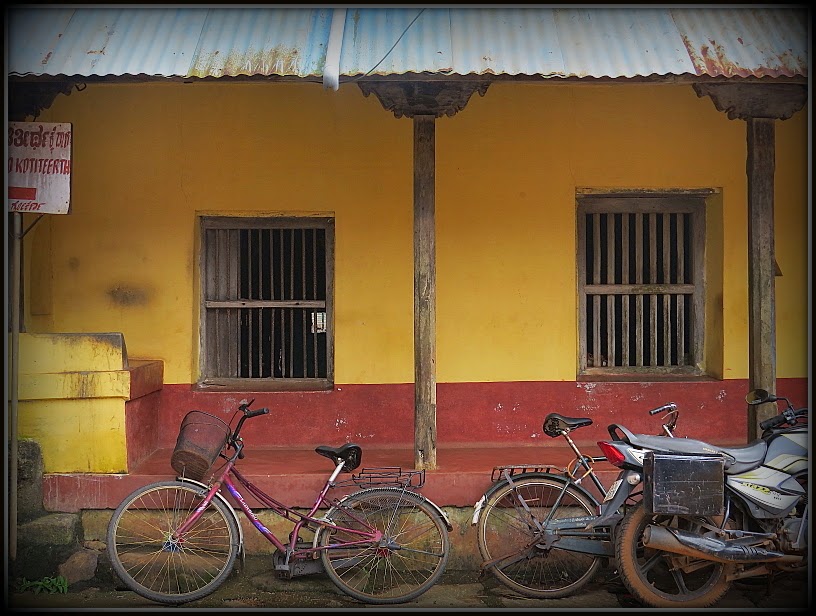
We spent the last two hours in Gokarna visiting the various places of religious importance. We began with Koti Teerth, which is a small sacred tank, about 500 metres from the main temple and is believed to have been formed by the confluence of over a crore fresh water springs. Bathing in the rectangular pond, is said to cleanse you off all the sins and is the primary reason that some rituals of the last rites are performed on its ghats. The medium sized water body is surrounded by several temples and houses with sloping roofs that are peculiar to the coastal plains. Here you can spot House Sparrows too which is such a delight. As you walk towards the Teerth from the Car street, watch out for the houses of the temple priests. While some have been rebuilt in modern style, many still retain their old world elegance and style. The simple two storied houses with verandah that have sitting platforms on either side of the small in addition to the main narrow main door are worth a watch. The closely spaced homes and the narrow streets shared by men, cows, bikes and rickshaws will definitely remind you of another holy city in the north dedicated to Lord Shankar - Benares. Moreover, we also came across this huge Baniyan tree under which are several idols of Nag Devta (Cobra God) which were stunning.


The Houses of the Priests

Our next stop were the temples of the town. Before I write about it, here is the story behind it for all those who are interested in Indian Mythology. The tale of the picturesque town is woven around the legend of Lord Shiva's most powerful manifestation - the Atma Lingam. It was believed that God Shankar's cosmic powers and infinite energy were derived from it. The Puranas mention that these powers would automatically be transferred to anyone who possessed this divine insignia. In his bid to become invincible, Ravana - the chief antagonist of the Ramayana underwent a rigorous penance lasting several years to get the Lingam as a boon. However, he was tricked by Narada Muni and ended up asking for Goddess Parvati instead. As he was returning back to his kingdom from Mount Kailasha, the half Brahmin, half demonic king was shocked to see that the lady who was accompanying him was not beautiful consort of Shiva but her ruthless and fearsome incarnation - Goddess Bhadrakali. Realizing that he had been fooled by the Gods, Ravana abandoned the Devi at modern day Gokarna and is said to have fled back to Lanka. Not the one to give up though, he returned back to the Himalayas some years late and performed yet another penance, this time with renewed vigor and complete dedication. Impressed by his unflinching devotion towards Him, Lord Shiva had no choice but to fulfill the wishes of his foremost devotee.

Aware that an unconquerable Ravana could endanger Dharma on Earth and threaten the lives of its inhabitants, the Devas came up with a 'sinister' plan to disarm him. The demonic ruler was a devout Brahmin and would never miss his evening prayers. On his way back, with the Sun setting over the Arabian, the he stopped over, again at Gokarna so that he could perform his rather elaborate ablutions. However, there was a problem; Lord Shankar had cautioned the Lankan King not to keep the Lingam on the ground under any circumstances since that would make it powerless. As such, he handed over his 'priced possession' to a cowherd who was grazing his cattle nearby, asking him to hold it till he completed his prayers. The young boy was none other than Lord Ganesh; No sooner did Ravana leave, the elephant God kept Siva's emblem on the ground and all its powers were immediately transferred back to the Lord. On returning back, Ravana was stunned. He used all his power and might to pull the Lingam off the ground. After numerous failed attempts, the enraged demon pulled out parts of the divine symbol and threw it at different places. The four remnants as well as the base of the Atma Linga, are believed to be worshiped today in five different shrines in the Uttara Kanara (Karwar) district of Karnataka, namely Sajjeshwara, Dhareshwara, Gunwanteshwara, Murdeshwara and the most important - Gokarna.


The Nag Devta (Cobra God)

The main temple here is the Mahabaleshwar Temple located on the shore which contains the remnants of the holy Linga. It is believed to have been constructed by the King Mayurasharma of the Kadamba dynasty and renovated by later rulers. Maratha King Chhatrapati Shivaji is said to have come here to pray to the Lord. The temple is big and I could not spend much time there. Close to it is the Mahaganpati Temple, which commemorates Ganesha's role in the story; the black standing idol of the Elephant God is simply stunning. The Bhadrakali Temple is located around a kilometer away. However, we could not go there. Other places that are frequented by the tourists include the Ram Teerth, the Jatayu Teerth which according to legend is the place where the great bird fell after it was killed by Ravana, the Hanuman Janmabhoomi which is supposed to be the birthplace of Lord Hanuman and the Go-Garbha - a cave on way to the Om beach which is believed to stretch all the way to Gokarna's 'twin city' of Varanasi in the north. We had seen it on the way to the Kudle Beach.

Male House Sparrow
The Madropadarcharya Mutt (Left) and the Gokarna Partagali Jevottam Mutt (Right)

Next, we went to a local hotel for snacks. We could not get either Masala Puri or Missal Bhaji, which we had eaten the day before. I and Da ate Idlis which were not tasty at all. We had one last thing on our agenda - a visit to the house where we had stayed in Gokarna during the late 80s. Dad was posted here as a clerk in Syndicate Bank immediately after his wedding and one of the houses where my parents stayed back then is located close to our hotel. To be frank, I do not have any memories of this place; we left for Haryana when I was one. Pavan Da does remember a few things. We walked all the way to the house we had rented which is hardly 5 minutes from the bank. We spent some time standing there, contemplating how things had changed over the last two and half decades. At 6:30 pm, we headed back to our room, packed our bags and hired an auto to the boarding point. We boarded our bus sometime later and reached Bangalore the following morning. All in all, it was a superb trip, something that we all will remember for a long time.

Syndicate Bank, Gokarna


For more posts in the series: GOKARNA DIARIES: AUG'14, click here (Link)

GOKARNA DIARIES: AUG'14 - Part XIX

WIRE-TAILED SWALLOW


As we were walking through the Car Street, I found this Wire-tailed Swallow (Wiki Link) perched on a wire. Though not very clear from the picture, this lovely bird has a patch of brown on its head apart form a white underside and black feathers. Found in abundance across the country, they can be easily identified by those two wire-like threads.

Wire-Tailed Swallow
Prunning...
Hirundo smithii filifera


For more posts in the series: GOKARNA DIARIES: AUG'14, click here (Link)

GOKARNA DIARIES: AUG'14 - Part XVIII

GOKARNA - WALKING THROUGH THE STREETS


It was 3 in the afternoon and the main temple opens only in the evening. However, instead of just lazing around in our hotel room, we decided to go and explore the town. This is something that Da and I love to do. Gokarna is a petite town and the Car Street as well as two other roads running perpendicular to it form most of its core.

Mired in myriad myths, soaked in countless traditions and blessed with nature's bounty, the temple town of Gokarna is indistinguishable from many such places that dot the Karavali coast. Located along the shore line in the tiny strip of land drained by the rivers Aghanashini and Gangavali on either side, it is home to the most holiest Shivaite shrine in this part of Karnataka - the Mahabaleshwar Temple. A host of other temples and mutts of several religious orders, further add to the aura of mystique and spirituality surrounding this place. These mutts are fast emerging as important centers of Vedic learning where vast knowledge of ancient Sanskrit scriptures and texts is imparted to students. A large number of devotees come here to perform the last rites of their loved ones since there is a belief that performing the Shraddh here will liberate the departed soul from the cycle of birth and rebirth. Apart from the hordes of pilgrims that come here to pay their obeisance to the Atma Linga, off late, the relatively quiet and unspoilt beaches around the town have become magnets for city dwellers as well as sizable number of foreign tourists. Well connected by road and rail, Gokarna with its unique blend of holy shrines, virgin beaches, an old world charm and friendly people is fast becoming one of the most visited tourist destinations in the state.

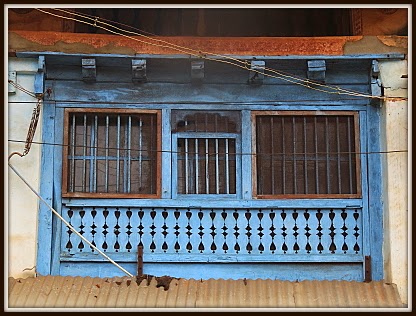
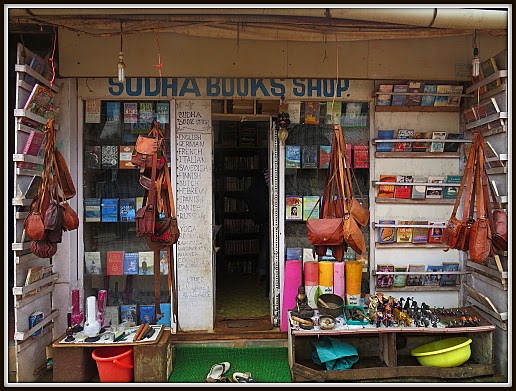
Known as the 'Kashi of the South', life in Gokarna is still centered around the Shiva shrine. The way to the temple, known as the 'Car Street' is lined by small shops selling a host of items like colorful garlands, scented incense sticks, bronze idols of numerous gods from the Hindu pantheon and so on. Keen to cater to foreign travelers, you will also find few shops selling second hand books, both travel guides and novels in several different languages including French, German and Hebrew. As you walk towards the temple, watch out for the lovely graffiti on the walls, ranging from the life-size Ganesha to the humorous Aghori Baba, a refreshing reminder that the holy town was once the favorite haunt of the hippies in India. Besides, there are several building, most of which can do with some repair that have remarkable windows and galleries made of wood.


For more posts in the series: GOKARNA DIARIES: AUG'14, click here (Link)