Showing posts with label Travel. Show all posts

November 09, 2014

RAJASTHAN DIARIES - Day 2

AJMER & PUSHKAR

Victoria Tower, Ajmer
We left for Ajmer early in the morning and took a rickshaw to the Gopalbari Railyway Station which is about 1.5 km from the Hotel Sunder Palace. We boarded the Garib Rath Express that operates between Chandigarh and Ajmer at 7:15 am and had our breakfast on the way. In spite of the fact that it was a public holiday on account of Gandhi Jayanti, there were hardly any people in the train. I spent most of the time observing the scenes form the window; the ones I remember are that of women in traditional attire walking along the lush green fields and of men in turbans resting in the shade of the trees as they cattle grazed nearby. In course of time, these would become common sights, yet their charm was not lost. The train covered a distance of about 140 km passing through Kanakpur, Asalpur Jobner, Pholeru Junction, Narana, Kishangarh and Madar. Minutes before the journey ended at about 9:30 am, we also caught a glimpse of the picturesque Taragarh fort.

Located to the west of Jaipur amidst the Aravallis, Ajmer is the fifth largest city in the state in terms of population. It is believed that the city grew around the hill fort of Ajay-Meru that was established by Chauhan chieftain Ajayraj Singh in late seventh century. From these humble origins, the fortunes of the town grew exponentially in the coming centuries with the slow rise in the political power of the Chauhans who would rule most of north-western India by the twelfth century. As such long before cities like Jaipur, Jodhpur and Kota came into existence, Ajmer was one of the most important urban centres in Rajputana. When the Chauhans supplanted the Tomaras, Ajmer along with Delhi served as the capital of their Empire. It was around this time that the great Sufi saint Khwaja Moinuddin Chisti who is today, synonymous with Ajmer settled here after a vision from the Prophet himself directed him to do so. Following the victory of the Ghurid forces over the forces of Prithviraj III Chauhan in AD 1192, this city emerged as a base for the strongest amongst the Delhi Sultans to subdue recalcitrant Rajput princes. In the mid 14th century, Ajmer became a bone of contention between the kingdoms of Marwar and Mewar. The next important chapter in Ajmer's history comes during the reign of Mughal Emperor Akbar the Great who is believed to have been a regular visitor to the dargah of Gharib Nawaz. Besides him, his two immediate successors - Jehangir and Shah Jahan are believed to have occasionally held their royal durbar here. After the disintegration of the Mughal Empire, the city was held by the Marathas who in turn sold it to the British in AD 1818. Queen Mary of England visited the town and paid her respects to its patron saint during her visit in December 1911. Thus, Ajmer is one of the few cities in the this part of the country that can boast a blend of Rajput, Muslim and British heritage, something that I believe has not been celebrated the way it should be.

We had not booked any room in Ajmer since we were to spend the evening at Pushkar. As such, we left our luggage at the cloak room in the railway station. I and Da bought four locks from a shop nearby since they do not accept any baggage without a lock. As I mentioned earlier, it was Gandhi Jayanti and PM Narendra Modi had just launched his ambitious 'Swach Bharat Abhiyaan' or 'Clean India' programme. From railway officials to school kids, everyone present there was busy cleaning the railway station. As you come out of the station, spend some time looking at the terracotta wall pieces (Link) that embellish the structure on the front side; it is definitely worth a look. The we walked towards the Magazine (Link) - a residential palace built by Emperor Akbar that serves as the ASI museum today. The next stop was Ajmer's most popular attraction - the sepulchre of Gharib Nawaz (Link). En route we had tasty Lassi by the roadside and gorged on some fresh Singhada (Water Caltrop). We left our footwear and other belongings at a shop near the entrance and bought a green chaddar (carpet) and some flowers as offerings to the revered saint. A man at the shop guided us towards the tomb at the Center of the complex. We managed to negotiate through the crowds and entered the shrine through the small opening with great difficulty.

After paying our obeisance to the Khwaja, we went to the Adhai Din ka Jhopra (Link), a temple that was converted into a mosque by Sultan Qutubuddin Aibak. Having spent about half an hour at this twelfth century masjid, we hired a taxi for Rs. 600/- from the Jhopra to the Taragarh Fort (Link) that overlooks Ajmer and offers some spectacular view of the city. On the way, we had a five minute stop over at the Anna Sagar Lake (Link) which is believed to have been constructed by Anaji Chauhan and beautified by the Mughals. For lunch, we went to Hotel Elite which is situated next to the King Edward VII Memorial and close to the Railway station. I had Shahi Paneer and Rotis whereas the rest had Vegetable Thalli. The food was cheap and very tasty too. From there we took a rickshaw to the Soneji ki Nusiyan (Link) which is a 19th century temple dedicated to the first Thirthanker Rishabnath which showcases some episodes from Jain mythology. From there we returned back the station, picked our luggage and went to Pushkar in an Omni costing Rs. 450/-.

Nearly 15 km west of Ajmer, the town of Pushkar is referred to in the Puranas as 'Teerth Raj' or the holiest of all pilgrimage centers. Hindu mythology tells us that it was here that Lord Brahma began his herculean task of creating the universe and its myriad inhabitants. In fact, it is one of the handful of places in India where the 'Creator' is worshiped. Moreover, Pushkar is also the center of the annual camel fair which is touted to be world's largest animal fair. Over the last few decades, besides pilgrims, the town has been attracting a large number of foreign tourists too.

After reaching Pushkar at 4:30 pm, we checked in to hotel Kanhaiya Haveli. Run by the Heda family, the hotel is situated close to the holy lake at the heart of the town. Similar to Hotel Sunder Palace, the hotel is huge and spacious; the verandahs and the staircase are decorated with paintings and other show pieces native to the state. Although the rooms are small and not all have proper ventilation, one needs to understand that it is a budget hotel and expectations need to be set accordingly.
After resting for some time, we headed to the Pushkar Lake to spend the evening and watch the aarti on the Varaha Ghat. We had tea at a stall near the entrance of the Raghunath Swamy Temple and then walked to the lake. Surrounded by 52 Ghats, the 22 square km large lake is 'the most happening place' in the small town. We sat at the Kali Ghat with our feet in the tank as small fishes came and nibbled on them. The view of the sun going down amongst the temples on the Ghats with birds flying by was truly stunning. After witnessing the pooja at the Varaha temple, we took a parikrama (round) around the lake. In the evening, Mom and Bhabi did some shopping in the bazaar on the way to the Brahma temple.
September 21, 2014

GOKARNA DIARIES: AUG'14 - Part XX

EXPLORING THE TEMPLES AND THE TOWN


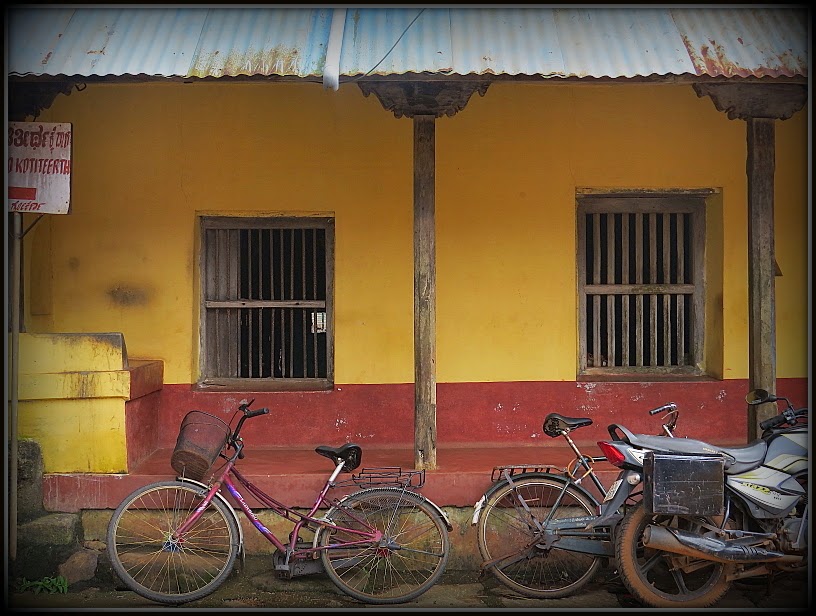
We spent the last two hours in Gokarna visiting the various places of religious importance. We began with Koti Teerth, which is a small sacred tank, about 500 metres from the main temple and is believed to have been formed by the confluence of over a crore fresh water springs. Bathing in the rectangular pond, is said to cleanse you off all the sins and is the primary reason that some rituals of the last rites are performed on its ghats. The medium sized water body is surrounded by several temples and houses with sloping roofs that are peculiar to the coastal plains. Here you can spot House Sparrows too which is such a delight. As you walk towards the Teerth from the Car street, watch out for the houses of the temple priests. While some have been rebuilt in modern style, many still retain their old world elegance and style. The simple two storied houses with verandah that have sitting platforms on either side of the small in addition to the main narrow main door are worth a watch. The closely spaced homes and the narrow streets shared by men, cows, bikes and rickshaws will definitely remind you of another holy city in the north dedicated to Lord Shankar - Benares. Moreover, we also came across this huge Baniyan tree under which are several idols of Nag Devta (Cobra God) which were stunning.


The Houses of the Priests

Our next stop were the temples of the town. Before I write about it, here is the story behind it for all those who are interested in Indian Mythology. The tale of the picturesque town is woven around the legend of Lord Shiva's most powerful manifestation - the Atma Lingam. It was believed that God Shankar's cosmic powers and infinite energy were derived from it. The Puranas mention that these powers would automatically be transferred to anyone who possessed this divine insignia. In his bid to become invincible, Ravana - the chief antagonist of the Ramayana underwent a rigorous penance lasting several years to get the Lingam as a boon. However, he was tricked by Narada Muni and ended up asking for Goddess Parvati instead. As he was returning back to his kingdom from Mount Kailasha, the half Brahmin, half demonic king was shocked to see that the lady who was accompanying him was not beautiful consort of Shiva but her ruthless and fearsome incarnation - Goddess Bhadrakali. Realizing that he had been fooled by the Gods, Ravana abandoned the Devi at modern day Gokarna and is said to have fled back to Lanka. Not the one to give up though, he returned back to the Himalayas some years late and performed yet another penance, this time with renewed vigor and complete dedication. Impressed by his unflinching devotion towards Him, Lord Shiva had no choice but to fulfill the wishes of his foremost devotee.

Aware that an unconquerable Ravana could endanger Dharma on Earth and threaten the lives of its inhabitants, the Devas came up with a 'sinister' plan to disarm him. The demonic ruler was a devout Brahmin and would never miss his evening prayers. On his way back, with the Sun setting over the Arabian, the he stopped over, again at Gokarna so that he could perform his rather elaborate ablutions. However, there was a problem; Lord Shankar had cautioned the Lankan King not to keep the Lingam on the ground under any circumstances since that would make it powerless. As such, he handed over his 'priced possession' to a cowherd who was grazing his cattle nearby, asking him to hold it till he completed his prayers. The young boy was none other than Lord Ganesh; No sooner did Ravana leave, the elephant God kept Siva's emblem on the ground and all its powers were immediately transferred back to the Lord. On returning back, Ravana was stunned. He used all his power and might to pull the Lingam off the ground. After numerous failed attempts, the enraged demon pulled out parts of the divine symbol and threw it at different places. The four remnants as well as the base of the Atma Linga, are believed to be worshiped today in five different shrines in the Uttara Kanara (Karwar) district of Karnataka, namely Sajjeshwara, Dhareshwara, Gunwanteshwara, Murdeshwara and the most important - Gokarna.


The Nag Devta (Cobra God)

The main temple here is the Mahabaleshwar Temple located on the shore which contains the remnants of the holy Linga. It is believed to have been constructed by the King Mayurasharma of the Kadamba dynasty and renovated by later rulers. Maratha King Chhatrapati Shivaji is said to have come here to pray to the Lord. The temple is big and I could not spend much time there. Close to it is the Mahaganpati Temple, which commemorates Ganesha's role in the story; the black standing idol of the Elephant God is simply stunning. The Bhadrakali Temple is located around a kilometer away. However, we could not go there. Other places that are frequented by the tourists include the Ram Teerth, the Jatayu Teerth which according to legend is the place where the great bird fell after it was killed by Ravana, the Hanuman Janmabhoomi which is supposed to be the birthplace of Lord Hanuman and the Go-Garbha - a cave on way to the Om beach which is believed to stretch all the way to Gokarna's 'twin city' of Varanasi in the north. We had seen it on the way to the Kudle Beach.

Male House Sparrow
The Madropadarcharya Mutt (Left) and the Gokarna Partagali Jevottam Mutt (Right)

Next, we went to a local hotel for snacks. We could not get either Masala Puri or Missal Bhaji, which we had eaten the day before. I and Da ate Idlis which were not tasty at all. We had one last thing on our agenda - a visit to the house where we had stayed in Gokarna during the late 80s. Dad was posted here as a clerk in Syndicate Bank immediately after his wedding and one of the houses where my parents stayed back then is located close to our hotel. To be frank, I do not have any memories of this place; we left for Haryana when I was one. Pavan Da does remember a few things. We walked all the way to the house we had rented which is hardly 5 minutes from the bank. We spent some time standing there, contemplating how things had changed over the last two and half decades. At 6:30 pm, we headed back to our room, packed our bags and hired an auto to the boarding point. We boarded our bus sometime later and reached Bangalore the following morning. All in all, it was a superb trip, something that we all will remember for a long time.

Syndicate Bank, Gokarna


For more posts in the series: GOKARNA DIARIES: AUG'14, click here (Link)

GOKARNA DIARIES: AUG'14 - Part XIX

WIRE-TAILED SWALLOW


As we were walking through the Car Street, I found this Wire-tailed Swallow (Wiki Link) perched on a wire. Though not very clear from the picture, this lovely bird has a patch of brown on its head apart form a white underside and black feathers. Found in abundance across the country, they can be easily identified by those two wire-like threads.

Wire-Tailed Swallow
Prunning...
Hirundo smithii filifera


For more posts in the series: GOKARNA DIARIES: AUG'14, click here (Link)

GOKARNA DIARIES: AUG'14 - Part XVIII

GOKARNA - WALKING THROUGH THE STREETS


It was 3 in the afternoon and the main temple opens only in the evening. However, instead of just lazing around in our hotel room, we decided to go and explore the town. This is something that Da and I love to do. Gokarna is a petite town and the Car Street as well as two other roads running perpendicular to it form most of its core.

Mired in myriad myths, soaked in countless traditions and blessed with nature's bounty, the temple town of Gokarna is indistinguishable from many such places that dot the Karavali coast. Located along the shore line in the tiny strip of land drained by the rivers Aghanashini and Gangavali on either side, it is home to the most holiest Shivaite shrine in this part of Karnataka - the Mahabaleshwar Temple. A host of other temples and mutts of several religious orders, further add to the aura of mystique and spirituality surrounding this place. These mutts are fast emerging as important centers of Vedic learning where vast knowledge of ancient Sanskrit scriptures and texts is imparted to students. A large number of devotees come here to perform the last rites of their loved ones since there is a belief that performing the Shraddh here will liberate the departed soul from the cycle of birth and rebirth. Apart from the hordes of pilgrims that come here to pay their obeisance to the Atma Linga, off late, the relatively quiet and unspoilt beaches around the town have become magnets for city dwellers as well as sizable number of foreign tourists. Well connected by road and rail, Gokarna with its unique blend of holy shrines, virgin beaches, an old world charm and friendly people is fast becoming one of the most visited tourist destinations in the state.

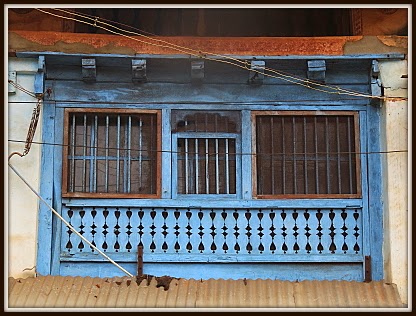
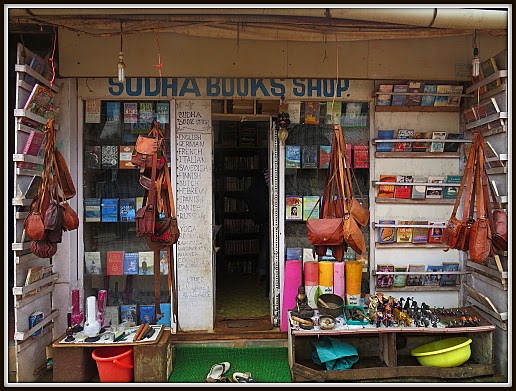
Known as the 'Kashi of the South', life in Gokarna is still centered around the Shiva shrine. The way to the temple, known as the 'Car Street' is lined by small shops selling a host of items like colorful garlands, scented incense sticks, bronze idols of numerous gods from the Hindu pantheon and so on. Keen to cater to foreign travelers, you will also find few shops selling second hand books, both travel guides and novels in several different languages including French, German and Hebrew. As you walk towards the temple, watch out for the lovely graffiti on the walls, ranging from the life-size Ganesha to the humorous Aghori Baba, a refreshing reminder that the holy town was once the favorite haunt of the hippies in India. Besides, there are several building, most of which can do with some repair that have remarkable windows and galleries made of wood.


For more posts in the series: GOKARNA DIARIES: AUG'14, click here (Link)

GOKARNA DIARIES: AUG'14 - Part XVII

SEA FOOD AT KAMAT HOTEL


One of the biggest reasons for us to zero in on Gokarna for our holiday was the fact that being a coastal town, one can expect to get a lot of fresh sea food here. After staying in Goa for a decade, we are not used to eating 'refrigerated' fish, like how we get it in Bangalore. Pappa had suggested that we have our lunch at Kamat Hotel which is on the way to the main temple. Even our auto driver recommended this place for sea food. Having left from Kudle at about 1:00 pm, we got down at Kamat Hotel to have our lunch. If I can recollect correctly, we paid the auto driver Rs. 600/- for his services.

Kamat Hotel is a small cafe located close to the Madhopadachrya Mutt. Like any other hotel in this part of the world, there are about 8 wooden benches on which food is served; at max it can accommodate about 30 people at a time. There is no A/C; do not expect to get continental food either. While the place may come across as simple, the food that they serve is 'out of the world' and that should be good enough for all sea food lovers like us. The fish thalli costing Rs. 100/- comprises of copious amount of white rice,Valli Randai (Malabar Spinach Bhaji), Sambhar, Tarlya Ambat (Sardine Curry) and one big fried Bangddo (Mackeral) with onion and lemon. That is what you call - Awesome! This place is very similar to the small cafes in Malwan region of Maharashtra which serve freshly cooked home food. Besides this, we also ordered a plate of fried Lady Fish (Nogli or Murdoshi). I was in such hurry to eat it that I even forgot to click a snap. You see, fish is one thing that can make me forget everything else. Sadly, due to the rains we could not get any prawn or crab dish.

Another reason why we loved this hotel was Ganesh Mama (that is 'uncle' in Konkani). In his mid 60s, he is the 'life' of the hotel. He goes to each table, inquiring if anybody needs anything or asking the guests about the taste.

Fish Thalli
Fish, Fish and more Fish
After our lunch, we checked into a room at the Kamat Lodge near the Gokarna Partagali Mutt. In fact, the Kamat Hotel as well as the Lodge are owned by the same guy. We had stayed here in 2004 and back then, it had just 4 rooms. Since we were to leave for Bangalore later that evening, we took a single room for Rs. 350/-. We freshened up and later left to roam around in the city and visit the famed temples.

For more posts in the series: GOKARNA DIARIES: AUG'14, click here (Link)

September 20, 2014

GOKARNA DIARIES: AUG'14 - Part XVI

THE KUDLE BEACH


Located about 3 km from the Om Beach, the Kudle Beach is Gokarna's second most popular beach. In fact, this shore is more popular with the Indian tourists. Like the Om Beach, there are some small resorts and cafes here. It is also quite accessible; the road leads to a descent which is not very steep. The beach is just hardly 5 minutes walk from the road. The pathway which is lined by vegetation and a small stream flowing through the rocks, gives the place an exotic feel.

The beach is long and narrow, much like the other beaches along the Arabian. When we reached the place, it started raining heavily. I remember coming here in 2004 when we had come to the temple town for Anna's (my paternal grandfather) last rites. On that occasion, we had visited a resort on the beach which was run by a local and his Spanish wife. This time around, the sea was rough and had encroached most of the beach. The winds were blowing at very high speeds. We spent about 15 minutes here and then left for Gokarna.

The Kudle Beach as seen from the road
The green fields, the palms, the Ghats, the beach and the sea... the Arabian coast as I know it
The Sea at Kudle
The Arabian in fury
The palms had a difficult time withstanding the winds

For more posts in the series: GOKARNA DIARIES: AUG'14, click here (Link)

GOKARNA DIARIES: AUG'14 - Part XV

THE PARADISE BEACH TRAIL


After the failed trek to Half Moon Beach, we went to the Paradise Beach. Again, one needs to go to the Belekan Beach and then walk through a trail of about 2 km before reaching the beach. Alternatively, one can reach here either by a boat ride or by a hike from Half Moon.

The drive to Belekan was beautiful; well laid roads along the hills with regular sightings of numerous birds including Kingfishers, Jungle Barblers, Mynahs, Red-wattled Lapwing and the most beautiful - Peacocks. At one point of time, we saw as many as six of them in a forest. The auto driver was kind enough to wait for us as I tried to get some quick snaps. However, the peacocks were too quick for me and disappeared into the forests.

We got down at the Belekan beach and then started on the trail which goes around a hill. We crossed a stream of fresh water which according to me was the best part of our second consecutive failed trail. We walked up the hill, going past some houses where stray dogs started barking at us. It was afternoon and walking in the heat was getting increasingly difficult. We also spotted a gang of Gray Langur sitting on a compound wall. We reached a small house on top and then took the wrong way to end exactly at the place where we had started our hike. Too tired to give a second shot, we crossed the stream and got into our auto. Next stop was the Kudle Beach - Gokarna's second most popular beach

The Belekan Beach
The entire beach was littered with organic waste
A Dragon Fly
Gray Langur or Indian Langur
More clicks at Belekan


For more posts in the series: GOKARNA DIARIES: AUG'14, click here (Link)

GOKARNA DIARIES: AUG'14 - Part XIV

THE FARMERS & THE PADDY FIELDS


Apart from fishing, another important occupation along the coast is padding farming. The fertile soil brought down by the rivers, the hot and humid climate as well as the heavy showers make Indian coast ideal to cultivate rice which is also the staple food in southern India. As I had mentioned earlier, I was spell bound by the scenes of farmers working so hard in their fields on the banks of the Agnashini River. At the same time, I was highly disappointed that I could not click any pictures of the people, the fields and the river flowing by since we were sitting in the tempo that took us from Gokarna Road to the main town. However, I got the opportunity to fulfill my wish as we were walking towards the Paradise Beach.

There were about eight people working in this paddy field opposite the Belekan Beach. The farm was a small one, about 3000 sq feet and there was a fresh water stream flowing close by which provided water. The bright green color of the crops is so refreshing, isn't it? The last picture in this photo blog was clicked from the top of the hill. The two people, a lady and a man were working on this pretty big field covered by a green carpet of paddy crop. Though we never made it to the Paradise Beach, coming so far was nevertheless rewarding thanks to these pictures.

Two ladies working on a farm opposite the Belekan Beach
Woman power
The harvested crops and the stone walls provide a nice backdrop
A couple standing in a sea of green


For more posts in the series: GOKARNA DIARIES: AUG'14, click here (Link)

GOKARNA DIARIES: AUG'14 - Part XIII

THE HALF MOON BEACH TRAIL


We had our breakfast at Namaste Cafe overlooking the beautiful Arabian. While I was busy going through the pictures that I had clicked earlier, Pavan Da was reading a travel guide - his favorite hobby off late. The Cafe has a small book shelf on the first floor lined with novels and travel guides, both in English and French. We also met the 'dude' who we had seen while having lunch on the previous day. The same fellow who was obsessed with the 'F word'. However, he seemed to be a changed man now. Without his friends and not under the influence of liquor, he was in fact sitting with a prayer bead in his hand. Wow!

Anyway, we checked out of our room at 10:30 am and headed off to the Half Moon Beach. This beach is located just next to the Om beach and is named so since the coast here is in the form of a semi-circle. This beach which is much secluded than the Om beach is gaining popularity amongst foreigners since very few tourists visit here. There are three ways to reach here from the Om Beach. One of the best options is trekking the hills that separate the two beaches. However, this is certainly not advisable during the monsoon when the hike becomes quite dangerous. Another option is hiring motor boats that operate throughout the year except during the rains. Travelling from one beach to another in a boat or taking the trail sandwiched between the Ghats and the Sea will be a wonderful experience. Since both of these choices were ruled out, we decided to take the rickshaw. There is no road directly connecting the two beaches; one needs to travel about 3 km by road and then trek through the forests to reach the Half Moon beach.

Though the forests are not dense, without road signs and people, finding directions was nearly impossible. The light showers only made the matters worse. We walked through the woods for about 45 minutes and reached a cliff overlooking the Arabian. We decided to call it quits and headed back. In case, you are planning to do this, watch out for red ants and other insects. Besides, you can also spot a large number of butterflies here. Though we could not see the beach, the picture on the net are breath taking and I hope we will go there the next time we are here.

The Sea and the Western Ghats
The Rocks stand tall against the waves

Red Millipede


For more posts in the series: GOKARNA DIARIES: AUG'14, click here (Link)

GOKARNA DIARIES: AUG'14 - Part XII

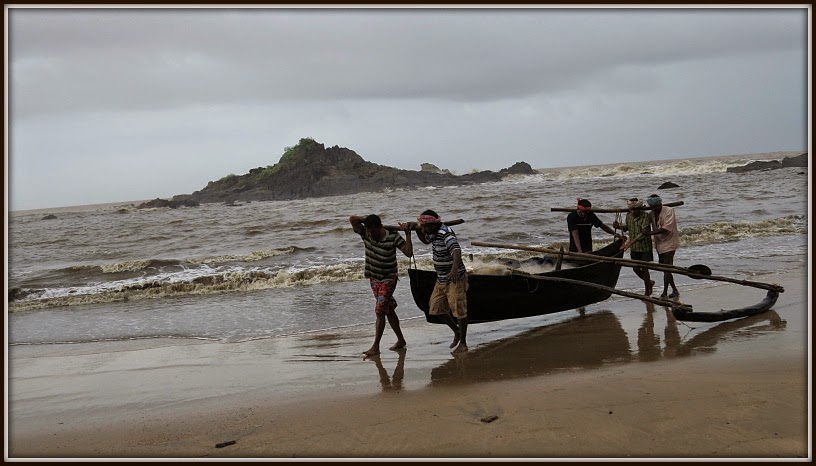
THE BOATMEN RETURN

The Beach, the Sea, the Rocks and the Fishermen... 
Unfortunately, for all the effort they put in, they could not get a good catch
Smaller boats, like this one are lifted and carried
The bigger boats are dragged using logs
The return journey
Back on the land
Perfect Perfect: The Beach, the Sea, the Rocks, the Fishermen and the Ghats


For more posts in the series: GOKARNA DIARIES: AUG'14, click here (Link)