Showing posts with label Canon SX50HS. Show all posts

May 31, 2015

BIRDS OF GOA: APRIL'15 - PART 6

INDIAN KOEL

I clicked this male Indian Koel as I was coming out of the Hanuman Temple at Housing Board, Porvorim. The fiery red eyes and the balck coat against the backdrop of the clear blue sky is pleasing. The females of this species who are notorious for laying their eggs in a crow's nest are polka dotted and are more elusive to find.

Click on the below snaps to see them in better quality.


More from the series: THE BIRDS OF GOA: APRIL'15

(1) Sparrow (Link)

(2) Jungle Babbler (Link)

(3) Purple Sunbird (Link)

(4) Brahminy Kite (Link)

(5) Black Headed Oriole (Link)

(6) Indian Koel (Link)


BIRDS OF GOA: APRIL'15 - PART 4

BRAHMINY KITE

One of the most beautiful birds of prey to be found in the Indian peninsular region, the Brahminy Kite is associated with the mythical creature Garuda, the king of the birds and the mount of Lord Vishnu in several cultures around the world. I shot this wonderful avian while it was perched on a coconut palm near my Bhabi's place at Goa Velha.

Click on the below click to enlarge them.


More from the series: THE BIRDS OF GOA: APRIL'15

(1) Sparrow (Link)

(2) Jungle Babbler (Link)

(3) Purple Sunbird (Link)

(4) Brahminy Kite (Link)

(5) Black Headed Oriole (Link)

(6) Indian Koel (Link)


For more posts on Brahminy Kites, click here (Link)

May 24, 2015

BIRDS OF GOA: APRIL'15 - PART 3

PURPLE SUNBIRD

Another lovely bird that came across while I was getting down the Chapora Fort was this Purple Sunbird. Considering that these birds seem to be always in a hurry, the time for any photographer to get their snaps is extremely limited. Luckily, I did manage to get a few good snaps.

Click on the below snaps to see them in better quality.


More from the series: THE BIRDS OF GOA: APRIL'15

(1) Sparrow (Link)

(2) Jungle Babbler (Link)

(3) Purple Sunbird (Link)

(4) Brahminy Kite (Link)

(5) Black Headed Oriole (Link)

(6) Indian Koel (Link)


BIRDS OF GOA: APRIL'15 - PART 2

JUNGLE BABBLER

Popularly known as the 'Seven Sisters', the Jungle Babblers are medium sized gregarious birds that are common to the country. Extremely noisy yet adorably cute, they can be easily found in the countryside, foraging for grains and worms.

The below pictures were clicked at the back-side of the Chapora fort i.e. the side facing the Chapora river which is in fact a heaven for bird lovers as I discovered during my last trip. I will post more pictures of the avians that I encountered here in the later posts in this series.

Click on the below snaps to see them in better quality.


More from the series: THE BIRDS OF GOA: APRIL'15

(1) Sparrow (Link)

(2) Jungle Babbler (Link)

(3) Purple Sunbird (Link)

(4) Brahminy Kite (Link)

(5) Black Headed Oriole (Link)

(6) Indian Koel (Link)


May 23, 2015

FACES OF GOA: APRIL'15 - Part 1

FLOWER VENDORS AT PANJIM BUS STAND

Religion plays an important role in the life of ordinary Goan irrespective of the faith he/she follows. As such, offerings to Gods and deities in the form of garlands is very common. One can easily spot flower vendors outside temples and churches with colorful garlands made of flowers that are grown in the vicinity.

The below pictures were taken at the small market inside the KTC Bus Stand in Panjim. The flowers that are generally sold here are brought from places like Belgaum and Bangalore and then are strung into garlands. In the interiors though, you will find garlands made up of local flowers like hibiscus and white jasmines which are far more prettier and have a local feel to it.


THE FACES OF GOA: APRIL'15

(1) The Flower Vendors of Panjim Bus Stand (Link)

(2) The Old Goa - Divar Ferry (Link)


May 17, 2015

GOA DIARIES: APRIL'15 - Part 2

THE SUNSET AT MIRAMAR

Located three kilometers from Panjim, the Miramar Beach is situated at the mouth of the Mandovi River and is the closest beach to Goa's capital city. No wonder, it is one of the most popular destination for Panjimites to head towards to spend an evening; the stalls around the place and the children's play area only add to its popularity.

On the first day of the Goa trip, I and a school friend of mine - Neeket met here to watch the spectacular sunset. We sat on the steps of the Samadhi of late Dayanand Bandokar - Goa's first CM and witnessed the Sun slowly going down the Arabian Sea through the trunks of the coconuts trees while recollecting the beautiful memories of our school and college days.


For more posts in the series: Goa Diaries - April 2015, click here (Link)

May 02, 2015

BIRDS OF GOA: APRIL'15 - PART 1

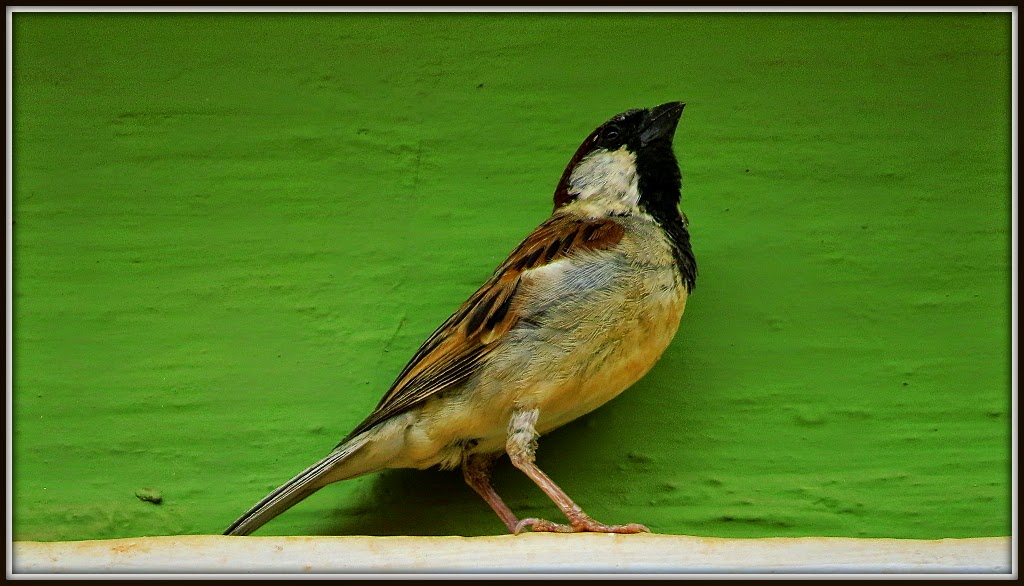
COMMON SPARROW

Bordering the Rua de Ourem, the wards of Fontainhas and Sao Tome are amongst the oldest residential areas of Panjim. The best part of these localities is that they have still retained the old world charm; a walk through the narrow by-lanes lined by bungalows painted in vivid colors here is such a pleasure.

Apart from the beautiful Indo-Portuguese villas, one of the highlights of such a walk are the numerous Sparrows that inhabit these wards; watching these passerine birds flying by, chasing each other or feeding on grains is a treat to the eyes, especially for those of who live in urban centres devoid of these beautiful birds. In fact, here, it is very easy to see these wonderful creatures engaged in their daily activities at a very close range.


More from the series: THE BIRDS OF GOA: APRIL'15

(1) Sparrow (Link)

(2) Jungle Babbler (Link)

(3) Purple Sunbird (Link)

(4) Brahminy Kite (Link)

(5) Black Headed Oriole (Link)

(6) Indian Koel (Link)


For more posts on Sparrows, click here (Link)

April 26, 2015

GOA DIARIES: APRIL'15 - Part 1

GOA VELHA

Located along the busy road connecting Goa's capital city Panjim to the commercial center of Margao, the quintessential town of Goa Velha would come across as just another Goan town for most of us. After all, a mixed Hindu-Catholic population, those large mansions with sprawling verandahs, the coconut trees along the streets and the bright white cross amidst the lush green fields are typical characters of most places in this part of the beach state and Goa Velha is no different. However, what distinguishes this place from most others is the fact that long before Old Goa and Panjim were designated as the administrative capital of the state, it served as the seat of power.

Known in the medieval times as Govapuri or Gokapattana, this once flourishing town was an important trading port along the Indian west coast with ships from the Middle East and Africa laden with spices, precious stones and other valuable merchandise docking here. Situated along the River Zuari back then, it was the capital of the South Konkan Silaharas (Link) and Goa Kadambas. The royal patronage and revenue generated by the profitable trade would have led to this being a bustling and prosperous metropolis. Unfortunately, the change in course of the river due to silting and the devastation caused by the wars between the Vijaynagar and the Bahamani Sultans for the control of Goa during the 14th and 15 centuries led to its ultimate downfall and the capital of the state was later shifted to Ilhas or present day Old Goa.

Though the place was once an important center of the Indo-Arabic sea trade, it is difficult to believe that today, there is absolutely no trace of the many grand palaces, those magnificent places of worship, the houses of the noblemen and the traders and other massive monuments that would have adorned the town when it was the capital of the region. Probably, one way to re-image Goa Velha's past grandeur is a short trip to the Pillar museum that contains several elegant sculptures that were unearthed in the vicinity during the construction of many modern buildings. Sometimes I wonder what more archaeological treasures are buried under the soil here and if we will ever be able to truly imagine the heights that Goa Velha reached during its glorious past.

As I have mentioned earlier, Goa Velha is my Bhabi's native and I stayed there with her parents for four days during my trip to Goa this April. Here are some of the pictures that I clicked of this rather sleepy town while on my vacation.


For more posts on Goa Velha, click here (Link)

For more posts on my Goa Trip - April 2015, click here (Link)

November 30, 2014

OFFICE DIARIES: NOV'14 - Part III

WHITE-CHEEKED BARBET

After clicking the Spotted Dove to our heart's content, a flash of green moving swiftly from one tree to another caught our attention. On a closer look, I was thrilled to see that the bird was a White-Cheeked Barbet. Due to its light green plumage, it is pretty difficult to spot these avians especially when they are on trees. Being patient certainly helps ;-).


This is the first in a series of three posts that were clicked on 21st November, 2014 at my office premises.
The complete series can be found here (Link).

OFFICE DIARIES: NOV'14 - Part II

THE SPOTTED DOVE

Another bird that I and Sunny clicked on the trip was the Spotted Dove. Initially, it was wary and tried avoiding us. However, once it realized that we meant no harm, it stood its ground and 'posed' for us like a celebrity on the red carpet. We were hardly 10 feet away from it and the bird gave us some superb frames. Native to the Sub-continent, this avain derives its name from the tiny black and white spots predominantly on its neck and feathers.


This is the first in a series of three posts that were clicked on 21st November, 2014 at my office premises.
The complete series can be found here (Link).

November 29, 2014

OFFICE DIARIES: NOV'14 - Part I

AJAA MERI BULBUL

Since time immemorial, the Bulbul is considered to be the epitome of beauty; one look at the passerine bird and you know why it continues to be an inspiration for poets and lyricist especially while describing feminine grace and charm. In case you have not yet noticed, the title of this post is borrowed from a hit song from the movie Ishq where Aamir Khan and Ajay Devgn shook their legs with model turned actress Shweta Menon. The small round eyes and the bright red spots on either side of the cheeks make them extremely pleasing to the eyes. Probably, even Mother Nature seems to agree with this; No wonder she has gifted this petite bird with a 'diadem' that the bulbul flaunts as it moves from one branch to another. And that is not all. Their 'sweet' calls are probably next only to the Asian Koels amongst the common birds found in this part of the world.

The pictures posted here are of the Red-Whiskered Bulbul that I clicked last Saturday (November 21, 2014) while on a birding trip in my office. A colleague of mine - Sunny Bhatia who has recently bought a Canon EOS 1200D accompanied me. Thanks to Sunny, I have started exploring the various options available on my camera :). The images here were clicked in the Sports Mode of the Canon SX50HS which comes with an inbuilt image stabilizer.


This is the first in a series of three posts that were clicked on 21st November, 2014 at my office premises.
The complete series can be found here (Link).

September 27, 2014

VARTHUR DIARIES: SEPT'14 - Part III

THE GEN-NEXT WEAVERS


After clicking the Munias, as I was walking towards the bus stand, noises coming from the bushes nearby caught my attention. As I went to have a closer look, what I saw was probably the best part of the entire birding trip. Wikipedia mentions that juvenile Baya Weavers are known to leave their nests and disperse to newer locations in the vicinity. What I had come across was in opinion, one such 'Baya Weaver Play School'. I found about six little Weavers there; in fact, the Gen Next was much more approachable than the adults. I was able to get some very good captures; yeah, I love some of the clicks that I have posted here. At the same time, I was careful enough not to attract the attention of predators like Crows and Eagles. After all, the young Weaver can be easy picking for these predators.


For more posts in the series VARTHUR DIARIES: SEPT'14, click here (Link)

VARTHUR DIARIES: SEPT'14 - Part II

THE SCALY-BREASTED MUNIA


After spending about 30 minutes with the weavers, I spotted this pair of Scaly-Breasted Munia as I was heading back to the bus stand. This small yet beautiful bird is native to the Sub-Continent, South-Eastern Asia and Eastern parts of Australia. It seems that Mother Nature has been extremely kind to this little bird; the color combinations and the patterns are brilliant. The head is darker brown while the feathers are much lighter. The underside has a unique pattern in the form of scales that have a black border. The pair that I saw on that day were quite comfortable sharing space with the weavers.


For more posts in the series VARTHUR DIARIES: SEPT'14, click here (Link)

VARTHUR DIARIES: SEPT'14 - Part I

MEETING THE WEAVERS


It was a Sunday morning and I decided to go to the Varthur Lake for birding. The second largest lake in the city is hardly 4 km from our new house and I was expecting to spot several avians here. I was hopeful that like Agara, BTM and Lalbaugh, there would be a jogging track across the circumference of the lake from where I could capture some nice clicks. However, I was in for a shock. After getting down at the bus stand, I kept on walking on the road that goes from Whitefield towards the Varthur Police Station, looking for the entry gate. Though much of this side of the lake was covered with water hyacinth, there was still a lot of water. Sadly though, I could not see any birds. I walked for about 20 minutes with vehicles passing by at break neck speeds and was cursing myself for having come here; I turned back and started walking towards the bus stop.

Not the one to give up so easily, especially on birding trips, I decided to try the other route. After crossing a small temple, I came across several flower and vegetable gardens. Not so surprisingly, there were several birds here. Then came the big moment; I spotted this colony of about ten Baya Weaver nests hanging from some coconut trees along the edge of the lake. It was always my dream to click these amazing creatures against the backdrop of their unique nests. While they may be said to be 'common', finding them, especially in our cities can be very difficult. I had spotted one such colony in November last year on our trip to Hampi but could not spend anytime there since we were to board our bus back to Bangalore in a few hours. Meanwhile, most of the nests in the colony were complete; many of the birds were in fact giving some finishing touches to their marvelous creations. At regular intervals, the birds would go the lake, pick up some straws and then go about weaving their homes using their tiny beaks. I took my time clicking the pictures and admiring the birds. At a short distance, there was another colony of 15 nests. In fact, the location of the trees here was such that, I could get better pictures here.

Baya Weavers are passerine birds common in the Sub-continent and South-Eastern Asia. The females are very similar to House Sparrows and distinguishing the two can be difficult. However, breeding males have a distinct yellow crown that makes them easy to identify. It is the male of the species that takes the onus of building those beautiful nests. After the nest is in, what is referred to as 'helmet stage', the males start courting the ladies. Once a female is impressed, the pair will go on completing their 'home'.


For more posts in the series VARTHUR DIARIES: SEPT'14, click here (Link)