Showing posts with label NGV. Show all posts
Showing posts with label NGV. Show all posts
December 17, 2013


THE MYNAHS OF THE URBAN JUNGLE - I
THE JUNGLE MYNAHS
Small yet feisty, the Jungle Mynah or Acridotheres fuscus is one species that you can commonly spot in most parts of Bangalore. They can be easily identified by the shrieking sounds that they make, usually in the mornings or just prior to the sunset when they seem to be most active. Placed in the family Sturnidae, under the Order Passeriformes, these little creatures are natives to southern Asia. They can be distinguished from their relatives, the Hill Mynah from the tuft of feathers on the top of their beaks which is in the form of spikes. Generally found in group of up to four individuals, they build their nests in tree holes in the countryside and in cracks and crevices in buildings in the cities that they inhabit. They are grey in color with distinct white markings and tail tips that are visible when they fly. The beak, legs and the iris are bright yellow. The South Indian race however has whitish blue iris. Presently classified as Least Concern in the IUCN list, they are omnivores which feed on grains, fruits and insects.
The pictures in this post were clicked on a Sunday morning in August in NGV, Kormangala.


 |
 |
November 24, 2013
SUNSET AT NGV
THE SUNSET THROUGH MY CAMERA
I took a day off in the first half of the last week due to some work. After accompanying mom to Auchan for grocery shopping, I reached home on time to witness the sunset from our terrace in NGV, Koramangala. The pictures in this post were clicked on 11th November, 2013.

 |
 |
 |


November 09, 2013
EK MAIN AUR EK TU
BLACK KITES
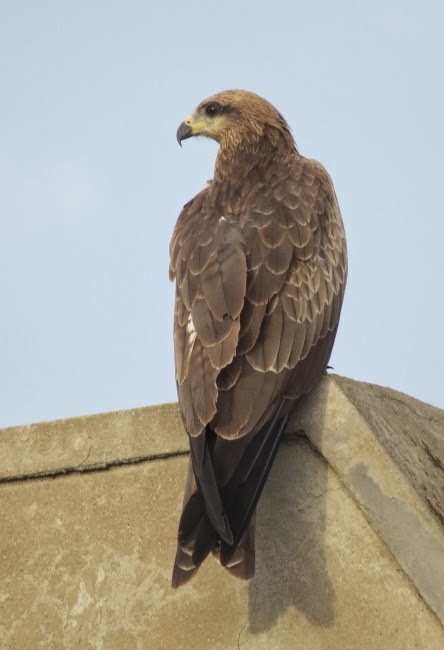
Ever since we shifted to NGV, spotting Black Kites has become extremely common, more so because we stay on the top floor. Every day, at about 11 in the morning and at 6 in the evening, I find perched either on the nearby tower or on the water tanks above the terrace. As mentioned earlier, these are some of the birds that are doing very well in the city. Although I personally like their cousins - the Brahminy Kites (Link) more because of their vivid colors and the fact that they remind me of the Western coast, the Black Kites are, without any doubt, very royal and graceful, especially in flight.
The following photos of one such pair were clicked on 5 th November, 2013 while I was at home for Diwali. Amongst all the photos of these avians that I have clicked in the last six months, I like these the most. Hope you like it too.

 |
 |
 |
 |

 |
 |
 |


For more posts on Black Kites, click here (Link)
November 01, 2013
CHANDA MAMA - II
BY THE DAY
The following pictures were clicked from our balcony late in the afternoon on a day which saw early Moon rise. Like in my previous post on our only natural satellite (Link), I could not get the entire circumference of Chanda Mama in focus. As far as photography is concerned, I think I still have a lot to learn. Anyway till then, I hope you like the pictures posted here.
 |
 |

September 08, 2013
THE LORDS OF THE BANGALORE SKY
THE BLACK KITES
Though Bangalore is slowly losing its green cover, some species of birds seem to be adapting to living life in the urban jungle. A telephone tower here in the National Games Village (NGV), Koramangala (Ya, that's where we live for the time being), is a perfect example of this. At about 70 feet in height, it offers a perfect view of the surroundings. No wonder, it is a magnet for birds. From Rose Ringed Parakeets to Jungle Mynahs and occasionally even Cormorants, one can see several different kinds of birds perched on it, all through the day.
Some photos of a group of Black Kites seated atop the tower were clicked on 31st August, 2103. Hope you guys like it.

 |
 |

 |
 |

For more posts on Black Kites, click here (Link)
September 07, 2013
CHANDA MAMA
ON THE MOON
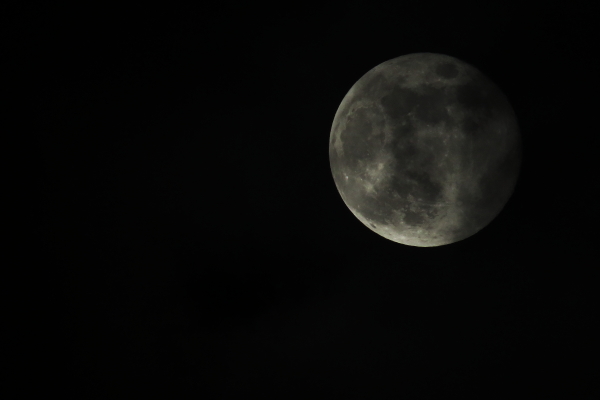
The Moon - Earth's only natural satellite is an integral part of the our rich culture and myriad traditions. Hailed as Chandra Dev in the Vedic texts, it adorns the matted hair of Lord Shiva. The Hindu calendar or 'Panchang' is based on lunar movements and festivals like Buddha Purnima, Guru Purnima and Vat Purnima are celebrated on the full moon day. In the form of the Crescent, it is synonymous with Islam, India's second biggest religion in terms of numbers. It is considered as a symbol of eternal beauty, love and romance; having inspired many popular Bollywood numbers, with Yeh Chaand sa Roshan Chehra being my favourite. After the success of Chandrayaan in 2009, India became one of the few countries in the world to land on this celestial body. The following pictures of the full moon against the backdrop of the pitch dark sky, were clicked by me on Wednesday - August 21,st 2013 from my home at the National Games Village (NGV), Koramanagala.


 |

|

July 09, 2013
WHRISKY, FRISKY, HIPPITY HOP
THE INDIAN PALM SQUIRREL
 |
| Funambulus palmarum |
I am winding up my first birding experience in NGV with a few snaps of one rodent that you can find everywhere in Bengaluru - the Indian Palm Squirrel. Unlike their distant cousins - rats and mice, these creatures have always been loved by humans, though they are capable of similar kind of destruction. Here in the IT city, the green cover (which is diminishing at an alarming rate) and the ample food supply has led to their proliferation in most parts and Koramangala is no exception. Just walk out to your gallery, terrace or garden and there is a very high possibility that you will find them just running around, chasing one another or making those squeaking sounds. Excellent climbers that they are, I remember this one squirrel who would regularly come to the window of my bedroom on the second floor in Porvorim. With our apartments being surrounded by trees on all sides, we would regularly see them. On one occasion in June 2007, I remember seeing about 15 of these running from our compound to a neighbouring compound across the road.
These little mammals remind me of this one poem which I had been taught back in school. In fact, it is one of the few poems that I can still recollect. You see I have always loved prose more than poetry. Titled 'The Squirrel', it was a part of my English textbook in the second standard (Maharashtra State Board Syllabus). Our class teacher - Miss Jessie would sing it, one line at a time and the rest of the class would repeat it. In a week, most of the class had memorized the poem. With the syllabus changing so often, nowadays, I sometimes wonder whether it is still being taught in our schools. I hope, it is. The other day, while I was searching for it on the internet, I was surprised to know that the poem is quite popular around the world. Though the lines are childish, I feel that it captures the very qualities that makes the squirrel such a delightful animal - agility, its small size and most importantly - infinite energy.
These little mammals remind me of this one poem which I had been taught back in school. In fact, it is one of the few poems that I can still recollect. You see I have always loved prose more than poetry. Titled 'The Squirrel', it was a part of my English textbook in the second standard (Maharashtra State Board Syllabus). Our class teacher - Miss Jessie would sing it, one line at a time and the rest of the class would repeat it. In a week, most of the class had memorized the poem. With the syllabus changing so often, nowadays, I sometimes wonder whether it is still being taught in our schools. I hope, it is. The other day, while I was searching for it on the internet, I was surprised to know that the poem is quite popular around the world. Though the lines are childish, I feel that it captures the very qualities that makes the squirrel such a delightful animal - agility, its small size and most importantly - infinite energy.

Whisky, frisky,
Hippity-hop;
Up he goes
To the tree-top!
Whirly, twirly,
Round and round ,
Down he scampers
To the ground.
Furly, curly
What a tail!
Tall as a feather
Broad as a sail.
Where's his supper?
In the shell,
Snappity, crackity,
Out it fell.
 |
| Chip and Dale - The Rescue Rangers |
For more on Birding at the National Games Village, Koramangala:
(1) The First Birding Experience at NGV (Link)
(2) The Pleasant Pandemonium (Link)
July 07, 2013
THE PLEASANT PANDEMONIUM
THE ROSE RINGED PARAKEET
 |
| Kitty Party: Rose Ringed Parakeets |
It was a lazy Sunday evening - the first at the Games Village and I was killing time with nothing interesting to do. Well that was till I heard loud squawking sounds emanating from a tower in the vicinity of our building. As I went to the balcony to have a closer look, I was thrilled by the sight in front of my eyes. A pandemonium (that is what they call a flock of these avians) of Rose Ringed Parakeets was perched on the tower, which is at a distance of 25 meters from where I was standing. The group consisting of about 12-15 members of both sexes, was very noisy... not surprising if you are familiar with this species. This is precisely the reason that their flocks are also referred to as 'pandemonium' which means a wild uproar or a noise. After a quick chat stretching for several minutes, they flew off, one by one to feast on the fruit bearing trees in the NGV Builder's Club where they were joined by other flocks from the area. The feeding frenzy continued for over an hour, giving me an opportunity to click them from the terrace - my vantage point. Just as the sun began to go down, they left towards the east, either individually or in groups of two or three. In fact, this spectacle of sorts is unfolded each evening here in the NGV complex. Sadly for me, since I come home late in the evening, I have to wait for the weekend to witness it (Awwwww!).
 |  |
Also known as the Rose Necked Parakeet, these birds are easy to identify all thanks to their distinct appearance - light green body, a relatively long bluish-green tail and a cherry-red beak in characteristic shape. Though they are gifted with distinct colours, they are difficult to spot, especially when foraging on trees. They display sexual dimorphism with males having a red ring around the neck. These Psittaciformes are scientifically known as Psittaci krameri after the 18th century Austro-German naturalist Wilhelm Heinrich Kramer. Four different sub-species have been identified - two being native to the Indian Sub-continent and the rest belonging to the horizontal stretch of land in Africa, ranging from Senegal in the west to Sudan in the east. Parakeets are social animals and congregate in mornings and evenings on fruit trees. These noisy creatures are also fussy eaters; they drop off fruits after consuming only a small portion of it. This helps in pollination of seeds and also provides food for other terrestrial animals. Though the peak breeding season is between February and March, in India, they also mate during the winters. The litter consists of two to six sibling who are born after an incubation period lasting for little over 20 days. Their average size is close to 40 cm and they weigh upto 150 grams. They are said to live for 15 years in the wild.

The Rose Ringed Parakeets are amongst the most successful birds in the world. Feral populations, which are descendants of introduced birds or escaped pets, have colonized several areas across the globe. From the US (Florida, California & Hawaii) to pockets in South America and Africa (Tunisia & South Africa), from the Middle East (Lebanon, Israel, UAE, Bahrain, Qatar & Oman) to Japan and Australia, they have adapted to these new regions, competing with local species, besides adjusting to unfamiliar terrain and peculiar climatic conditions. In nature, as the great Charles Darwin once put it, it is the Survival of the Fittest and the manner in which this species has seen off the human pressure on its habitat is indeed remarkable. However, one should not forget that these invasive creatures may end up upsetting the ecological balance in its new territories. In Bengaluru, I have seen them in many places - Bannerghatta Road, Indira Nagar, White Field and now even in Koramanagala. Though not as widespread as the crows, pigeons, mynahs or kites, they are certainly doing well here inspite of all the urbanization and deforestation. As such, the IUCN has evaluated them as as a species of Least Concern.
 |  |
Parakeets are intelligent birds and have the ability to mimic human voice when trained. They are quick learners and are known to perform tricks like untying knots or identifying objects, all of which keeps their mind occupied. As such, there is little surprise that for centuries, they have been kept as pets by kings and commoners alike. In modern times, newer techniques have been used to produce mutant individuals in different colours including blue, grey, yellow, white and so on which are a big hit with pet owners, especially in the west. Sadly though, in most cases, they are confined to small steel cages for their entire life. In absence of companionship or in situations wherein they are not challenged mentally, they become 'rouge' and revert back to their wild behaviour. Though the wild population of the Red necked parakeet is still pretty large, the pet trade is today a serious concern. Though it is not a threat to their numbers, I believe it is morally wrong to confine any bird or animal to a cage. By doing this, we are snatching away the right of another creature to live its life on its own terms. I hope that this inhuman practice of keeping such winged beauties for personal entertainment is stopped at the earliest.

SOURCES
(1) Wikipedia: Rose-ringed Parakeet (Link)
For more on Birding at National Games Village, Koramanagala:
(1) The First Birding Experience in NGV (Link)
(2) Whrisky, Frisky, Hippity Hop (Link)
Subscribe to:
Posts (Atom)