May 31, 2015

ROME - A HISTORY OF THE ETERNAL CITY

JOURNEY FROM PAGANISM TO CHRISTIANITY


It is not always that I watch a three hour long documentary twice; after all, there are so many good documentaries to watch out there. However, I just could not resist myself from watching BBC Four's three part documentary - Rome: A History of the Eternal City for the second time this week. Of course, I have a special liking for the Roman Empire in general and the city of Rome in particular. But it is the content and the manner in which it has been presented in this series that makes it a must watch for all history buffs.

While there have been many documentaries and docu-dramas in the past that have focused on the city from the perspective of it being the epicenter of one of the world's greatest empires, there is fairly less content available on reel that explores Rome's role as one of the world's most important cities and the part that its association with religion has played in it over the years. This is precisely the biggest USP for the series. The music is catchy, though at times, it is not always relevant or required. Another thing that works in the favor of this documentary is the cinematography of the beautiful city of Rome; the documentary makers have gone much beyond the usual places that are shown in other documentaries and it is a treat to the eyes even as the narrator descends into the sewers of the city.

Narrated by historian and author Simon Sebag Montefiore, the series sees the 2,700 year old history of Rome from its establishment as a city in 7th century BC to the present day as the centre of the Catholic faith, albeit the focus is not on the emperors, the wars that they fought or scientific advancements of these people but on the religion and the manner in which shaped and reshaped the city, its population and their fortunes over these three millennia.

In the first installment City of the Sacred, Montfiore explores Rome's pagan past at a time when the Romans, like so many other people in contemporary world worshiped the Gods of Thunder, Rain, Learning, War and so on. As the city fortunes and its empire grew, mighty temples were raised in the honor of these Gods who were looked upon as the protectors of the city and its people, the rituals in their became more elaborate and they even assimilated deities from foreign lands during tough times. Over a period of time as Rome transformed from a republic into an empire, the Emperors too were added to the ever-increasing Pantheon of Roman Gods.

In the second episode - The Divine Gamble, Montifiore talks about how Christianity begins to spread across the Holy City after the martyrdom of Saint Peter and how the early Christians are persecuted by the Pagan Roman Emperors. In fourth century, Emperor Constantine embraces Christianity, a move that changes not only the history of the city but also that of the entire Western World as we know it today. In the coming centuries although the Empire has faded into history, the power and the influence of the Popes of Rome rises with the Christianization of Europe, making them one of the most influential power players in the continent and thereby helping Rome stay relevant. At the end of the first millennium AD, the power struggle between the Popes and kings of various European kingdoms as well as the corruption that has engulfed Roman Catholic Church diminish the Papal authority to some extent.

In the last episode - The Rebirth of God's City, the author starts with the return of the Papacy to Rome from Avignon and how the Church saw off the threat posed by the Western Schism. During the Renaissance, fabulous churches are erected across the length and breadth of the eternal city and embellished with fabulous art works that focus both on Christian traditions as well as the pagan mythology. However, with the increase in the excesses of the Pope and the Roman Church as a whole, Martin Luther launches Protestantism which shakes the very foundation of the Roman Catholic Church and forces it to reform. In the nineteenth century, Italian nationalism grows and the Papal states are annexed by the new state of Italy. Mussolini ends the stalemate as Vatican City recognized as a separate country with the Pope as its head.

BIRDS OF GOA: APRIL'15 - PART 6

INDIAN KOEL

I clicked this male Indian Koel as I was coming out of the Hanuman Temple at Housing Board, Porvorim. The fiery red eyes and the balck coat against the backdrop of the clear blue sky is pleasing. The females of this species who are notorious for laying their eggs in a crow's nest are polka dotted and are more elusive to find.

Click on the below snaps to see them in better quality.


More from the series: THE BIRDS OF GOA: APRIL'15

(1) Sparrow (Link)

(2) Jungle Babbler (Link)

(3) Purple Sunbird (Link)

(4) Brahminy Kite (Link)

(5) Black Headed Oriole (Link)

(6) Indian Koel (Link)


BIRDS OF GOA: APRIL'15 - PART 5

BLACK HEADED ORIOLE

The brightly colored Black Headed Oriole is one of the most beautiful avians to be found in Goa. Though it is common in the region, spotting them amidst the foliage is difficult. I had a tough time clicking this individual in Goa Velha; unfortunately, though it made me run around the bush for sometime, none of the clicks have come out well. A couple of years ago, I had a similar experience with another Oriole while climbing down the Church of Our Lady of the Mount at Old Goa.


More from the series: THE BIRDS OF GOA: APRIL'15

(1) Sparrow (Link)

(2) Jungle Babbler (Link)

(3) Purple Sunbird (Link)

(4) Brahminy Kite (Link)

(5) Black Headed Oriole (Link)

(6) Indian Koel (Link)


BIRDS OF GOA: APRIL'15 - PART 4

BRAHMINY KITE

One of the most beautiful birds of prey to be found in the Indian peninsular region, the Brahminy Kite is associated with the mythical creature Garuda, the king of the birds and the mount of Lord Vishnu in several cultures around the world. I shot this wonderful avian while it was perched on a coconut palm near my Bhabi's place at Goa Velha.

Click on the below click to enlarge them.


More from the series: THE BIRDS OF GOA: APRIL'15

(1) Sparrow (Link)

(2) Jungle Babbler (Link)

(3) Purple Sunbird (Link)

(4) Brahminy Kite (Link)

(5) Black Headed Oriole (Link)

(6) Indian Koel (Link)


For more posts on Brahminy Kites, click here (Link)

May 29, 2015

FACES OF GOA: APRIL'15 - Part 2

THE OLD GOA - DIVAR FERRY

Crossing the narrow and swift flowing rivers of Goa on a ferry is one of the things that you can never get tired of, no matter how many times you have done it in the past. Though there are many ferry crossing points in the state, most being located around the island of Tiswadi, the one connecting Old Goa to Divar is my favorite. Unlike the one connecting Panjim and Betim which perhaps is the most famous since it offers stunning view of the state's capital city, the one here is shorter and far less crowded. Moreover, the sight of the majestic churches of Old Goa rising above the towering coconut palms on the river bank as you sail along the serene Mandovi will remain with you for a long time. The mangrove fores bordering the river along the Divar island, the far away railway bridge, the men fishing in their circular boats and the mighty barges carrying minerals mined in the heartland only add to the charm. No wonder, the round trip i.e. Old Goa to Divar and back, is always on my agenda during my visits to the UNESCO World Heritage Site.

Now, a little regarding these ferries. Almost all of the ferries that operate in the state are blue and white in color and most are named either after rivers or towns. They are fairly simple, run on coal and are operated by three to four men - a driver who is stationed in the cabin on the top, one or two attendants who help maneuver the ramp as the vessel nears the banks and a supervisor who collects money from the motorists. In fact, at every crossing point, there are two ferries, each sailing in opposite direction so that the people do not waste much time in transit. Moreover, this service is free for passengers and cyclists whereas a minimal fee is charged for motor bikes and automobiles. The importance of this mode of transport is underlined by the fact that in places like Divar and Vanxim, the ferry is the only connection between these riverine islands and the rest of the world.


THE FACES OF GOA: APRIL'15

(1) The Flower Vendors of Panjim Bus Stand (Link)

(2) The Old Goa - Divar Ferry (Link)


May 24, 2015

BIRDS OF GOA: APRIL'15 - PART 3

PURPLE SUNBIRD

Another lovely bird that came across while I was getting down the Chapora Fort was this Purple Sunbird. Considering that these birds seem to be always in a hurry, the time for any photographer to get their snaps is extremely limited. Luckily, I did manage to get a few good snaps.

Click on the below snaps to see them in better quality.


More from the series: THE BIRDS OF GOA: APRIL'15

(1) Sparrow (Link)

(2) Jungle Babbler (Link)

(3) Purple Sunbird (Link)

(4) Brahminy Kite (Link)

(5) Black Headed Oriole (Link)

(6) Indian Koel (Link)


BIRDS OF GOA: APRIL'15 - PART 2

JUNGLE BABBLER

Popularly known as the 'Seven Sisters', the Jungle Babblers are medium sized gregarious birds that are common to the country. Extremely noisy yet adorably cute, they can be easily found in the countryside, foraging for grains and worms.

The below pictures were clicked at the back-side of the Chapora fort i.e. the side facing the Chapora river which is in fact a heaven for bird lovers as I discovered during my last trip. I will post more pictures of the avians that I encountered here in the later posts in this series.

Click on the below snaps to see them in better quality.


More from the series: THE BIRDS OF GOA: APRIL'15

(1) Sparrow (Link)

(2) Jungle Babbler (Link)

(3) Purple Sunbird (Link)

(4) Brahminy Kite (Link)

(5) Black Headed Oriole (Link)

(6) Indian Koel (Link)


May 23, 2015

AMMA RETURNS

AIADMK SUPREMO IS BACK WITH A BANG

Much to the chagrin of her enemies, AIADMK supremo J Jayalalithaa who was given a clean chit by the Karnataka High Court in the disproportionate asset case couple of weeks ago is back, 'officially' the Chief Minister of Tamil Nadu for the fifth time. After being convicted in the case and given a jail sentence for four years in September 2014, the regional satrap who swept to power in the last state polls had stepped down and entrusted the responsibility of the state to here confidante O Paneerselvam. Since then, she had maintained a rather low profile, refusing to make public appearances and this meant that most public projects were struck up since the 'Iron Lady' was not there to inaugurate them. Although this may sound hilarious for most of us, people following Dravidian politics will certainly not be surprised. After all, politics down south is as dramatic as the local cinema and most of the successful Tamil politicians including Jaya have their roots in the film industry.

With the AIADMK chief back at the helm of affairs, the prospects of her party in the state elections scheduled for the next year have blossomed overnight. After successive victories, first in the 2011 polls and then in the 2014 General Elections, the Amma Express was on a roll. The many freebies and welfare schemes launched during her tenure were paying off. Its primary opposition in the state - the DMK was battling allegations of corruption and the fight within its first family was only intensifying with each passing day. Just when everything seemed to be going right for Jaya and her followers, the ruling of the Karnataka HC came as a massive jolt, threatening to cut short her political ambitions for the time being. However, much to her relief, the recent ruling, acquitting her and three others of all allegations of wrong-doing during her previous tenure have only enhanced the 'aura' of invincibility surrounding her. Speaking after the verdict she said that she has come out of the 'ordeal' like pure gold; in fact, many believed that Jaya could even consider snap polls, trying to en-cash on the sympathy wave following her acquittal.

From the perspective of the AIADMK, the decision is a big fillip before it kick starts its campaign for the 2016 polls. The return of Amma as the CM of Tamil Nadu is set to herald in a new set of reforms as well as public welfare scheme - read 'freebies', aimed at consolidating her voter base that has stood firmly with her for some time now. Many schemes like the Chennai Metro which has been completed but not yet made operational, apparently since Jaya was not there to inaugurate it are likely to be opened for the public. Though state politics may be her primary concern as of now, the AIADMK is expected to now play a more proactive role in the Lok Sabha too where it is the third largest party with 37 members. Besides, its 11 members in the Rajya Sabha too could be actively wooed, both by the government and the various opposing blocks considering that many of the Bills could be stuck up in this house.

While one witnessed scenes of ecstatic celebrations in the AIADMK camp, a wave of gloom has set upon the DMK. Though Karuna tried to take a 'principled' stand saying that the 'court of conscience' was above all other courts, it is clear that his party's attempt to use this issue to script a revival has gone down the drain. The numerous problems plaguing the DMK just seem to be piling one after another. As if successive defeats were not enough, the fight between Stalin and Azaghiri that led to the ouster of the latter from the party has severely weakened its ranks. The allegations of graft against some of its prominent leaders including Karuna's daughter Kanimozhi, his nephew Dayanidhi Maran and former Telecom Minister A Raja has tarnished the party's image to a large extent. In the present context, it will take more than a miracle for Karuna and the DMK to prevent Jaya from winning a straight second term.

Although it was BJP leader Subramanian Swamy who had filed the case against the Tamil Nadu CM nearly two decades ago, Jaya's acquittal is likely to bring cheers to the saffron outfit. It is a well known fact that the PM and Jaya share a good personal rapport. After the verdict, Modi is believed to have called up Amma and congratulated her. With the AIADMK chief coming out clean from all the allegations levied against her, it makes it much easier for the BJP to work with her party. Since the NDA lacks the numbers in the Upper House, the saffronists would now try to strike some sort of a working deal, if not a partnership between the two political parties to check mate their enemies.

For the Congress though, the case could give it the leverage it needs to stage a comeback down south or at least try to get back some of the space that it has conceded to others. The local party unit is in tatters and unless it manages to make up with its former ally - the DMK which is unlikely, it will find it extremely difficult to even cross the two digit mark in the next state polls. But then, as fate would have it, the Congress is all set to play a key role in the Jaya saga which is far from over. After all, it is in power in Karnataka and it is up to the Siddaramaiah government to file a review petition in the Supreme Court against the HC verdict. In that scenario, the Tamil Nadu CM could be in for some problems in the near future. More importantly, the move will perhaps be the first step in the renewal of ties between the INC and the DMK which has been left red-faced after dropping of the charges against Jayalalithaa. However, the move could boomerang too since this may translate into more closer ties between the BJP and the AIADMK which will be a win-win situation for both.

With the party being relegated to a 'pariah' and regional satraps largely ostracizing it, the Congress rarely gets a chance to play a decisive role in politics nowadays. However, in the Jaya disproportionate asset case, it is the INC that holds the cards. The party leaders need to evaluate all the angles and come up with an action plan that can help it turn the tide in its favor. Whatever the party's government in Karnataka does, the implications of that decision will not only impact Tamil politics but will resonate in the National Parliament.

FACES OF GOA: APRIL'15 - Part 1

FLOWER VENDORS AT PANJIM BUS STAND

Religion plays an important role in the life of ordinary Goan irrespective of the faith he/she follows. As such, offerings to Gods and deities in the form of garlands is very common. One can easily spot flower vendors outside temples and churches with colorful garlands made of flowers that are grown in the vicinity.

The below pictures were taken at the small market inside the KTC Bus Stand in Panjim. The flowers that are generally sold here are brought from places like Belgaum and Bangalore and then are strung into garlands. In the interiors though, you will find garlands made up of local flowers like hibiscus and white jasmines which are far more prettier and have a local feel to it.


THE FACES OF GOA: APRIL'15

(1) The Flower Vendors of Panjim Bus Stand (Link)

(2) The Old Goa - Divar Ferry (Link)


May 17, 2015

GOA DIARIES: APRIL'15 - Part 2

THE SUNSET AT MIRAMAR

Located three kilometers from Panjim, the Miramar Beach is situated at the mouth of the Mandovi River and is the closest beach to Goa's capital city. No wonder, it is one of the most popular destination for Panjimites to head towards to spend an evening; the stalls around the place and the children's play area only add to its popularity.

On the first day of the Goa trip, I and a school friend of mine - Neeket met here to watch the spectacular sunset. We sat on the steps of the Samadhi of late Dayanand Bandokar - Goa's first CM and witnessed the Sun slowly going down the Arabian Sea through the trunks of the coconuts trees while recollecting the beautiful memories of our school and college days.


For more posts in the series: Goa Diaries - April 2015, click here (Link)

EMPIRES: THE GREEKS - CRUCIBLE OF CIVILIZATION

THE RISE AND FALL OF THE ATHENIAN EMPIRE


Please don't go by the name. This three part documentary with a total run time of over 150 minutes, published by PBS as a part of its 'Empire series' in 1999 chronicles the rise and the eventually fall of the Athenian Empire during the 5th and 4th century BC. While it is true that this city state was the epicenter of the great Greek civilization, one cannot afford to ignore the contribution made by the likes of Argos, Corinth, Macedonia and of course - Sparta (whose popularity has soared post the release of the hit Hollywood movie '300' and its sequel) in the development of this unique culture. If you can overlook this minor thing, something that I strongly recommend you to, I can guarantee you that by the end of it, you will be left spellbound. Not only the content, in fact the manner in which the documentary has been presented is something that is unique and enchanting at the same time.

Each part of the series narrates a phase of Athenian history through the stories of the personalities who played an integral role during that time. It is through the lives of these men that the viewer is given a broad socio-political perspective of ancient Athens and made aware of how this rather nondescript coastal town became the 'crowning glory' of contemporary Mediterranean, carved an empire of its own and finally fell following a disastrous war with its rival - Sparta, all within the span of few decades. Though the Athenian domination of the region might have been short-lived, it continues to be one of the few places wherein the every foundation of modern Western Civilization was laid; in fact, it is the crucible from which a large number of modern policies and belief emerged.

Titled 'The Revolution', the first episode recounts the story of how Democracy - Athens' greatest gift to mankind was established in the city state following the rule of several tyrants and the uprising of the masses against the aristocratic class that had been dominating the society. It was Cleisthenes - the aristocrat who sided with the common people and laid the foundation of an experiment that would make the city, the greatest power in the whole of Greece and usher in an unprecedented growth in trade, arts, craft and learning.

In the next episode - Golden Age, as the Persians under Darius the Great mount an invasion of Greece to destroy the fledgling economy of Athens, the nascent democracy stands tall and beats back the invaders even as the Spartans refuse to come to their rescue. Themistocles, a by-product of the Athenian democracy convinces his citizens to build a strong navy that hands the Persians a disastrous defeat in the naval battle in the Strait of Salamis a decade later. It is on account of their naval supremacy that Athens manage to build a mighty empire in the Mediterranean region and prosper. Pericles who is elected as the leader of Athens sometime later begins the construction of Parthenon in honour of the city's patron Goddess Athena, which serves till date as the very symbol of ancient Greece.

In the final episode titled Empire of Mind, Pericles engulfs Athens in a do or die war against Sparta to become the preeminent power in contemporary Greece that ends in complete failure and destroys the very empire that the city had built in the last century. It is during the time of this 30 year conflict that Socrates, arguably the world's first and greatest philosopher moves around in Athens questioning the very tenets that Greek thought, society and religion were based upon. At the end of the war, as Athenians are looking for some scapegoat to put the blame of their defeat, Socrates is condemned to death and executed. However, his refusal to budge even in face of death makes him a role model; though Athens loses its political prestige to Sparta, Corinth and Macedonia in the coming years, it retains its position as the city of learning for centuries.

The whole series has been narrated by the actor Liam Neeson who essayed the main role in the movie Schindler's List and he has done a very good job. The cinematography of Greek monuments, the shoreline and the countryside in general is beautiful. The script is solid, especially the last 15 minutes of the final episode when Neeson explains how in spite of losing its political dominance Athens became the seat of thought and learning in the Greek world is fantastic and how his death changed the notion of Greek heroes forever. It makes one look upon Socrates as a 'martyr' who changed the very dimensions of contemporary thinking by questioning and criticizing existing beliefs and traditions. Though I had read a little about Socrates earlier, the final episode made me realize how great a man he truly was and why he is considered as the father of 'Free Modern Thinking'. Perhaps, the best thing that this series gave me personally was a new hero to look upon: SOCRATES

May 10, 2015

THE SILAHARAS - Part II

THE SOUTH KONKAN SILAHARAS

Ganapati - Silahara Period (8th cent.)
Pilar Museum - Goa Velha
The first amongst the three Silahara kingdoms of the middle ages, the South Konkan Silaharas or the Goa Silaharas ruled areas of modern day Goa and Ratnagiri district of Maharashtra between the eighth and the eleventh centuries, chiefly as the feudatories of the mighty Rashtrakutas who were the preeminent political dynasty in much of the Sub-continent during this time. Like most 'minor' dynasties that rose and fell during this age, our knowledge about these kings, their administration, the prevalent socio-economic conditions and so on is meager to say the least; as a matter of fact, most information regarding the political history of this dynasty comes from the few copper plates that have been found so far, the most famous being that of one Rattaraja - probably, the last king of this dynasty which were found in the village of Kharepattan in the Ratnagiri district of Maharashtra. These plates are no less than the famous 'Rosetta Stone' since they give a detailed genealogy of the whole clan beginning from the man who established this kingdom and his subsequent successors up to Rattaraja including their exploits. Of course, relying completely on this to rewrite the political history of this clan could be a costly mistake. However, in absence of other credible sources, validating the information present in these plates to reconstruct the South Konkan Silahara history is not possible.

Gokapattanam or Govapuri (Goa Velha) along the Zuari River is said to have been their capital with some historians stating that it was later moved to some prominent place in the Sawantwadi - Ratnagiri region. This assumption seems to be correct since the Kharepattan plates mention of the presence of a separate ruling family at Chandor which is not very far from Goa Velha. Though this family, of which we do not have any specific information was generally sub-ordinate to the Goa Silaharas, there have been instances recorded of hostilities between the two. As such, it would have been a strategic blunder for the capital to be so close to Chandor. Hence the observation of the South Konkan Silahara capital being in somewhere in modern day Ratnagiri region seems to make a lot of sense although the historical records to back this claim by be lacking at present.

THE ORIGINS

Like all other Silahara kingdom, the kings of the South Konkan branch claim to be descendants of King Jamutivahana - the mythical Vidyadhara king who is the prime protagonist of the Sanskrit epic Nagananda which is attributed to the great Vardhana Emperor Harsha. In this drama, the wise king who gives up his empire and retires to the forests, offers himself as a sacrifice to save the serpent race from the wrath of the Garuda. As the mythical bird realizes its mistake, Jamutivahan is revived from the dead and Garuda promises to end his annihilation of the snakes, bringing 'ananda' (joy) to the Nagas (serpents).

While the records of the branches at Thana and Kolhapur say that they were natives of the town of Ter, the Goan Silaharas records mention relations with the Kings of Simhala. People familiar with history would naturally and rightly identify Simhala with Ceylon or modern day Sri Lanka. However, Altekar suggests that Simhala here meant 'Tiswadi' - the island along the Goan coast on which the city of Panjim is situated. In fact, this conclusion seems to be correct since Goa was an integral part of the South Konkan Silahara kingdom. More interestingly, if the above conclusion is correct, Silaharas may actually be the first native Goan kings.

SANAPHULLA - THE FOUNDER

Ganesh - Silahara period (10 cent.)
The Goa State Museum, Patto - Panjim
As per the Kharepattan plates, the kingdom was founded by Sanaphulla who was granted the land between the Sahaya mountains (possibly the Sahayadris or the Western Ghats) and the Arabian Sea by the Rashtrakuta Emperor Krishna I in the mid-eight century. In fact, the Southern Silahara kings continued to owe their allegiance to their overlords at Manyakheta till the end of that clan. The claims in the plates suggests that Sanaphulla aided his 'master' Krishna I who was the second ruler in the Rashtrakuta clan, in subjugating the Konkan coast which was under the influence of the Badami Chalukyas till the downfall of the dynasty in AD 753. As the emperor left after conquering the coast, he perhaps appointed Sanaphulla as his 'Viceroy' or 'Governor', thereby establishing the dynasty.

Another scenario that is possible is that following the fall of the Chalukyan empire due  to the defeats inflicted upon them by the Pandyas and the Rashtrakutas, Sanaphulla who may be hailed from Goa, gathered a fighting force and drove away the Chalukyan defenders or their allies who guarding the rich port city of Govapuri. After expanding his influence in nearby areas along the coast, he might have submitted to the authority of the Rashtrakutas who were fast emerging as the undisputed masters of the Deccan. Though Goa was a prosperous region back then and a lots of money flowed in due to the international sea trade, the nascent kingdom stood no chance in front of the strong Rashtrakutan army. Moreover, there would definitely have been other contenders who were eager to bring the port city under their control. Probably, this is why he voluntarily accepted Rashtakuta overlordship and obtained their permission to rule the southern Konkan region by promising to pay an annual tribute and assist them as and when needed.

THE CHRONOLOGY

   Sr. No.   
                    King                    
     Reign     
1
Sanaphulla
765-795
2
Dhammayira
795-820
3
Aiyapparaja
820-845
4
Avasara I
845-870
5
Adityavarman
870-895
6
Avasara II
895-920
7
Indraraja
920-945
8
Bhima
945-970
9
Avasara III
970-995
10
Rattaraja
995-1020

a. This is the chronology of the South Konkan Silahara dynasty as given in the Kharepattan plates of Rattaraja.

b. In the absence of accurate details regarding the regnal years of the above mentioned kings, historians generally attribute a reign of 25 years to each of them which is the average reign for Indian kings ruling in the medieval times.

THE KINGDOM STABILIZES

Sanaphulla's successor was Dhammayira who is said to have consolidated his family's hold over the nascent kingdom by erecting a fort at Vallipattana or Ballipatana. Though there is no conclusion, historians have identified this port with places like Velim in South Goa, Kharepattan in Ratnagiri district and so on. It seems to have been a bustling port during this time and and well connected to other nearby ports of Chandrapur (Chandor, Goa) and Chemul (Chaul, Maharashtra). Moreover, the Kharepattan plates also mention ships from far and wide docking in its yard and the taxes that they paid to the Southern Silahara treasury. Some believe that in course of time, Vallipattana could even have served as a second capital of their kingdom apart from the first seat of power at Goa Velha.

Aiyaparaja, the third king in this line is said to have won a victory over the local ruler of Chandrapur. This was perhaps a major boost to the Silahara kingdom. Firstly, this victory would have helped in maintaining their supremacy in the neighborhood. Moreover, Chandor was a prosperous port having trading contacts with other coastal towns along the Western coastline and bringing it under the influence of the Silaharas would have earned them certain financial benefits too.

Silaharas - Silver Coins (11th - 12th Cent.)
The Goa State Museum, Patto - Panjim

ADITYAVARMAN - THE GREATEST SOUTH KONKAN SILAHARA KING

Though the Kharepattan plates may refer to Avasara I as the 'Vanquisher of the Enemies', it was his son - Adityavarman who in my opinion was the greatest ruler of this clan. The contemporary North Konkan Silahara ruler - Lagu Kapardin II was still a minor and Adityavarman used this opportunity to increase his supremacy over most of the Konkan region. As per the plates, he is said to have offered assistance to the rulers of Chandrapur and Chemul. If we consider these two places as the northern and the southern limits of the South Silahara 'sphere of influence', then it means that Adityavarman was the master of nearly 500 kilometer of Konkan coast, leaving only the Mumbai-Thana region for the Northern Silaharas. Thus the kingdom reached its zenith under him.

GATHERING OF THE CLOUDS ON THE HORIZON

Adityavarman was succeeded by Avasara II, Indraraja and Bhima who is recorded as being 'ambitious'. It was during his reign that the Goa Kadamba dynasty rose and captured Chandor. Since the Kadambas were loyal to the Kalyana Chalukyas who were the sworn enemies of the Rashtrakutas - the overlords of the South Konkan Silaharas, the two clans are believed to have been hostile towards each other. Bhima is said to have won a victory over the first Kadambas king Shashthadeva or his son Chaturbhuja. However, this win was in no way decisive since it was the Goa Kadamba dynasty that would play a key role in bringing an end to the South Konkan Silahara kingdom.

As if the Kadamba takeover of Chandor was not enough, the Silaharas were delivered a crushing blow when the Rashtrakuta dynasty was overthrown by the Kalyana Chalukyas during the reign of Avasara III. Though most of the vassals of the Rashtrakutas had switched their allegiance to Tailapa II by now, the Goan Silaharas continued to be loyal to them. In fact, the Kharepattan grant of Avasara's successor - Rattaraja contains the genealogy of the Malked clan, a right reserved only for the imperial overlords. By the time this grant was given, it was over two decades since the last of the Rashtrakuta kings were deposed yet the Goa Silaharas seem to have had some sense of gratitude and affection towards them which is strange. Thus while the North Konkan Silaharas accepted the suzerainty of the new rulers of Deccan, namely the Chalukyas, their counterparts down south were still held up in the past and this proved to be a costly mistake. The demise of the Rashtrakutas and the emergence of the Goa Kadambas who had allied themselves with the Kalyana Chalukyas proved disastrous for the Silaharas of southern Konkan. A grant of this ruler named as the Chikkodi or the Pattanakuddi plate dated AD 988 is the earliest of the three land grants belonging to this clan which have been found so far.

THE END

Two grants of Avasara's son and successor - Rattaraja have been found so far. The first dated AD 1008 are the Kharepattan plates which record the grant of three villages namely Kushmandi, Asavanire and Vadagule to Atreya the Brahmin belonging to the Karkaroni branch of Mattamayura clan of Saiva sect for the worship of God Aveshvara. Another grant issued two years later records the grant of a plot in the village of Bhaktagrama and a garden of betel nut to Sankamaiya, son of the Brahmin Senavi Bagamaiya. This was one of the earliest mention of the Shenvi Brahmanas who went on to dominate the Goan society in the later periods.

The series of events that culminated in the demise of this dynasty are unclear; neither are we sure as to who the last Goan Silahara king was - Rattaraja or his immediate successor. Anyway, what we can tell for sure is that the refusal of these kings to acknowledge the supremacy of the Chalukyas would have not gone well with the latter. Moreover, the Kadambas too were sensing on an opportunity to settle scores with them. Whatever be the reason for it, it is pretty clear that Chalukya emperor Jayasimha II invaded the South Silahara kingdom and deposed its ruler while returning from a campaign against the Cholas, probably after Rattaraja renounced his allegiance to the Kalyana clan following the death of its ruler Satyasraya or Vikramaditya V. It is also possible that the invasion weakened the Goa Silaharas and soon after the Chalukyan army withdrew, the city of Govapuri was attacked and captured by the Kadambas who are considered to be the political successors to the Goa Silaharas.

THE RASHTRAKUTA - SOUTH SILAHARA RELATIONS

Naga - Silahara Period (10th cent.)
The Goa State Museum, Patto - Panjim
The relationship between the kingdom and their imperial overlords in Manyakheta is 'enigmatic' to say the least. The Southern Silaharas were fiercely loyal to the Rashtrakutas; at a time when the power equations in the Deccan were fast changing in the later half of the tenth century and the Kalyana Chalukyas were the devouring vast swathes of the erstwhile Rashtrakuta empire, the kingdom continued to swear its allegiance to the Manyakheta court. In fact, even after the termination of this glorious line of rulers by Taila II, the grants of the Goan Silahara kings continued to begin with the genealogy of the now 'dead' clan. A copper plate of Rattaraja mentions with regret as to how the Rashtrakuta family was crushed by the weight of the mountain that fell on it in the form of Taila. It seems that the Silaharas later accepted the suzerainty of the Chalukyas but were doomed once they raised the banner of revolt leading to the invasion of the Goa region by Jayasimha II.

Though there are no questions regarding the loyalty of the Silaharas towards the Rashtrakutas, the relation between the two families is not as per the general convention of these times. For example, a vassal state was suppose to send in troops whenever its overlord undertook an expedition or was defending his sovereignty. We know for sure that the Rashtrakutan army fought many wars and their records do mention the sub-ordinate kings who helped them in their battles; however, the Southern Silaharas find no mention in all these records which is strange. After all, a dynasty that mourns the demise of its imperial masters in its personal records is expected to stand by them during their hour of need, isn't it? Moreover, we have no record of any sort of matrimonial alliance between the two families which too was a norm in most cases. Hopefully, our understanding of the nature of the relations between these two dynasties will enhance after more records of the Southern Silaharas are discovered in the future.

THE LEGACY

An important point that historians tend to miss while writing about this kingdom is the role that it would have played in the rich and prosperous Indo-Arab trade. We know that the Arabs were in contact with the Rashtrakutas as the Arab text Silsilatuttavarikh names them as one of the four greatest empires in the contemporary world. With the ships from the Gulf dominating the Arabian Sea region during this time, most of the trade or diplomatic relations between the two worlds i.e. India and Arabia would have happened through the seas. As the port cities in Konkan, Goa and Karavali (coastal Karnataka) were under the rule of states sub-ordinate to the Rashtrakutas, most of this trade would have happened here. Thus, both the Silahara kingdoms would have served as the 'Gateway to India' for the Arabs.

Medieval ports like Chandrapur (Chandor), Gokapattna (Goa Velha), Vallipattnam, Kharepattan, Chemul (Chaul), Puri (Elephanta) and Kalyan which were under the influence of the two Silahara clans were definitely the melting pot where these two worlds, each rich not only in terms of money but in science and culture as well, would converge benefiting both. From the perspective of the Silaharas, the trade would have been a rich source of revenue. The Kharepattan plates mention the Arabic ships docking at the port of Vallipattnam and the taxes that they paid to the authorities there.

May 03, 2015

RAHUL VERSION 2.0

WHAT RAGA NEEDS TO DO TO REVIVE HIS CAREER & THE CONGRESS

After abandoning the Congress party for a good 57 days, the scion of the Nehru-Gandhi family - Rahul Gandhi made a grand return to the country couple of weeks back. Ever since his sojourn, he seems to be a changed man; much to the delight of the Congress leaders and supporters, he has been making the right kind of noises and attacking the Modi government on a wide range of issues. Be it standing up for the farmers against the Land Bill or speaking up for Net Neutrality in the Parliament or meeting home buyers in the NCR and raising their concerns over the amendments made to the Real Estate Bill, the MP from Amethi is slowly building up a strong front against the policies of the NDA government which has hardly delivered on any of the numerous tall promises it made during its election campaign.

Though I have been a critic of Rahul and his style of politics for long, I have been pretty impressed by Rahul - version 2.0 and whatever I have seen of it so far. With the 'honeymoon period' for the Modi government coming to an end, the failure of the incumbent regime to bring in the 'Aache Din' and the ignominious defeat faced by the BJP at the hands of the AAP in the Delhi polls, the Congress Vice President has upped the ante and is leading the much delayed Congress fight back from the front. His actions in mobilizing a united front consisting of farmers, the middle class and the youth to take on the NDA government in the past two weeks has taken most of us, be it political analysts or the common man, by surprise. Move over RTI and Women Empowerment, in his brand new avtaar Rahul Gandhi, like so many of the illustrious Congress leaders of the past is connecting with the people on the ground and engaging with the karya-kartas at the lowest levels to check mate the BJP lead national government in New Delhi.

Rahul's comeback has evoked contrasting response from various factions within the political circles of the country; naturally enough, the Congress has hailed this as a game-changer, the regional satraps are treading a cautious line, the media has termed it as a 'revelation' whereas the BJP sees this as just another attempt to relaunch the Gandhi's scion 'failing' political career. In my opinion, a more mature Gandhi junior is good news for our democracy. After all, he is all set to become the President of the largest Opposition party in the coming weeks. A strong, well-informed leader at the helm of affairs in the INC will keep PM Modi and his colleagues in the cabinet on the tenterhooks. At a time when many are scared that the fringe groups within the Sangh Parivaar may derail the government's development agenda, an Opposition led by a level headed Rahul may help check their excesses and raise the issue that are actually affecting the people.

This is certainly not the first time that the Amethi MP has burst out on the national scene all of a sudden. Be it speaking on behalf of Kalavati in the Parliament during the debate on the Indo-US Nuclear Deal or tearing off the ordinance protecting parliamentarians from arrest, Rahul has made waves in the past too. However, the problem with him seems to be that he fails in sustaining the enthusiasm surrounding him. The reluctant politician in him seems to arise every time one thinks that he is going to break out from the shackles and make a permanent space for himself in the political arena. Perhaps, he can take a leaf out of the book of his namesake - 'Mr Consistent' Rahul Dravid. Besides, here are a few more things that he can do so that the people of the country take him more seriously.

They say that a man is known by the company he keeps. The first thing that Rahul has to do is that he needs to do away with 'incompetent' advisors who have done more damage to his political career so far than good; people like Digvijaya Singh and Madhusudan Mistri need to go. The junior Gandhi has to surround himself with a coterie of people who have sharp political acumen and are aware of the aspiration of the electorate in different parts of the country. Moreover, there is a need to have state level leaders too in this committee who can help him take the right decisions. The more diverse and more competent this core group, the more returns it will yield for Rahul and his party.

Raising the right issues at the right time is an art that makes a successful politicians and this is something that the Amethi MP needs to master as soon as possible. As of now, he has done very well. The trip to Punjab to meet the farmers was a good move considering that the state goes for polls in 2017 and that there is simmering anti-incumbency against the Badals there. Speaking up for neutrality of the Internet has surely won him admirers amongst the youth, a constituency that had stood behind Modi during the 2014 General Elections. The meeting with the flat buyers and his opposition to the Real Estate Bill in Delhi will help in wooing the middle class, another section that had gravitated towards the BJP till some time back. It is imperative that Rahul keeps pilling on more pressure on the government at regular intervals.

Thirdly, the Congress Vice President has to be more accessible. The party workers on the ground have long complained that it is very difficult to get an audience with him. Rahul's absence on the social media, his minimal media interactions and his absence from the Parliament during the times of important debates only adds to the negative publicity surrounding him. It is high time that Rahul finally sheds this tag of being aloof from the realities on the ground. An account on Facebook and Twitter are long over due; considering that this is a good platform for connecting with the youth, the Amethi MP needs to make his debut on the social media as soon as possible. He has to address more press conferences and speak more often in the Parliament so that his views on issues of national importance are well known.

Next and more importantly, there is an immediate need to revive the Congress which seems to be moribund at the moment. After being reduced to 44 seats, the least in its history, the INC needs a complete reform. Earlier, Rahul has spoken about his ideas to reform the Congress by initiating schemes like holding primaries to select party candidates and decentralizing power by empowering state leaders. However, none of these ideas actually took off in the right spirit. The recent spate of electoral defeats that the party suffered in the past two years only has made the matters worse. The urgent need of the hour is for Rahul to take control of the party and infuse some enthusiasm amongst the party workers. As the morale of the workers will boost, the prospects of the INC too will brighten, thereby helping it regain lost ground.

Last and in no way the least, Gandhi needs to make some working arrangements with leaders of non-NDA parties in the Parliament so that pressure can be built up on the Modi regime. TO begin with, the Amethi MP has to improve the co-ordination between the various parties that are still within the UPA. The Bihar by-polls has shown that the only way to combat the BJP is to form newer, innovative alliances cutting across traditional political barriers. In this aspect, the relaunched Janata Parivaar is a strong anti-Modi Front and Gandhi has to work more closely with the likes of Mulayum, Lalu and Nitish so that they can take on the NDA in the Parliament. The Left parties have always stood against the BJP and befriending Karat & Co. should not be difficult. Regional players like Mamata, Mayawati, Chandrashekar Rao and Karunanidhi can be cajoled into forming alliances with the Congress for the state polls. Certainly, Rahul Gandhi's political success in the near future could depend on how many friends he can win in the next few months.

May 02, 2015

THE SILAHARAS - Part I

THE THREE SILAHARA KINGDOMS

One of the least known dynasties to have ruled over the country, the Silaharas ruled over three, possibly related kingdoms in Western India between the 8th and the 12th century AD. I would not be surprised if most of us, even those taking a keen interest in Indian history would not have heard much about this clan. In fact, in the state of Goa, a place which was the very epicenter of the Southern Silahara kingdom, the dynasty just finds a few passing references in the state's history textbooks.

Although each of these three kingdoms lasted for over 150 years each, the kings were chiefly the feudatories to other powerful families ruling over contemporary Deccan like the Rashtrakutas or the Kadambas. Much against the general norm that existed around this time, it seems that these kings did not participate in the military campaigns of their 'overlords'; neither do we have any record of their matrimonial alliance with their 'masters'. Perhaps that was the reason that not much is said or written about them in the dynastic records of the other powerful houses. The paucity of material in the form of inscriptions and monuments from this era means that our understanding of the Silaharas is rather limited

THE THREE KINGDOMS

The earliest amongst these three kingdoms were the South Konkan Silaharas or the Goan Silaharas who ruled modern day Goa between mid-eight century to the early eleventh century. Though the North Konkan Silaharas or the Thana Silaharas rose about half a century later when compared to their southern counterparts, their power lasted for nearly four and half centuries until it was absorbed by the Yadavas. The last of these three - the Kolhapur Silaharas began their rule sometime around AD 1000 and last for over two centuries and like the Thana kingdom was later defeated and extinguished by the Yadavas who undertook expansionist activities during the thirteenth century in modern day Maharashtra.

ORIGIN

Though the three kingdoms share the name - Silahara, we are not sure about what kind of relationship existed between them. The only thing that we know was common between them, apart from the name was the fact that they claimed to be the descendants of the mythical hero - Jimutavahana from the Nagananda which is attributed to the great king Harsh Vardhan. As per the story, the king Jimutavahana of the Vidhyadharas offered himself as 'ahara' (food) to the bird Garuda on a 'sila' (rock) to save the Nagas or serpents from destruction and hence the name - Sila-hara. Unlike the Chalukyas or the Yadavas who claim that to be descendants of Gods like Rama or Krishna, it is rather surprising to see the Silaharas 'chose' a not so famous ancestor. Perhaps, the Gods were only reserved for the more powerful families; just a thought!

The Goan Silaharas claimed to have originated from Simahala which either was Sri Lanka or Goa whereas the records of the other two houses say that they were natives of Tagara. The exact location of this medieval city is unknown with historians connecting it with Ter, Kolhapur and so on.

WERE THEY RELATED?

Other than the fact that all three Silahara clans claim to be the descendants of Jimutavahana, two families, namely the Thana Silaharas and the Kolhapur Silaharas also shared the Garuda emblem which cannot be brushed aside as mere coincidence.

Considering that the North Konkan Silahara dynasty began about forty years after the establishment of the Goan Silahara kingdom, it is possible that the founder of the former kingdom was a member from the royal family that ruled over Goa. Perhaps, the viceroy who was appointed to govern northern Konkan broke off all allegiance to Goa and founded a new kingdom. Similarly, the founder of the house at Kolhapur too was in some way related to either of the other two houses. However, these are just some speculations that I am making and there are no historical evidence to back these claims.

BIRDS OF GOA: APRIL'15 - PART 1

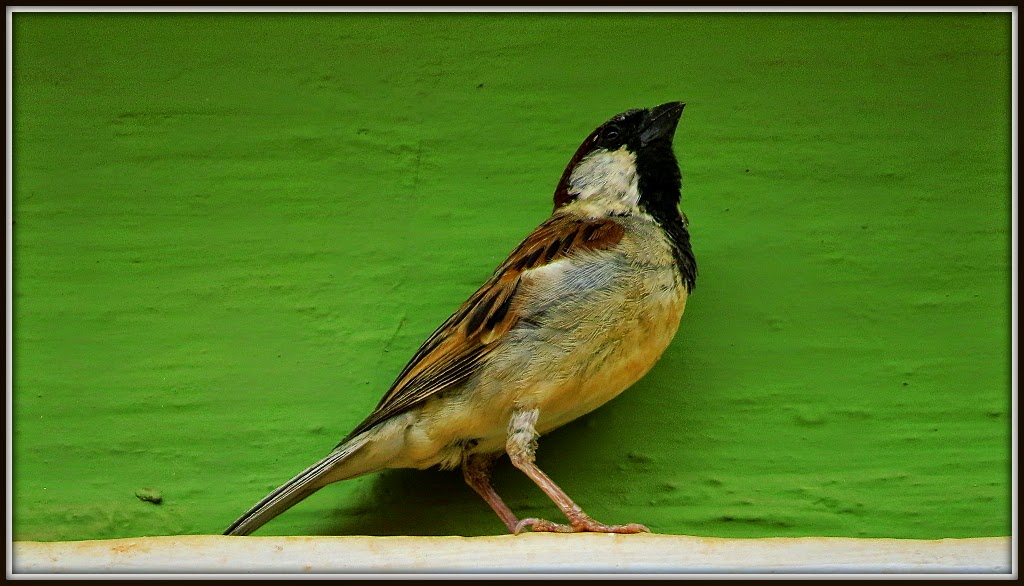
COMMON SPARROW

Bordering the Rua de Ourem, the wards of Fontainhas and Sao Tome are amongst the oldest residential areas of Panjim. The best part of these localities is that they have still retained the old world charm; a walk through the narrow by-lanes lined by bungalows painted in vivid colors here is such a pleasure.

Apart from the beautiful Indo-Portuguese villas, one of the highlights of such a walk are the numerous Sparrows that inhabit these wards; watching these passerine birds flying by, chasing each other or feeding on grains is a treat to the eyes, especially for those of who live in urban centres devoid of these beautiful birds. In fact, here, it is very easy to see these wonderful creatures engaged in their daily activities at a very close range.


More from the series: THE BIRDS OF GOA: APRIL'15

(1) Sparrow (Link)

(2) Jungle Babbler (Link)

(3) Purple Sunbird (Link)

(4) Brahminy Kite (Link)

(5) Black Headed Oriole (Link)

(6) Indian Koel (Link)


For more posts on Sparrows, click here (Link)