Showing posts with label Goa. Show all posts

June 14, 2015

THE GOA STATE MUSEUM - AN INTRO

AN INTRODUCTION

Though the Goa State Museum is dwarfed in size by the neighboring Goa State Central Library (now known as Kishan Das Shamal State Library), it is an excellent place to explore the state's rich heritage and witness some of the glimpses from its glorious past. For what it lacks in size, it more than makes up with some of the artifacts showcased here being priceless gems for people like me who are eternally in love with the beach state and its history. Situated in Patto - the industrial hub of Panjim, sadly, it is not amongst the top tourists attractions in the capital city and hosts relatively few visitors in spite of the fact that in comparison to other government museums in cities across the country, it is well maintained.

As per the brochure, the Goa State Museum was established in 1977 and was initially set up in St. Inez locality of Panjim before being shifted to its present location in June 1996. It is managed by the Directorate of Museum - Government of Goa. The entry to the museum is free, photography is allowed and there is also a guide available for those who are interested in the details. A book titled - 'The Remarkable Sculptures of the Goa State Museum' which available at the counter for Rs. 300/- gives a much detailed overview of the approximately 50 odd sculptures displayed here and is worth the money.

Name
               The Goa State Museum               
Location
      EDC Complex, Patto - Panjim      
Timings
                    Monday to Saturday - 9:30 am to 5:30 am                     
Entry Fee
Free
Camera
Allowed (Not Additional Camera Fee)
          Approximate Time          
1 - 3.5 hours

The one storied building has as many as thirteen different galleries of which the first and in my opinion, the most impressive is the Sculpture Gallery. Amongst the exhibits displayed here include Hero memorials, Sati Stones, Gajalaxmi panels as well as a few inscriptions discovered in the state. An equally beautiful second gallery showcases beautiful wooden carvings of various Christian saints, portraits of a few Portuguese Governor Generals and a flag commemorating the Portuguese naval victory over the Dutch. The theme for the third section is the 'History of Printing Press in Goa' which is also the first of its kind in the whole of Asia whereas the next gallery manifests the collection donated by S K Bannerji, the ex Lt. Governor of Goa and is named after him. The fifth section depicts the religious expressions of Goa; objects relating to daily life are exhibited in the sixth whereas paintings and sculptures of several Indian artists are shown in the next gallery. The eight section is the Numismatics gallery whereas the ninth is a photo walk through Goa's independence struggle. The tenth gallery houses objects from the Menezes Braganza Institute; the Furniture section showcases amongst others the chair of the Governor General and the 'Table of the Inquisition'. The last two sections developed with the help of the WWF showcase the natural heritage of Goa.

In the next few posts, I will be posting about the beautiful artifacts in the Goa State Museum that left me spellbound.


More from the series: GOA STATE MUSEUM

(1) An Introduction (Link)

(2) The Hero Stones (Link)

(3) The Sati Stones (Link)

(4) The Gajalaxmi Stones (Link)

(5) The Cult of Mahishasura Mardini (Link)


May 29, 2015

FACES OF GOA: APRIL'15 - Part 2

THE OLD GOA - DIVAR FERRY

Crossing the narrow and swift flowing rivers of Goa on a ferry is one of the things that you can never get tired of, no matter how many times you have done it in the past. Though there are many ferry crossing points in the state, most being located around the island of Tiswadi, the one connecting Old Goa to Divar is my favorite. Unlike the one connecting Panjim and Betim which perhaps is the most famous since it offers stunning view of the state's capital city, the one here is shorter and far less crowded. Moreover, the sight of the majestic churches of Old Goa rising above the towering coconut palms on the river bank as you sail along the serene Mandovi will remain with you for a long time. The mangrove fores bordering the river along the Divar island, the far away railway bridge, the men fishing in their circular boats and the mighty barges carrying minerals mined in the heartland only add to the charm. No wonder, the round trip i.e. Old Goa to Divar and back, is always on my agenda during my visits to the UNESCO World Heritage Site.

Now, a little regarding these ferries. Almost all of the ferries that operate in the state are blue and white in color and most are named either after rivers or towns. They are fairly simple, run on coal and are operated by three to four men - a driver who is stationed in the cabin on the top, one or two attendants who help maneuver the ramp as the vessel nears the banks and a supervisor who collects money from the motorists. In fact, at every crossing point, there are two ferries, each sailing in opposite direction so that the people do not waste much time in transit. Moreover, this service is free for passengers and cyclists whereas a minimal fee is charged for motor bikes and automobiles. The importance of this mode of transport is underlined by the fact that in places like Divar and Vanxim, the ferry is the only connection between these riverine islands and the rest of the world.


THE FACES OF GOA: APRIL'15

(1) The Flower Vendors of Panjim Bus Stand (Link)

(2) The Old Goa - Divar Ferry (Link)


May 24, 2015

BIRDS OF GOA: APRIL'15 - PART 3

PURPLE SUNBIRD

Another lovely bird that came across while I was getting down the Chapora Fort was this Purple Sunbird. Considering that these birds seem to be always in a hurry, the time for any photographer to get their snaps is extremely limited. Luckily, I did manage to get a few good snaps.

Click on the below snaps to see them in better quality.


More from the series: THE BIRDS OF GOA: APRIL'15

(1) Sparrow (Link)

(2) Jungle Babbler (Link)

(3) Purple Sunbird (Link)

(4) Brahminy Kite (Link)

(5) Black Headed Oriole (Link)

(6) Indian Koel (Link)


BIRDS OF GOA: APRIL'15 - PART 2

JUNGLE BABBLER

Popularly known as the 'Seven Sisters', the Jungle Babblers are medium sized gregarious birds that are common to the country. Extremely noisy yet adorably cute, they can be easily found in the countryside, foraging for grains and worms.

The below pictures were clicked at the back-side of the Chapora fort i.e. the side facing the Chapora river which is in fact a heaven for bird lovers as I discovered during my last trip. I will post more pictures of the avians that I encountered here in the later posts in this series.

Click on the below snaps to see them in better quality.


More from the series: THE BIRDS OF GOA: APRIL'15

(1) Sparrow (Link)

(2) Jungle Babbler (Link)

(3) Purple Sunbird (Link)

(4) Brahminy Kite (Link)

(5) Black Headed Oriole (Link)

(6) Indian Koel (Link)


May 23, 2015

FACES OF GOA: APRIL'15 - Part 1

FLOWER VENDORS AT PANJIM BUS STAND

Religion plays an important role in the life of ordinary Goan irrespective of the faith he/she follows. As such, offerings to Gods and deities in the form of garlands is very common. One can easily spot flower vendors outside temples and churches with colorful garlands made of flowers that are grown in the vicinity.

The below pictures were taken at the small market inside the KTC Bus Stand in Panjim. The flowers that are generally sold here are brought from places like Belgaum and Bangalore and then are strung into garlands. In the interiors though, you will find garlands made up of local flowers like hibiscus and white jasmines which are far more prettier and have a local feel to it.


THE FACES OF GOA: APRIL'15

(1) The Flower Vendors of Panjim Bus Stand (Link)

(2) The Old Goa - Divar Ferry (Link)


May 17, 2015

GOA DIARIES: APRIL'15 - Part 2

THE SUNSET AT MIRAMAR

Located three kilometers from Panjim, the Miramar Beach is situated at the mouth of the Mandovi River and is the closest beach to Goa's capital city. No wonder, it is one of the most popular destination for Panjimites to head towards to spend an evening; the stalls around the place and the children's play area only add to its popularity.

On the first day of the Goa trip, I and a school friend of mine - Neeket met here to watch the spectacular sunset. We sat on the steps of the Samadhi of late Dayanand Bandokar - Goa's first CM and witnessed the Sun slowly going down the Arabian Sea through the trunks of the coconuts trees while recollecting the beautiful memories of our school and college days.


For more posts in the series: Goa Diaries - April 2015, click here (Link)

May 02, 2015

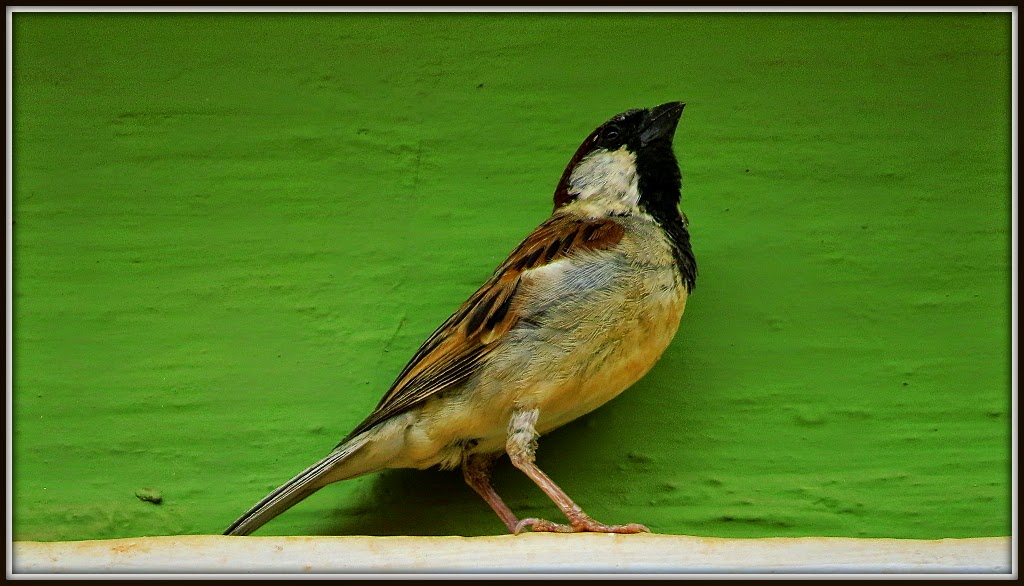
BIRDS OF GOA: APRIL'15 - PART 1

COMMON SPARROW

Bordering the Rua de Ourem, the wards of Fontainhas and Sao Tome are amongst the oldest residential areas of Panjim. The best part of these localities is that they have still retained the old world charm; a walk through the narrow by-lanes lined by bungalows painted in vivid colors here is such a pleasure.

Apart from the beautiful Indo-Portuguese villas, one of the highlights of such a walk are the numerous Sparrows that inhabit these wards; watching these passerine birds flying by, chasing each other or feeding on grains is a treat to the eyes, especially for those of who live in urban centres devoid of these beautiful birds. In fact, here, it is very easy to see these wonderful creatures engaged in their daily activities at a very close range.


More from the series: THE BIRDS OF GOA: APRIL'15

(1) Sparrow (Link)

(2) Jungle Babbler (Link)

(3) Purple Sunbird (Link)

(4) Brahminy Kite (Link)

(5) Black Headed Oriole (Link)

(6) Indian Koel (Link)


For more posts on Sparrows, click here (Link)

April 26, 2015

GOA DIARIES: APRIL'15 - Part 1

GOA VELHA

Located along the busy road connecting Goa's capital city Panjim to the commercial center of Margao, the quintessential town of Goa Velha would come across as just another Goan town for most of us. After all, a mixed Hindu-Catholic population, those large mansions with sprawling verandahs, the coconut trees along the streets and the bright white cross amidst the lush green fields are typical characters of most places in this part of the beach state and Goa Velha is no different. However, what distinguishes this place from most others is the fact that long before Old Goa and Panjim were designated as the administrative capital of the state, it served as the seat of power.

Known in the medieval times as Govapuri or Gokapattana, this once flourishing town was an important trading port along the Indian west coast with ships from the Middle East and Africa laden with spices, precious stones and other valuable merchandise docking here. Situated along the River Zuari back then, it was the capital of the South Konkan Silaharas (Link) and Goa Kadambas. The royal patronage and revenue generated by the profitable trade would have led to this being a bustling and prosperous metropolis. Unfortunately, the change in course of the river due to silting and the devastation caused by the wars between the Vijaynagar and the Bahamani Sultans for the control of Goa during the 14th and 15 centuries led to its ultimate downfall and the capital of the state was later shifted to Ilhas or present day Old Goa.

Though the place was once an important center of the Indo-Arabic sea trade, it is difficult to believe that today, there is absolutely no trace of the many grand palaces, those magnificent places of worship, the houses of the noblemen and the traders and other massive monuments that would have adorned the town when it was the capital of the region. Probably, one way to re-image Goa Velha's past grandeur is a short trip to the Pillar museum that contains several elegant sculptures that were unearthed in the vicinity during the construction of many modern buildings. Sometimes I wonder what more archaeological treasures are buried under the soil here and if we will ever be able to truly imagine the heights that Goa Velha reached during its glorious past.

As I have mentioned earlier, Goa Velha is my Bhabi's native and I stayed there with her parents for four days during my trip to Goa this April. Here are some of the pictures that I clicked of this rather sleepy town while on my vacation.


For more posts on Goa Velha, click here (Link)

For more posts on my Goa Trip - April 2015, click here (Link)

November 22, 2014

BEST OF LUCK, BAAB!

GOA CM PARRIKAR SWORN-IN AS DEFENCE MINISTER


Early February 2005. Months after the BJP lost the national elections to the Congress and its allies, the saffron regime in Panjim was looking shaky as four of the party's 17 MLAs including the then Transport Minister Digamber Kamat switched their allegiance and joined the principal opposition, the INC. After a controversial vote on the floor of the assembly, the incumbent governor S C Jamir dismissed the state government, terming it 'unconstitutional'. Protests broke out near the BJP state headquarters located at the Navelkar Arcade, close to the Municipality. A friend of mine who lives in the complex called me knowing my interest in politics. The crowd of about 200 people (that is big by Goan standards) shouting slogans against the governor, fell into silence as the CM who had been shunted just hours ago, emerged from the office where he held a meeting with the 'remaining' saffron MLAs and other party leaders. As he addressed the gathering and declared that he would continue fighting the INC in spite of the setback, some angry BJP workers announced a 'Goa bandh' to protest over the actions of the governor who they accused of being a pawn of the Congress party. Surprisingly, in a nation where politicians are known to go to any extent for their individual gains, the deposed CM - Manohar Parrikar reprimanded his followers fully aware that a strike could cost the exchequer dearly.

Having stayed in the beach state for a decade, this is one of the many incidents that come to my mind whenever I think about the former Goa CM. In a state which is notorious for political instability, a state which is infamous for electoral malpractices like horse trading, MLA poaching and switching loyalties, Parrikar baab stands head and shoulders above the rest. As far as I can recollect, he along with his party colleague and rival Shripad Naik (North Goa MP and OBC strong man) are the only two leaders who have never 'crossed over' in search of greener pastures. A five time MLA from Panjim, he created history in October 2000 when he became the first Chief Minister to have graduated from the prestigious IITs. Some of the programmes implemented by him during his second tenure including the very popular Cyber Age Scheme under which computers are given to all higher secondary students (Class XI & XII) for a paltry sum of Rs. 1000/-, found praise from all quarters. Seven years after staying out of power, he lead his party to a famous win in 2012 state elections; his work as the Chairman of a committee appointed to probe into illegal mining and his efforts to win the trust of the influential Catholic community were seen as instrumental in cornering the Congress regime headed by Digamber Kamat - the same man who had 'back stabbed' Parrikar way back in 2005. With the BJP winning a whopping 21 seats, it was the first time since 1984 that a party had won majority on its own in the Goa assembly. In spite of the fact that the mining ban has severely crunched the government's revenues, he managed to run the administration pretty well. Off late, he did face flake from some sections for his unclear stand on issues like Medium of Instruction and the 'anti-Christian' statements made by his colleagues from the MGP. However, there is no doubt that every Goan, irrespective of his or her political affiliation would have been saddened as he resigned from his post and took oath as the Defence Minister of the country.

On several occasions, the new PM has said that he has this knack of picking the right people for the right job; of course, many would question Modi's claim with 'tainted' men like Giriraj Singh making to the union cabinet. Anyway, there is no doubt that the former Goa CM is arguably, one of the best candidates to handle the pressure related to this high profile job. Like his predecessor in the UPA (A K Anthony), Parrikar is largely seen as non-corrupt in spite of being in active politics for over two decades. Moreover, he is a proven administrator; unlike Anthony, he will be more willing to take risks, if it is in the best interests of our armed forces. Also, he is less likely to succumb to the pressures of the various lobbies that come into the picture during the time of multi-million defence deals. Modernizing the Indian defence sector and getting it in on par with the likes of China is one of the primary agenda of the BJP regime. FDI in this sector too is something that Modi is believed to be keen on so that we could reduce our dependence on foreign firms. With the Goan leader having graduated from IIT which is one of the most prestigious technical institutes in the nation, he is certainly expected to oversee his master's above mentioned grand plans. Lastly, Parrikar is a workaholic; his style of functioning in many ways is similar to Narendra Modi. And the fact that he is close to the PM and the party president Amit Shah only helps.

The new defence minister has his task cut out. Combating Pakistan sponsored cross border terrorism and keeping a check on home grown militant modules like the Indian Mujahideen is a top priority. On the eastern border, we need a strong policy to counter repeated Chinese incursions into Indian territory. At the same time, it is imperative that we develop our infrastructure along the Indo-China border so as to enable quick deployment of troops and weapons in case of a war. There is an urgent need to revamp the Indian Navy which seems to in urgent need of attention. Modernizing our military capabilities, FDI in Defence, stimulating the growth arms producing firms in India, improving co-ordination between the three commands and a good work life balance for our soldiers are other issues which will figure high in his priority list. For a politician who has worked largely within the state of Goa, handling the defence minister will be the biggest challenge of his political career so far. The PM has showed tremendous confidence by calling him to the Centre, by-passing other senior leaders including Murli Manohar Joshi, Nitin Gadkari, Venkaiyya Naidu and Uma Bharati. If he can justify Modi's faith in him, he will surely be rewarded with more such prestigious offers in the future.

As Manohar Parrikar settles into his new job, I wish him all the best. Hope that he makes the country and Goa proud!

March 15, 2014

THE BATTLE OF THE NAIKS


SHRIPAD vs RAVI FOR NORTH GOA


The Bhandari Samaj is Goa's biggest caste in terms of numbers, constituting about 20 percent of the state's population. Come April 12, the North Goa seat is all set to witness a big clash amongst the two tallest leaders from the community. The seat is presently held by former Union Minister Shripad Naik, who has won from here continuously since the 1999 General Elections. Meanwhile, with the local Congress unit clearing the name of former Goa CM Ravi Naik to contest from this seat, the two backward caste leaders are set to fight against each other for the third time in political history of the state. I have stayed in this constituency for eight long years (four years in Panjim and another four in Porvorim) and hence have been following the political developments here for long. There is enough to indicate that the fight for Panjim is going to be the most keenly fought in this part of the country (Link).

A former member of the state legislature, Shripad Naik first contested from North Goa in 1999 Lok Sabha polls. As the party romped home to power in New Delhi, Shripad won a handsome victory, beating his closest rival and former Union Law Minister Ramakant Khalap of the INC by over 80,000 votes. In the Vajpayee cabinet, he held various portfolios as a junior minister. In the next big polls, even as the BJP fell out of favor across the country, Naik still won his seat. In 2009, even as the Congress consolidated its position and crossed the 200 mark, the North Goa seat still went to the saffron outfit. However, the margin was wafer thin. He just scrapped through, winning about six thousands votes more than his nearest rival NCP's Jitendra Deshprabhu. What works for Shripad Naik is his clean image. After having been in the murky politics for Goa for nearly three decades, no allegations of corruption or wrong-doing were ever raised against him. The second and perhaps the biggest plus point for Shripad is the fact that he has never switched parties. In a state like Goa where it is common for politicians to hop from one party to another, he is perhaps one of the few who have stood loyal to the BJP. One threat to saffron leader though is anti-incumbency. After electing BJP for 15 long years, you should not be surprised if North Goans chose the Congress this time around. Another factor that could damage his prospects could be the alleged differences between him and CM Manohar Parrikar. During the 2012 state polls (Link), Shripad who was said to be keen to contest from Porvorim was initially denied a ticket as he could be a potential competitor to the IITian post elections. Though he was offered a ticket later after his public outburst, the North Goa MP declined to contest. A split in the saffron ranks could prove suicidal for its prospcts here, especially with Ravi in the fray.

Ravi Naik, or the politics he does in many ways epitomizes the politics of the beach state, a state that has seen over 20 Chief Ministers in less than three decades. Hailing from the temple town of Ponda in central Goa, Ravi who is more known for his 'not so holy' activities. He began his career with the MGP. A legislator in the state assembly, he shot to prominence when he along with five other MGP MLAs joined the Congress in 1991. For this act, Ravi was made the Chief Minister and continued in the post till 1993. In June 1993, he became the first CM to be disqualified under the new Anti-Defection Law. He got another shot at the top job in 1994 but remained in the office for just seven days. Admist the chaos that Goa saw in the late nineties, he shifted his base to the Centre, winning on a Congress ticket from North Goa. In 2000, he walked into the BJP, serving as the Home Minister under Manohar Parrikar. However, he returned back to the Congress before the 2002 polls and won from Ponda for two consecutive terms. However, in 2012, after the BJP and MGP entered into a pre-poll alliance, former police officer Lavoo Mamledar defeated him by a margin of over 3000 votes. Ravi’s son Ritesh who contested against MGP heavyweight Sudhin Dhavalikar from Marcaim too was also routed.

In many ways, Ravi and Shripad complement each other. While the latter has stuck with the saffron brigade ever since he made his debut, the former has hopped from MGP to Congress to BJP and is back with the INC. Also, the former CM has a ‘tainted’ image amongst the people of the state. He is known to be power-hungry and his name has figured in several scams. Most notably, a Swedish model has accused him and his son of being involved in the drug trade. However, there are some things that work to his advantage. His humble origins and his amazing rise with in the state politics have won him many admirers, especially within his own community. The Muslims too have continuously backed him. Besides, with the Congress pushed to the walls in the state assembly polls after the drubbing that they got, it is expected that the INC leaders would unite and firmly support Ravi.

While their war to become the dominant leader of the Bhandari community in Goa has gone on for over two decades, the two Naiks have fought each other in politics on two different occasions. In 1994, Shripad Naik was the candidate of the BJP-MGP coalition in the state from the constituency of Marcaim. He was up against Ravi who had joined the Congress recently. Although Ravi was the incumbent Chief Minister of the state, the other Naik had the last laugh as he won by a handsome margin of 2700 votes. In 2002, the two were again locked in a political fight, this time from Ravi's stronghold of Ponda. Ravi had left the BJP and rejoined the INC once again. In a bid to teach him a lesson, the saffron party asked serving North Goa MP Shripad to contest against him and replicate the success of 1994. While much of the background between 1994 and 2002 was same, there was one major difference. This time around, the MGP was not in any kind of agreement with the BJP. The split in votes helped Ravi take revenge as he trounced the BJP leader by over 1000 votes. The upcoming polls for the 2014 Lok Sabha will be the third installation of this political rivalry with scores at present being one each.

There are a host of issues which will decide who wins the North Goa seat, this time around. The numerous scams and economic slump will hurt the INC whereas local topics like the ban on mining and Parrikar government's flip flops on the Medium of Instructions at the primary level are said to go against the BJP. In this contest which one can expect to go down to the wire, it could be the regional parties who will influence the final outcome. Getting the support of the Maharashtrawadi Gomantak Party (MGP) would be a big boost for Shripad. Remember, he lost to the former CM when his party was not in alliance with the MGP in 2002. The Congress on the other hand will need the help of the Nationalist Congress Party (NCP) to put on a good show. However, convincing Pawar's outfit will be difficult. Earlier the INC always allowed its partner to nominate candidate from North Goa. It is highly unlikely that the NCP will not field a candidate from this seat if the talks wit the Congress fail. It was speculated that BJP rebel Vishnu Wagh would resign from the legislature and contest from this seat as a NCP candidate. Meanwhile, the Aam Admi Party (AAP) has nominated Dattaram Desai from here. Finally, the support of the Catholics and the Muslims too could decide the ultimate winner.

March 09, 2014

GOA & LOK SABHA 2014


WILL IT BE EVEN-STEVEN IN GOA YET AGAIN?


In 2012, the BJP created history in the small yet beautiful state of Goa as it crossed the half way mark on its own, winning a whopping 21 seats. The party had indeed played its cards well. While the incumbent Congress-NCP regime in the state was fighting charges of failing to curb illegal mining, the saffron outfit made the right moves. First, it entered into a pre-poll agreement with the Maharashtrawadi Gomantak Party (MGP) which has a solid vote bank in the central talukas of the state. Also, Parrikar extended an olive branch to the powerful Catholic minority in Goa whom he had angered in his earlier term. At the same time, the Congress made a blunder by giving tickets to multiple candidates from the political families. After having governed the state for about two years, the Lok Sabha polls are an acid test for the former IIT alumni. In the last two General elections, both the UPA and the NDA won a seat each from the beach state. It will be interesting to see whether the BJP under Parrikar will be able to reverse this trend and storm the tiny state.

ISSUES

(1) Local versus National: With the BJP being in power for nearly two years now, the performance of the Manohar Parrikar government is going to be a key electoral issue before the 2014 General Elections. In his third term, there have been certain positives and few negatives too. Several schemes introduced by him including the Ladli Lakshmi scheme, providing an assistance of Rs 1,000/- to housewives with an annual household income of less than three lakh, another programme under which unemployed youth would get a monthly dole, the continuation of the cyber scheme and controlling the prices of fuel in the state have been lauded. At the same time, the rebellion of MLA Vishnu Wagh, the impasse over mining, the regime's U-turn over the Medium of Instruction at the primary level, its failure to cancel licenses of casinos and the recent strike by taxi drivers in the state may hurt the saffron party's prospects. 

While mixed signals are coming regarding the regime in Panaji from the people on the ground, there is no ambiguity about how the masses feel about the UPA II at the Centre. The Manmohan Singh government has failed on all accounts be it corruption, economic development, foreign affairs or defence. The BJP's poll campaign will certainly revolve around highlighting the myriad failures of the Congress led government in New Delhi. At the same time, the INC is expected to focus on local issues to counter the Parrikar government.

(2) The ban over Mining: Illegal mining in the state was probably the biggest issue during the 2012 Goa legislative polls. The BJP had accused the then Chief Minister Digamber Kamat of being involved in the multi-crore scam. Based on an affidavit filed by Prashant Bhushan and others, the Supreme Court banned mining in Goa in late 2012. Considering that mining and allied sectors are one of the pillars of the state economy, the thousands affected by the ban are feeling the pinch. In a rally in Panjim early this year, BJP's PM nominee Narendra Modi has promised to revoke the ban if he is elected to power. Even the Governor lashed out at the Centre earlier this week for failing to provide a special economic package to the state to help people affected by the Court's order.

(3) The Demand for Special Status: As Goa was a former Portuguese colony, the culture here is distinct from most other parts of the country. However, in recent years, there has been a heavy influx of people coming into the beach state from other parts of the country. Besides, a large number of non-Goans and foreigners have started buying property here. This is led to fear amongst the local that they will become a minority in their own state and lose their identity. As such, time and again demands for Special status for Goa have been raised by politicians across party lines. CM Parrikar has promised to fulfill this demand in case a NDA government comes to power in New Delhi. You can certainly expect this emotive issue to come up during the elections.

(4) The Catholic Votes: The Christians account for nearly 26 percent of the total population in the state. As such, their votes matter a lot. In fact, one of the reasons for BJP to do exceedingly well in 2012 was the backing it received from the community. Earlier, Parrikar had repented for the mistakes he had done in his earlier term including cancelling the public holiday for Good Friday which had alienated the Catholics. Also, the saffron party fielded several Catholic candidates across the state. It will be interesting to see if the community will still be with the BJP or go back to the Congress, especially after the elevation of Narendra Modi.


CONTENDERS 

(1) The BJP: After crossing the half way mark on its own in the state elections, you can expect the BJP to sweep the two seats in Goa. The CM Manohar Parrikar has an extremely clean image. Moreover, the fact that he has graduated the prestigious IIT-Bombay adds more value. Over a period of time, he has proved to be one of the best administrators in the country. The saffron outfit has been the dominant player in North Goa where its candidate Shripad Naik has won multiple times. However, can the BJP wrest back the South Goa seat from the Congress is the big question. Considering the significant Catholic population, wining the Marmagao seat might be a little difficult for the party.

(2) The Congress: At present, Francisco Sardinha of the INC represents the South Goa seat in the Lower House. After being reduced to mere nine seats in last state elections, it will certainly be an uphill task for the grand old party to win even a single seat from here. However, if it can win back the trust of the Catholic community then things will change. Another factor to note is whether the Nationalist Congress Party (NCP) will fight the elections in Goa with a pre-poll agreement with the Congress like in neighboring Maharashtra. If the alliance does not go through then both the constituents of the UPA are bound to doom in Goa.

(3) Others: The Maharashtrawadi Gomantak Party (MGP) which fought the state polls in an alliance with the BJP has not yet made its stand clear. Considering the clout of the powerful Dhawalikar brothers in the Priol-Marcaim region, it will be good for the NDA if they can convince the MGP to refrain from contesting. Former Tourism minister Mickky Paccecho's Goa Vikas Party (GVP) too has strong presence in parts of Southern Goa. An understanding with him will help gain some Christian votes. The Aam Admi Party (AAP) got a big boost when two of the state's most prominent personalities - musician Remo Fernandes and activist Dr. Oscar Rebello joined it. The candidates they choose will decide if AAP can open its account here. Former CM Dayanad Narvekar's Goa Democratic Party (GDP) and the United Goans Democratic Party (UGDP) are expected to be fringe players.

PAST PERFORMANCE 

The below chart in many ways depicts the way Goan politics has moved in last two decades. In 1996, the regional parties were dominant as the state's two original outfits - the MGP and the UGDP won a single seat each. Ironically, this was the last time that a regional party won a Lok Sabha seat from the state. In 1998, the Congress won both the seats whereas in the very next year, it was the BJP that swept Goa. In the last two polls, while the BJP has won the North Goa seat, the South Goa seat has gone to the INC. Both in 2004 and 2009, the Congress and the NCP had fought the elections in a pre-poll alliance. 

Political Party
1996
1998
1999
2004
2009
Bharatiya Janata Party (BJP)
-
-
2
1
1
Congress (INC)
-
2
-
1
1
Maharashtrawadi Gomantak Party (MGP)
1
-
-
-
-
United Goans Democratic Party (UGDP)
1
-
-
-
-

MY PREDICTIONS

While Parrikar's approval rating may not be sky high at the moment I think the BJP is the strongest contender here to bag both seats. Three-time MP Shripad Naik is likely to sail through in the North and the Catholics seems to have no reason to desert the saffron outfit. Moreover, the CM's rather soft approach on the Medium of Instruction in schools was seen as an attempt to appease the Christians. It will be beneficial if the party can persuade its ally, the MGP to refrain from putting candidates. The Congress will find it hard to retain South Goa, especially after the bad governance of the UPA II. However, the tie-up with the NCP will help. Meanwhile, if they can rope in Paccecho's GVP then its fortunes in Marmagao may change. 

Political Party/Alliance
Expected Seats
1
Bharatiya Janata Party (BJP)
1-2
2
UPA (Congress+NCP)
0-1


WATCH OUT

(1) The Wounded Tiger: After jumping several ships, Vishnu Wagh contested the 2012 elections from the St. Andre constituency and won. Denied a ministerial berth, he has been sulking for long and even sent overtures to the NCP. On a visit to a social gathering organized by a local NCP leader, he was alleged attacked by BJP goons. A few weeks back, he was stripped of all his positions in the government by the CM. Wagh has now dared the BJP to expel him. He knows that if he willing resigns, he will no longer be a MLA. It is speculated that he may join the NCP and contest the North Goa parliamentary seat against Shripad. 

(2) The Ripple Effect: In 2005, months after the NDA was dislodged from power, a group of four BJP legislators deserted the party and joined the Congress. In fact, Goa is a state known for its political instability. Vishnu Wagh is already in rebellion. Thought the government still enjoys the support of about 23 MLAs, it will not take much the woo the MGP away. In case, the UPA wins this election, you can be pretty sure that Parrikar will not complete his full term in spite of a handsome victory in 2012.

For more posts in this series:
(1) Telangana & Lok Sabha 2014 (Link)
(2) Karnataka & Lok Sabha 2014 (Link)
(3) Rajasthan & Lok Sabha 2014 (Link)
(4) Maharashtra & Lok Sabha 2014 (Link)
(5) Kerala & Lok Sabha 2014 (Link)
(6) Assam & Lok Sabha 2014 (Link)
(7) Tripura & Lok Sabha 2014 (Link)
(8) Haryana & Lok Sabha 2014 (Link)
(9) Chhattisgarh & Lok Sabha 2014 (Link)
(10) Jammu Kashmir & Lok Sabha 2014 (Link)
(11) Madhya Pradesh & Lok Sabha 2014 (Link)
(12) Bihar & Lok Sabha 2014 (Link)
(13) Jharkhand & Lok Sabha 2014 (Link)
(14) Sikkim & Lok Sabha 2014 (Link)
(15) Arunachal Pradesh & Lok Sabha 2014 (Link)
(16) Nagaland & Lok Sabha 2014 (Link)
(17) Manipur & Lok Sabha 2014 (Link)
(18) Meghalaya & Lok Sabha 2014 (Link)
(19) Mizoram & Lok Sabha 2014 (Link)
(20) Delhi & Lok Sabha 2014 (Link)
(21) Uttarakhand & Lok Sabha 2014 (Link)
(22) Himachal Pradesh & Lok Sabha 2014 (Link)
(23) Gujarat & Lok Sabha 2014 (Link)
(24) Punjab & Lok Sabha 2014 (Link)
(25) Bengal & Lok Sabha 2014 (Link)
(26) Odisha & Lok Sabha 2014 (Link)
(27) Tamil Nadu & Lok Sabha 2014 (Link)
(28) Andhra & Lok Sabha 2014 (Link)
(29) Uttar Pradesh & Lok Sabha 2014 (Link)

January 24, 2014

THE MANDOVI MEMORIAL CROSS


REMEMBERING THE SOULS OF MANDOVI


Located on the southern bank of the River Mandovi, the town of Panjim is one of the most scenic urban centres in the country. Dubbed as the 'Queen of the Arabian', it was made the capital of Goa in the mid 19th century after the Portuguese abandoned Goa Velha, the former seat of administration. The cobbled streets with grand villas painted in bright shades of blue, yellow and red - hallmarks of the colonial era, the sprawling promenade overlooking the serene Mandovi and the Goan brand of hospitality make Panjim a magnet for tourists. In fact, the city or as I like to call it - the town is petite, similar to those in Europe which I had the good fortune of visiting last December. While it may be small in size, one has to admit that there are numerous secrets that it holds deep within and numerous mysteries surrounding it. Though I have stayed in the Goan capital and in its vicinity for eight years, I am myself unaware of the many stories that the city has to tell. In fact, about two years after we shifted to Bangalore, I came across this article (Link) regarding a tragedy in Goa that took place at the turn of the 20th century. What caught my attention was the picture at the centre -  a white cross erected on a pedestal about 8 feet high, along the Riviera. It looked familiar and it took me less than a minute to recognize it. While I have walked past the Mandovi Memorial Cross a hundred times, I had never known the sad story it commemorates.


The tragedy, the worst ferry disaster in the history of Goa dates back to 3rd December in the year 1901. It is indeed an irony that so many lives were lost on a day when Goans celebrate the Feast of our patron saint - Francis Xavier. It was on that fateful day that a launch 'Goa' going from Verem to Panjim, carrying about 160 people, most of them on their way to Old Goa, capsized and sank into the river, with nearly half of the passengers reported missing. The city police chief Manuel Pedro Rodrigues led the rescue operation which lasted for four days. Seventy five bodies were recovered; the bodies of six unfortunate people were never found. A majority of the victims were form the villages of Bardez namely Saligao, Calangute, Reis Magos and Candolim. The launch was later pulled out of the waters in the following days. A report in the Times of India attributed the tragedy to the fact that the ferry was filled beyond its capacity. The Goan diaspora in Aden collected funds and built a memorial to honor the dead in 1904 after getting the necessary permission from the local government. The modest landmark has two plaques, one facing Panjim and the other facing the Mandovi.


The English translation of the southern plaque is as follows: "In the memory of the 81 victims of the tragedy of the launch Goa that occurred on 3-13-1901.  The landmark is dedicated by Goans in Aden requesting all those who pass by to say a pray for their eternal rest. Dated: 3-12-1904." The other plaque reads: "In memory of the 81 victims of the tragedy of the launch Goa on December 3, 1901 - dedicated by the Goan diaspora of Aden." 

The article which I mentioned earlier was a revelation. Having seen this cross so many times, I wondered as to how could I have missed the story behind it. Isn't it true that in our 'busy' lives, we end up over looking so many things. Meanwhile, I was determined to go to the memorial and pay my homage to the Souls of Mandovi the next time I went to Goa. In fact, after having visited the Reis Magos fort with my friend Niketh on December 22 last year, I insisted on taking the Betim - Panjim ferry on the way back. Although it would have been more convenient for him had we taken the bus to the Patto bus stand, Niketh agreed to accompany me. Thanks Nikz, you are awesome! In fact, our ferry took more or less the same route that the fateful launch 'Goa' would have taken on its final journey. Looking at the Mandovi Memorial as we approached the capital city, I wondered what the scene would have been on that day, 113 years ago. Once we reached our destination after a journey of about 15 minutes, Nikz boarded the bus at the Ferry Boat stop and I headed to the cross. After clicking some pictures, I said a silent prayer for the people who lost their lives in that tragedy. At the same time, I also prayed for something else... I prayed to the souls of Mandovi to protect Panjim, the town which is extremely close to my heart from unplanned growth and commercialization. While I am not against development, there is an old world charm about the capital and I hope it remains to hold on to it forever. I spent the rest of the evening roaming around the streets of the city and then returned to Bhabi's place.

June 23, 2013

LIFE IS A BEACH


THE GOA DIARIES: FUN AT VAGATOR


DD: Niks, kite karta re tu?
Sav: Oye, purro atta

Kadam Kadam badaye ja...

DD in Deep Retrospection


Small Green Bee Eater (top) & sea life (below)


All Hail the King


PS: The images posted here were clicked by me and my friends Sai and Sav.


For more on the Goa trip:
(1) An Evening in Vagator - Part 1 (Link
(2) An Evening in Vagator - Part 2 (Link)
(3) Birds at Goa Velha (Link
(4) More Birds at Goa Velha (Link)

June 08, 2013

AN EVENING IN VAGATOR - PART 2


THE GOA DIARIES: SUNSET AT VAGATOR


Sunset at Vagator
If playing in the sea is not something that you enjoy, then the best thing to do at a beach in the evening is to sit down and watch the sun going down. As the temperatures dip and the cool winds start blowing from the sea, the sky is transformed into a canvas changing shades from blue to yellow to golden, sometimes strewn with shades of pink as the lone star in our solar system - now resembling a bright orange ball, disappears into the waters in the distant horizon with its reflections shimmering on the waves. Having spent about an hour and a half at Vagator, we got the 'golden' opportunity to witness this spectacle while we were walking back from the Orzan beach towards DD's car, covering all the three segments of the shore. We walked along the edge of the shore enjoying the marvelous view in front of our eyes as the sun went about its business to illuminate the other half of the world, providing some wonderful photo-ops.

The descent of the sun

We had parked our car in an open place, close to the entrance of the Big Vagator beach and not in the parking area around the headland. As this was not an organized parking, some 'irresponsible' fellow had ended up parking his vehicle right in front of ours leaving us stranded. This is quite common as domestic tourists, in their hurry to hit the beach, end up acting like 'idiots', with least concern for the the inconvenience that they cause to others. It is true that one is here on a vacation but so are many of us and it would be great if all of us act sensibly. However, the blessing in disguise was that from here, the view of the sun descending in the background with coconut palms in the front was amazingly beautiful.

Sun setting amongst the palms

As we waited at the parking area, cursing the guys who had left their car right in front, thirst got the better of us and we headed to a nearby shack for some refreshments. The humidity levels was extremely high and we were soaked in sweat. With the climate in Bengaluru staying pleasant throughout the year, I do not remember when was the last time I had perspired so much. Some time later as we headed back, we were relieved to see a group of visitors, I guess they were Keralites from their peculiar accent, going back in their Indica which was parked in the front row. While this was not the four wheeler that was left in front of our car, we got just about enough space to move out of the parking lot. Though the space was less, DD managed to maneuver his brand new Wagon-R like a skilled captain negotiating his ship along a rocky coastline in rough weather. With Sav's GPS showing the way, we left for Panjim, bidding farewell to Vagator and planning for our next get-together.

A painting of the Buddha at a shack in Vagator
PS: The images posted here were clicked by me and my friends Sai and Sav.


For more on the Goa trip:
(1) The Chance Encounter (Link)
(2) Dil Dosti Etc (Link)
(3) An Evening in Vagator - Part 1 (Link
(4) Life is a Beach (Link)
(5) Birds at Goa Velha (Link